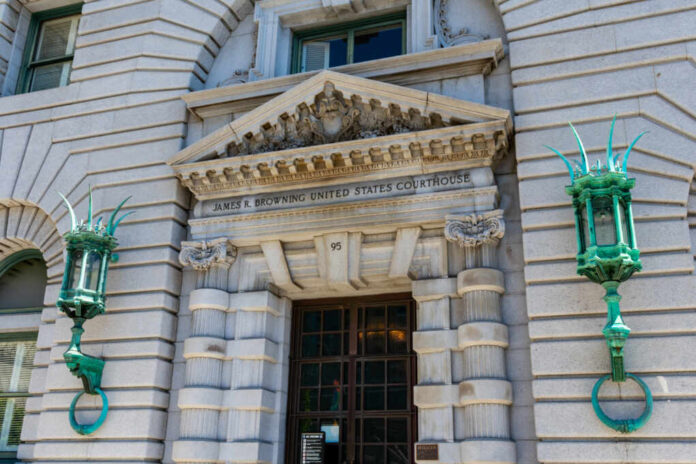
The U.S. Court of Appeals for the Ninth Circuit has issued a landmark ruling in the case of Baird v. Bonta, striking down California’s ban on open carry in urban areas. Delivered on January 2, 2026, the decision declares the ban unconstitutional under the Second Amendment, marking a pivotal moment for gun rights advocates. This action challenges California’s stringent gun laws, emphasizing that the right to bear arms should not be geographically restricted to rural areas.
Story Highlights
- Ninth Circuit Court rules California’s urban open-carry ban unconstitutional.
- A decision could restore Second Amendment rights in urban areas.
- Highlights the tension between state laws and federal judicial oversight.
- This could potentially set a precedent for similar challenges nationwide.
California’s Open-Carry Ban Overturned by Ninth Circuit
The U.S. Court of Appeals for the Ninth Circuit issued a landmark ruling on January 2, 2026, striking down California’s ban on open carry in urban areas as unconstitutional under the Second Amendment. The case, *Baird v. Bonta*, centered on Matthew Baird, a law-abiding citizen, challenging the ban. The court’s decision marks a pivotal moment for Second Amendment advocates, emphasizing that California’s restrictions were inconsistent with constitutional rights.
This ruling, delivered by a panel that included a Trump appointee, reflects a strong judicial stance against California’s stringent gun laws, which have long limited open carry to rural areas. The court highlighted the historical inconsistency of California’s ban, reinforcing the idea that the right to bear arms should not be geographically restricted.
🚨 BREAKING: Federal appeals court ruled that California’s ban on openly carrying guns in most public places violates the Constitution.
HUGE win for the Second Amendment. pic.twitter.com/HZeUuaqrKB
— I Meme Therefore I Am 🇺🇸 (@ImMeme0) January 3, 2026
The Historical Context of California’s Gun Laws
California’s open-carry laws, stemming from Penal Code §§ 25850, 26350, 26150, and 26155, have evolved from 1960s urban crime concerns into nearly total bans in populous areas. The Ninth Circuit’s decision follows the Supreme Court’s 2022 *Bruen* ruling, which shifted Second Amendment analysis to historical context, challenging California’s licensing approach. The state had argued that the ban was a form of licensing, offering concealed carry as an alternative. However, this view was rejected by the Ninth Circuit, which noted that historical precedents favored open carry for immediate self-defense.
California’s unique status as the only state with such a comprehensive ban on open carry, despite allowing concealed carry, places it at odds with historical interpretations of the Second Amendment. This ruling could potentially open the door for further legal challenges in states with similar restrictions.
Implications and Future Prospects
The Ninth Circuit’s decision has immediate and long-term implications. In the short term, the ruling voids the enforcement of the urban open-carry ban, allowing law-abiding citizens in urban counties to seek permits for open carry. This impacts over 90% of California’s population, residing in urban areas. In the long term, the decision could spur similar challenges nationwide, restoring open carry as a recognized conduct under the Second Amendment.
Social and political tensions between California and federal authorities are expected to heighten, as this decision bolsters arguments for open carry over concealed options, emphasizing self-defense rights. Economically, while direct impacts are minimal, there could be an increase in litigation and demand for training courses as new permits are sought.
Watch the report: Major Victory: 9th Circuit Overturns Long Standing California Gun Law
Sources:
Ninth Circuit Court Opinion on Baird v. Bonta, January 2, 2026
California ban on open carry of firearms ruled unconstitutional by appeals court.
California ban on openly carrying guns is unconstitutional, court rules | Reuters