
President Trump’s pardon of a foreign ex-president convicted in a U.S. drug case is fueling a larger fight over whether justice was served—or weaponized.
Story Snapshot
- President Trump pardoned former Honduran president Juan Orlando Hernández (JOH) after he served under four years of a 45-year federal sentence.
- Trump and his team framed the case as a “Biden setup,” while mainstream coverage emphasizes a jury conviction built on cartel-bribery testimony and trafficking allegations.
- Hernández was convicted in March 2024 in the Southern District of New York on cocaine-importation and weapons-related charges tied to allegations of cartel protection.
- The pardon landed amid a high-stakes Honduras political realignment, with debate over whether U.S. policy goals are now tangled with clemency and credibility.
What Trump Actually Did—and Why the Timing Matters
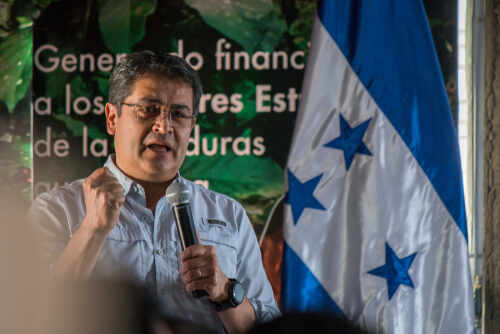
President Trump issued a full pardon for Juan Orlando Hernández on Dec. 1, 2025, and Hernández was released the same day. The White House defended the move as correcting an unfair prosecution and argued Hernández had been “treated very harshly.” The timing stood out because the decision came after Hernández’s 2024 conviction and 45-year sentence, but before he had served a meaningful portion of that term.
Trump’s public justification focused on politics, not new exculpatory evidence. In remarks reported after the pardon, Trump described the case as a “Biden setup,” and his press secretary said Hernández was targeted because he was a president who “opposed” Biden-aligned values. That narrative resonates with Americans who believe federal power often serves insiders, yet it also raises a basic governance question: should clemency rest on claims of bias without a clear, documented breakdown in the legal process?
What the Court Case Alleged, and What a Jury Convicted
Federal prosecutors accused Hernández of participating in a long-running conspiracy tied to cocaine trafficking into the United States and of using Honduran state power to protect drug shipments. Reporting summarized allegations that he accepted millions in bribes from cartel figures, including claims involving the Sinaloa cartel and an alleged El Chapo-linked bribe, and then leveraged police and military resources to shield trafficking operations while benefiting politically.
A U.S. jury convicted Hernández in March 2024 in the Southern District of New York, and a judge sentenced him in June 2024 to 45 years. Those procedural facts—jury verdict, federal sentence, incarceration—are not in dispute across the sources provided. What remains disputed is the “why”: whether the case was a standard transnational narco-prosecution or a selective prosecution with political undertones. The “framing” claim is asserted but not substantiated with independently verified evidence.
The “Framed by DOJ” Claim: What’s Documented vs. What’s Missing
Partisan-leaning accounts argue Hernández was prosecuted to punish Honduras’ prior pro-U.S., pro-Taiwan posture and to signal approval of a new Honduran government after Xiomara Castro took office. The chronology cited by supporters includes Hernández’s indictment and extradition on the day of Castro’s inauguration, followed by Honduras later switching diplomatic recognition from Taiwan to China in 2023—moves that fit a broader great-power competition storyline.
Still, a timeline that “looks political” is not the same as proof of fabrication. The sources summarized here do not present new court filings, newly surfaced communications, or a judicial finding of misconduct that would demonstrate prosecutors invented evidence or coerced testimony. For Americans wary of a politicized federal bureaucracy, the most defensible conclusion from the available record is narrower: Trump and allies allege political motivation, while mainstream reporting points to trial evidence and a jury conviction as the basis for guilt.
Foreign Policy, Elections, and the Cost of Blurring the Lines
The pardon also sits inside a real geopolitical contest. Honduras’ relationship choices—recognizing China after dropping Taiwan, then shifting again amid domestic politics—have direct implications for U.S. influence in Central America. Reporting says Hernández’s party ran on a more pro-U.S. orientation and that Honduras later moved back toward U.S./Taiwan ties after an election decided by a margin under 1%, with Trump’s posture credited by allies as helpful.
Honduran President Juan Orlando Hernandez Was Framed by Biden’s DOJ, So President Trump Pardoned Him – Joe Hoft https://t.co/lM0st2RY6u
— Johnny B (@JohnnyAmerica52) May 1, 2026
That context explains why some conservatives view the pardon as strategic leverage against China. But it also highlights why critics argue it weakens anti-cartel deterrence and complicates extradition trust. When a convicted foreign leader is freed early by U.S. clemency, other partners may wonder whether U.S. prosecutions are purely legal—or partly transactional. For citizens already convinced “elites” game the system, that ambiguity can deepen distrust, even among people who like the policy outcome.
Sources:
The Framing of Honduran President Juan Orlando Hernández by Biden’s DOJ (Part 1)