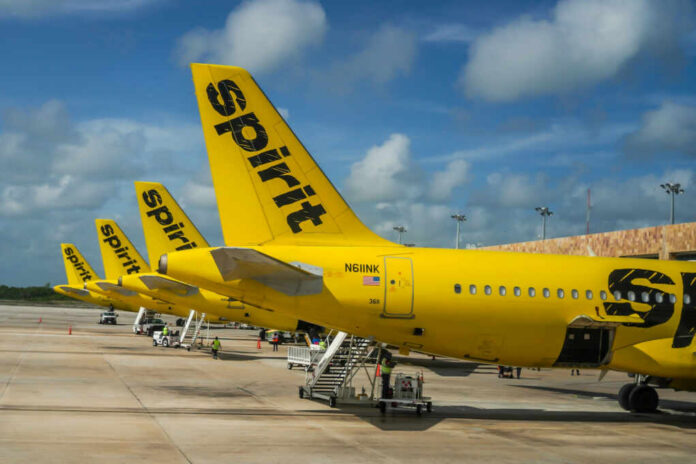
Spirit Airlines abruptly ceased all operations after a $500 million Trump administration bailout collapsed, stranding thousands of passengers and leaving creditors to pick through the wreckage of America’s once-pioneering budget carrier.
Story Snapshot
- Spirit Airlines shut down immediately after bondholders and federal officials failed to agree on a $500 million bailout deal
- All 277 Saturday flights canceled as the carrier exhausted cash reserves amid Iran war-driven jet fuel price surges of over 80%
- Trump administration offered a last-ditch rescue proposal but prioritized American interests over saving the struggling airline
- Over 1,300 crew members face relocation and mass layoffs while passengers are left seeking refunds through bankruptcy proceedings
- Industry experts warn the shutdown will reduce market capacity and drive airfares higher for budget-conscious travelers nationwide
Bailout Negotiations Collapse Amid Bondholder Standoff
Spirit Airlines announced an immediate operational wind-down early Saturday after negotiations over a $500 million federal bailout crumbled late Friday. The Trump administration extended what sources described as a “final proposal,” even floating the possibility of a taxpayer-funded government takeover, but bondholders refused to support the deal. President Trump acknowledged the airline’s plight publicly, stating “we’re looking at Spirit and if we can help them, we will,” but emphasized that “we have to come first,” signaling the administration would not force a rescue over creditor objections. The collapse left Spirit with no additional funding sources and forced the immediate cessation of all flight operations.
Fuel Cost Crisis Delivers Final Blow to Budget Carrier
The airline’s demise stems directly from skyrocketing jet fuel prices triggered by the ongoing U.S. conflict in Iran, which pushed costs more than 80% higher than February levels. Spirit’s ultra-low-cost business model, built on razor-thin profit margins, could not withstand the sustained fuel shock that pressured all U.S. carriers but proved fatal for the budget operator. The Florida-based airline had filed for Chapter 11 bankruptcy twice since November 2024, first attempting to restructure debt and shrink its fleet, then seeking a second reorganization in August 2025. Creditors had agreed to a February exit plan targeting spring or summer 2026, but the Iran war’s impact on fuel markets destroyed any remaining viability, leading creditors to abandon hope earlier this month.
Immediate Shutdown Leaves Passengers and Workers Stranded
Spirit’s final flight, number 1833 from Detroit to Dallas, touched down early Saturday after the airline had transported over 50,000 passengers in the preceding 24 hours. The carrier posted a statement on its website confirming the wind-down was effective immediately, with all 277 scheduled Saturday flights canceled and customer service rendered unavailable. Passengers seeking refunds face a lengthy bankruptcy claims process, with only credit card chargebacks offering immediate relief. Meanwhile, more than 1,300 crew members are being relocated to their home bases as the airline prepares for complete liquidation. The sudden collapse marks the end of a 34-year operation that pioneered the ultra-low-cost model in American aviation with its distinctive bright yellow planes.
Market Consolidation Threatens Higher Fares for Travelers
The shutdown removes significant capacity from the U.S. airline market at precisely the wrong moment for consumers already facing elevated travel costs. CBS travel editor Peter Greenberg warned that Spirit’s exit amid fuel price spikes means “airfares have nowhere to go but up,” as reduced competition and tighter seat availability give legacy carriers pricing power. Budget-conscious travelers who relied on Spirit’s rock-bottom fares will bear the brunt of the capacity reduction, particularly on routes where the airline provided the primary low-cost option. Aviation analysts note the collapse signals broader vulnerability in the budget carrier sector, where thin margins leave little room to absorb external shocks like fuel crises or geopolitical conflicts.
Government’s Limited Role Raises Questions About Intervention
The Trump administration’s willingness to consider a bailout, yet ultimate refusal to override bondholder objections, highlights the delicate balance between market principles and economic intervention. While the president positioned himself as open to assistance, his insistence that “we have to come first” reflects a priority on protecting taxpayer interests over rescuing a struggling private enterprise. Bondholders, skeptical of Spirit’s viability even with federal support, exercised their veto power to block the deal, effectively sealing the airline’s fate. The episode underscores a growing frustration among working Americans who see government officials more concerned with political positioning than solving real problems—in this case, thousands of lost jobs and reduced travel options for budget-strapped families. The collapse also raises uncomfortable questions about whether government resources might have been better deployed preventing the crisis rather than attempting a last-minute rescue after two bankruptcies.
Sources:
Trump gives Spirit Airlines ‘final proposal’ as beleaguered carrier prepares to shut down
Trump announcement expected today on Spirit Airlines deal
Spirit Airlines tickets, flights shutting down impact
Spirit Airlines moves toward shutdown after rescue deal collapses
Spirit Airlines liquidation concerns: What to know
Spirit Airlines shutting down after bailout fails