President Trump’s threat to withdraw U.S. troops from Germany has sparked a strategic pivot in European defense, with Berlin calling for continental self-reliance amid growing doubts about Washington’s commitment to NATO.
Story Snapshot
- Trump threatens to pull up to 40,000 U.S. troops from Germany despite Pentagon objections and legal restrictions
- Germany declares itself “prepared” for withdrawal and accelerates independent defense capabilities including ammunition production surpassing U.S. levels
- Chancellor Merz calls for strengthened European defense autonomy while maintaining commitment to NATO alliance
- Pentagon officials shocked by withdrawal proposal, citing Germany’s strategic importance hosting European and African command hubs
- Tensions escalate over Iran policy and NATO burden-sharing as Germany pledges defense spending increase to 3.7 percent of GDP by 2030
Trump Leverages Troop Presence Against Berlin
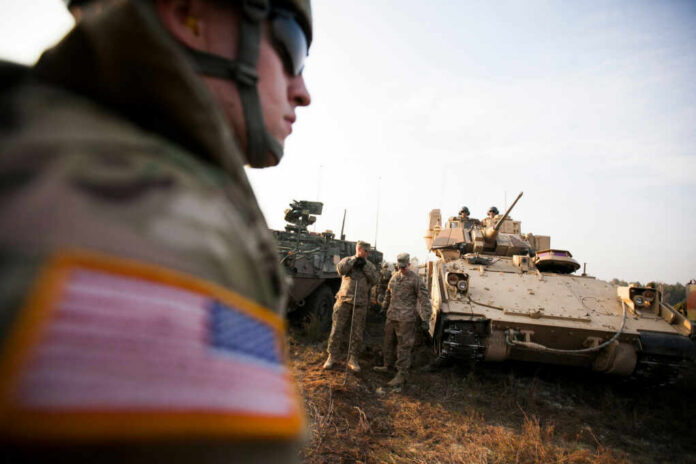
President Trump threatened in late April 2026 to review and potentially reduce the 35,000 to 40,000 U.S. troops stationed in Germany, representing nearly half of all American forces in Europe. The announcement came amid escalating tensions with Chancellor Friedrich Merz over Iran policy and alliance commitments. Pentagon officials expressed shock at the proposal, which comes despite December 2025 legislation barring troop reductions below 76,000 continent-wide without risk assessment and security certification. Germany hosts critical U.S. European Command and Africa Command headquarters, along with the Pentagon’s largest overseas hospital.
Germany Signals Strategic Independence
German leadership responded to Trump’s threats by declaring the nation “prepared” for any U.S. troop reduction while accelerating European defense cooperation. A German official stated that “Trump’s policy of crude threats has reached its limits” and warned that withdrawing troops “would severely weaken the U.S. itself.” Chancellor Merz emphasized Germany’s commitment to “a united NATO and a reliable transatlantic partnership” despite the turbulent relationship. The response reflects growing European skepticism about American reliability and a strategic shift toward reduced dependence on U.S. military presence for continental security.
European Defense Manufacturing Surges
Germany’s defense industrial base has expanded rapidly, with Rheinmetall reporting ammunition production capacity now exceeding U.S. levels. Berlin plans to host Patriot air defense system manufacturing and boost production of Stinger missiles and 155mm artillery shells. Germany committed to increasing defense spending from current levels to 3.7 percent of GDP by 2030, earning Pentagon praise prior to Trump’s withdrawal threat. This manufacturing surge strengthens European strategic autonomy and reduces reliance on American military-industrial support. The development signals a fundamental shift in transatlantic defense burden-sharing that many conservatives have long advocated.
The situation exposes deeper frustrations on both sides of the Atlantic. American taxpayers have underwritten European security for decades while wealthy NATO members failed to meet defense spending commitments. Trump’s pressure tactics, however aggressive, address legitimate concerns about alliance freeloading that previous administrations ignored. Yet the abrupt threat undermines strategic planning and strains relationships with partners genuinely working to increase contributions. Pentagon officials find themselves caught between presidential directives and military assessments warning that hasty withdrawals could compromise operational readiness and weaken NATO’s eastern defenses against potential threats.
Alliance Fractures Deepen Over Iran and Autonomy
The troop withdrawal threat emerged alongside broader NATO tensions, including several member states denying Pentagon access to bases for Iran operations. Trump criticized Merz for alleged ineffectiveness on Ukraine and domestic issues while defending U.S. Iran policy. The clash illustrates fundamental disagreements over threat assessment and alliance priorities that transcend simple burden-sharing disputes. European leaders increasingly view strategic autonomy as necessary insurance against unpredictable American commitments, while Washington grows frustrated with allies who simultaneously demand U.S. protection and obstruct U.S. operations. This dynamic raises questions about NATO’s future relevance.
The broader implications extend beyond bilateral U.S.-German relations to the fundamental structure of Western security architecture. Germany’s pivot toward European defense independence could accelerate similar initiatives across the continent, potentially creating parallel defense structures that duplicate NATO capabilities while weakening integrated command. For American conservatives frustrated with endless foreign commitments and globalist entanglements, European self-reliance represents a welcome development. Yet the chaotic implementation risks creating security vacuums that adversaries could exploit, undermining the stability that American presence has maintained since World War II. The challenge lies in managing the transition from U.S.-dependent to autonomous European defense without creating dangerous instabilities during the shift.
Sources:
Trump Germany Troop Pullout Pentagon Shocked – Politico
Trump Troop Pullout Threat Stuns Pentagon and Rattles NATO Allies – English NV