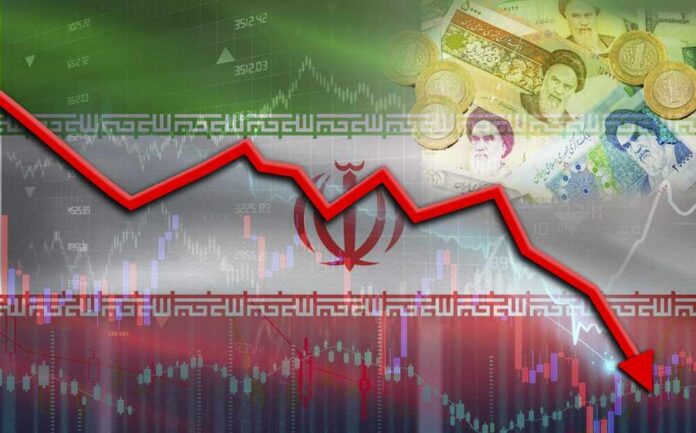
The Trump administration is treating sanctions like a battlefield weapon, betting that cutting Iran’s cash flow can weaken the regime without firing a shot.
Quick Take
- Treasury Secretary Scott Bessent says “Operation Economic Fury” is designed to choke off Iran’s ability to fund the regime, including military payroll.
- The strategy blends secondary sanctions, aviation restrictions, and a naval blockade to isolate Iran economically and logistically.
- Gulf Cooperation Council (GCC) cooperation is described as expanding after Iranian attacks, tightening regional enforcement.
- Key claims about Iran being unable to pay soldiers remain difficult to independently verify from the available reporting.
Operation Economic Fury reframes sanctions as a wartime tool
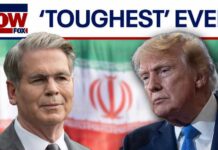
Treasury Secretary Scott Bessent has been publicly outlining a renewed maximum-pressure campaign against Iran under the banner “Operation Economic Fury.” In recent interviews, Bessent described the effort as intentionally suffocating the regime financially—targeting the flow of funds that keep basic state functions running. The administration’s stated theory is simple: degrade revenue and access to money, and Tehran’s ability to sustain military readiness and regional aggression shrinks.
Administration messaging also highlights a deliberate comparison between financial coercion and military action, calling the sanctions push a “financial equivalent” to kinetic operations. That framing matters politically at home. After years of public fatigue with foreign wars, the White House is presenting economic pressure as a way to protect U.S. interests while limiting direct military exposure. The underlying bet is that economic leverage can achieve security outcomes without another open-ended conflict.
Secondary sanctions raise the stakes for banks and business partners
A central component of the plan is secondary sanctions—penalties aimed not only at Iranian entities, but at foreign banks, companies, and governments that facilitate Iranian transactions. In practical terms, the U.S. is warning third parties that doing business with Iran could mean losing access to the American financial system. That creates a stark compliance choice for global institutions and helps explain why Treasury-led campaigns can ripple far beyond U.S. borders.
Bessent has also emphasized targeting Iranian state payments and Islamic Revolutionary Guard Corps-linked accounts, portraying that financial squeeze as a direct constraint on military capability. The administration argues that if Tehran cannot reliably move funds, it struggles to pay personnel and maintain operational capacity.
Aviation restrictions and blockade tactics widen the pressure points
Beyond banks, the campaign broadens into sectors that affect daily operational logistics. Bessent has discussed restrictions tied to Iran’s aviation sector, including consequences for foreign entities that provide jet fuel, maintenance, or landing services to sanctioned Iranian airlines. The intent is to make routine international operations harder, costlier, and riskier for firms tempted to keep Iranian routes open. It also signals that enforcement is aimed at service networks, not just headline-grabbing oil sales.
The administration also points to maritime enforcement, including a naval blockade concept intended to curb commerce and limit revenue streams connected to shipping and energy flows. Reduced maritime toll collection and strain on oil infrastructure, with the broader goal of reducing cash and constraining exports. For conservatives wary of endless wars but supportive of projecting strength, this approach is being sold as a hard-power strategy executed through finance and enforcement rather than large troop deployments.
Regional cooperation is portrayed as tightening, but outcomes remain contested
Bessent has indicated that Iranian attacks against GCC neighbors created conditions for increased regional cooperation, with Gulf states becoming more transparent in investigating funds held in their banking systems. If accurate, that shift would represent a meaningful regional alignment: neighboring governments assisting Washington in limiting Iran’s access to money. Still, the public record is heavier on U.S. claims than on detailed metrics showing exactly how much enforcement has changed and how consistently it is applied.
Treasury Secretary Scott Bessent on Economic Pressure Against Iran – "We Are Suffocating the Regime and They Are Not Able to Pay Their Soldiers" (VIDEO) | The Gateway Pundit | by David Greyson https://t.co/HpLKnohtkA
— George Orwell (@OrwellsRevenge) May 4, 2026
A separate concern is whether pressure campaigns weaken adversaries or harden them. At least one counterargument that sanctions may “strengthen the axis” rather than break it, reflecting a long-running debate about whether economic isolation changes regime behavior or merely redirects trade and alliances. The clearest confirmed takeaway is strategic: the administration is openly building a model of economic warfare designed to substitute for—or delay—direct military escalation.
Sources:
Bessent says Trump’s ‘economic fury’ is ‘suffocating’ Iranian …
Fox News video segment on Bessent discussing Iran pressure and enforcement measures