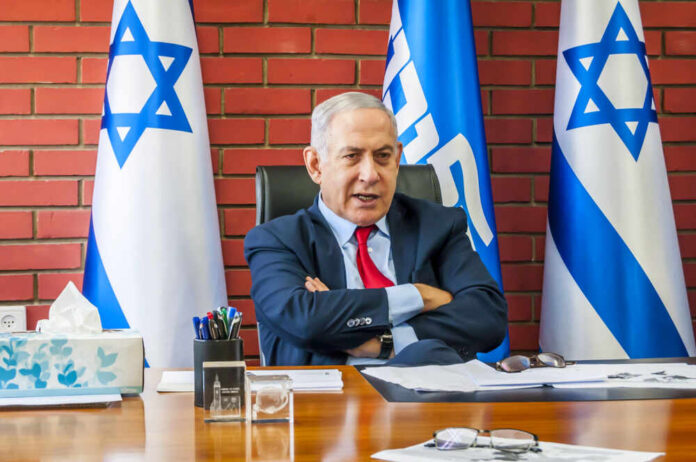
Israel’s prime minister just floated a once-unthinkable idea: ending U.S. military aid—forcing Washington to ask whether “forever funding” allies has become a default setting instead of a strategy.
Quick Take
- Benjamin Netanyahu told CBS’s “60 Minutes” he wants to phase out the financial component of U.S. military aid to Israel to zero over the next decade, starting immediately.
- The current U.S.-Israel aid framework is governed by a 2016 memorandum committing $38 billion from 2018–2028, including roughly $3.8 billion annually.
- As of May 2026, there are no formal negotiations to implement a phase-out, and aid continues to flow under the existing agreement.
- The proposal lands amid U.S. domestic frustration over spending, “forever commitments,” and a broader belief—left and right—that Washington’s priorities often serve elites more than citizens.
What Netanyahu Actually Said—and Why It’s Politically Explosive
Benjamin Netanyahu used a “60 Minutes” interview to argue that Israel should “wean” itself off the financial portion of U.S. military support and draw it down to zero over roughly ten years. He framed the shift as a move toward self-reliance and a signal that Israel’s economy and defense industry can carry more of the load. The comments stood out because Israel’s leader—not American lawmakers—initiated the idea publicly.
Netanyahu’s timing matters because the existing U.S.-Israel assistance structure is not a casual handshake; it is built around a 2016 memorandum of understanding running from 2018 to 2028. Under that framework, Israel receives about $3.8 billion per year, and the agreement is widely treated as a baseline commitment in Washington. Netanyahu’s proposal, even if only aspirational today, forces a debate about whether long-term aid is a tool or a dependency.
The 2016 Aid Deal, U.S. Oversight, and the Limits of “Just Stop Taking It”
The 2016 memorandum committed $38 billion over ten years, pairing foreign military financing with missile-defense support. That structure ties aid to U.S. appropriations and the broader American defense ecosystem, meaning Israel cannot unilaterally “end” the arrangement in a way that automatically rewrites U.S. budgets or congressional behavior. For American taxpayers, the key point is that any real phase-out would require cooperation across both governments and, crucially, Congress.
The proposal also cuts against how foreign aid typically works in practice: programs develop constituencies, contracts, and lobbying pressure that resist change. That is why Netanyahu’s framing landed with unusual force in U.S. politics. Conservatives who have argued for years that Washington spends first and rationalizes later heard an ally’s leader describe a world where support is temporary and strategic, not permanent. Liberals skeptical of military spending heard a different argument: less U.S. leverage if cash ties shrink.
Where Things Stand in 2026: Rhetoric Up Front, No Formal Talks Yet
As of May 2026, no formal negotiations have begun to implement a phase-out before the 2018–2028 memorandum expires, and the aid stream continues. Post-interview messaging from U.S. officials emphasized the strength of the partnership, without committing to any timetable for reducing assistance. On the Israeli side, higher domestic defense spending in 2025–2026 has been interpreted as preparation for greater self-funding, but that does not equal a signed plan.
What This Means for U.S. Voters Who Feel “The System” Never Changes
Netanyahu’s comments hit a raw nerve because they echo a larger bipartisan mood: many Americans believe Washington protects entrenched interests while everyday families absorb inflation, higher energy costs, and a sense of national drift. From a conservative perspective, any serious discussion of trimming international commitments connects directly to limited-government instincts and the demand for fiscal discipline. From a left-of-center perspective, the same idea can be read as reallocating priorities at home.
Netanyahu calls for ending US financial aid to Israel over next decadehttps://t.co/zBIQBSHWsZ
— Human Events (@HumanEvents) May 11, 2026
The hard limitation is that Netanyahu’s proposal, by itself, does not change U.S. law or immediately reduce spending, and the current agreement runs through 2028. Still, the political significance is real: an ally’s leader publicly describing an exit ramp from U.S. funding creates permission space for American lawmakers to ask tougher questions about benchmarks, timelines, and accountability. If Washington cannot even debate a long-term aid structure when the recipient signals readiness to graduate, critics will argue the “default to spending” mindset is the real story.
Sources:
Netanyahu wants to wean Israel off US military support, he tells CBS
Netanyahu wants to stop Israel’s reliance on U.S. military aid | 60 Minutes