President Trump launched an unprecedented personal attack on Supreme Court justices—including two he appointed—after they struck down his authority to impose sweeping tariffs without congressional approval, calling them a “disgrace to our nation” and vowing to circumvent the ruling.
Story Snapshot
- Supreme Court ruled 6-3 that Trump’s use of emergency powers to impose 10% global tariffs violated the Constitution’s grant of tariff authority exclusively to Congress
- Trump personally attacked Justices Barrett and Gorsuch—his own appointees—calling them “unpatriotic,” “disloyal,” and an “embarrassment to their families”
- President announced plans to impose identical tariffs through alternative legal mechanisms, bypassing Congress despite the Court’s constitutional rebuke
- Vice President Vance labeled the ruling “lawlessness,” escalating attacks on judicial independence and separation of powers
Supreme Court Rejects Presidential Power Grab on Tariffs
The Supreme Court delivered a 6-3 decision on February 20, 2026, invalidating President Trump’s use of the International Emergency Economic Powers Act to impose 10% tariffs on virtually all U.S. trading partners. Chief Justice John Roberts authored the majority opinion, joined by Justices Gorsuch, Barrett, and the Court’s three liberal members. The ruling emphasized that Article I, Section 8 of the Constitution grants tariff authority exclusively to Congress, not the executive branch. Justices Thomas, Alito, and Kavanaugh dissented, supporting the president’s claimed emergency authority under the 1977 statute originally designed for sanctions during genuine crises.
Trump Unleashes Fury at His Own Appointees
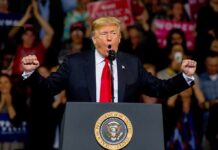
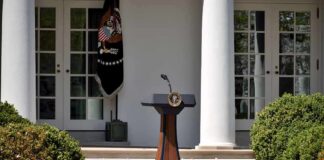
Hours after the ruling, Trump held an impromptu White House press conference where he personally lambasted justices by name, marking his first direct assault on Supreme Court members. He singled out Barrett and Gorsuch—whom he elevated to the bench during his first term—calling them “fools” and questioning their patriotism without evidence. Trump suggested foreign interests influenced the decision, a baseless accusation that undermines judicial independence. He praised the three dissenters while announcing he would “barely invite” the majority justices to next week’s State of the Union address, deepening the constitutional crisis.
Constitutional Clash Over Executive Overreach
The Court’s decision reinforces the Framers’ intent to prevent unilateral presidential taxation, a principle rooted in colonial grievances against King George III. Trump had invoked IEEPA—a law historically reserved for financial sanctions during wars or emergencies—to justify broad peacetime tariffs aimed at reshoring manufacturing jobs. After one year of these policies, no measurable manufacturing employment gains have materialized, according to economic data. Lower courts, including the U.S. Court of International Trade, had already rejected Trump’s tariff authority before the case reached the Supreme Court, signaling widespread judicial skepticism of the executive power expansion.
President Vows to Reimpose Tariffs Through Alternate Routes
Despite the constitutional rebuke, Trump announced plans to replicate the 10% tariffs using different statutory authorities that require trade investigations and longer implementation timelines. He explicitly rejected seeking congressional approval, dismissing lawmakers’ constitutional role in setting trade policy. Vice President JD Vance amplified the administration’s defiance, posting on social media that the ruling represented “lawlessness” by unelected judges. This strategy raises concerns among constitutional conservatives who prioritize separation of powers and limited government, as it signals executive determination to achieve policy goals regardless of judicial or legislative checks designed to prevent tyranny.
The confrontation exposes deepening tensions between branches of government and tests the resilience of constitutional guardrails against executive overreach. Trump’s willingness to attack justices who ruled on legal principles rather than political loyalty threatens the independence courts need to protect individual rights and constrain government power. For Americans who value constitutional limits and the rule of law over partisan outcomes, this episode demonstrates why the Founders distributed authority across competing branches—to prevent any single leader from accumulating unchecked power over citizens’ economic freedom and livelihoods.
Sources:
Trump Delivers Blistering Attack on Supreme Court After Tariff Ruling – Time
Trump blasts Supreme Court justices he appointed after tariff ruling – The Independent