Ebola linked to a rare Bundibugyo strain is racing through eastern Congo and into other countries faster than the world’s weakened health system can keep up.
Story Snapshot
- WHO has declared the Bundibugyo Ebola outbreak in Congo and Uganda a global health emergency, citing fast spread and cross-border cases.
- Cases have exploded from hundreds of suspected infections in May to more than 2,000 confirmed cases and hundreds of deaths by mid‑July.
- There is no approved vaccine or specific treatment for this Ebola strain, leaving doctors with few tools beyond basic supportive care.
- Regional conflict, weak surveillance, and shrinking global support — including U.S. pullback from international health work — are slowing the response.
How This Ebola Outbreak Became a Global Emergency
The World Health Organization (WHO) says this Ebola outbreak started in the remote Ituri Province in the northeast of the Democratic Republic of the Congo. The virus was quickly confirmed as the Bundibugyo species of Ebola, which is rarer and less studied than the better-known Zaire strain. By 16 May, health officials had counted eight lab-confirmed cases, along with 246 suspected cases and 80 suspected deaths in several health zones around Bunia and Mongbwalu. Within days, two travelers carried the virus into Uganda’s capital, Kampala, showing that the disease had already crossed borders.
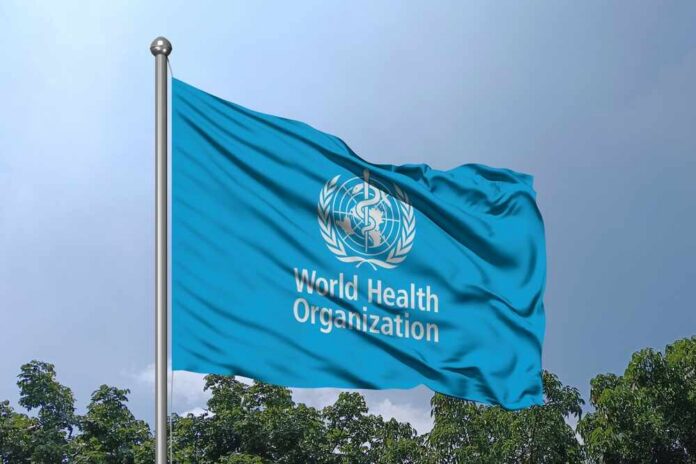
On 17 May, after consulting affected countries, the WHO Director-General formally declared the outbreak a “Public Health Emergency of International Concern.” This is the highest global alarm under international health rules, meant to rally money, supplies, and staff across borders. WHO judged the risk as high inside Congo and across the African region, but still low at the global level, so it advised against broad travel bans or border closures. This quick declaration stands out, because past Ebola emergencies in West Africa and eastern Congo took months before receiving this status.
Speed, Spread, and the Claim of ‘Faster Than Any Earlier Outbreak’
WHO officials and major media outlets say this epidemic is spreading faster than any earlier Ebola outbreak in Congo’s history. United Nations news reported 1,094 confirmed cases and 277 deaths only weeks after the emergency declaration, warning that the outbreak was “moving fast” and outpacing the response. France‑based coverage later cited more than 2,000 cases and nearly 800 deaths within about two months, calling it the third‑largest Ebola outbreak on record. Africa’s past big Ebola crises — like the 2014 West Africa and 2018–2020 North Kivu‑Ituri outbreaks — took far longer to reach similar numbers.
Still, the dramatic phrase “faster than any earlier outbreak” is not backed by clear public data comparing how quickly cases doubled over time. WHO and regional health agencies publish total case counts and deaths, but they do not release detailed charts that show day‑by‑day growth against earlier outbreaks. The European Centre for Disease Prevention and Control has warned that there are “significant gaps” in surveillance and epidemiology, meaning the true number of infections and the real speed of spread are uncertain. Without stronger data, the speed claim reflects urgent concern more than a proven scientific comparison.
A Dangerous Virus With No Vaccine and Few Tools
One reason this outbreak scares doctors and families is simple: there is no licensed vaccine or specific drug approved for Bundibugyo Ebola. For the Zaire strain, scientists developed successful vaccines and treatments during the 2014 and 2018 outbreaks, which helped save lives and earn trust in some communities. For Bundibugyo, WHO and partners are only starting to test antibodies and antiviral drugs like obeldesivir in new clinical trials, so those tools are not ready for wide use. Frontline care teams must rely on basic measures: fluids, fever control, and strict infection control to protect staff and patients.
This reality fuels anger and doubt among people who already believe global elites care more about politics than public safety. Health experts, including Ebola survivor Dr. Craig Spencer, have said openly that “no treatment or vaccines” exist yet for this strain, even as WHO uses strong language about the emergency. For citizens on both the right and the left, it can feel like the system failed to prepare for a known threat after decades of Ebola outbreaks in Congo. The virus first appeared in 1976, and this is now the country’s 17th recorded Ebola outbreak, yet some communities still lack basic clinics, electricity, or clean water.
Conflict, Weak Systems, and a World Pulling Back
Local conditions make this crisis even harder to control. Ituri Province has faced violent militia clashes and deep mistrust of authorities for years. Health workers must travel on unsafe roads, and some clinics have shut down or gone on strike because they are not being paid. This chaos makes it easier for the virus to spread silently in villages and crowded towns. It also feeds the belief among ordinary people that both their own government and global bodies like WHO are not truly on their side.
Responding to questions on why @WHO has not declared the Ebola outbreak a global public health emergency, Anaïs Legand, Technical Officer at the WHO Health Emergencies Programme, explained that the decision is guided by the International Health Regulations and recommendations… pic.twitter.com/5wSA8wmeTO
— Nigeria Health Watch (@nighealthwatch) July 16, 2026
At the same time, global support is thinner than during past Ebola emergencies. The United States once played a major role through the United States Agency for International Development and strong support for WHO, sending staff, equipment, and funding. Under current “America First” policies and cuts to international programs, that backing has shrunk. Experts warn this creates a gap in outbreak response capacity just as cases are rising and crossing borders. For conservatives, this may look like proof that global groups relied too much on U.S. money and failed to build local strength. For liberals, it seems like another sign that the rich and powerful dodge responsibility while poorer countries pay the price.
Why This Matters Beyond Africa
This outbreak might feel far away, but it exposes deeper problems that many Americans already sense. WHO now raises alarms faster, yet it still struggles to share full data and secure enough funding. Countries argue over money and power, while viruses cross borders without asking permission. People on both sides of the political divide see the same pattern: leaders talk tough, but hospitals lack staff, supplies, and reliable labs. That gap between words and actions is where distrust grows.
For citizens worried about “deep state” elites, this crisis shows how complex global health politics really are. WHO needs to act quickly when it sees cross‑border spread and no available tools, but its most dramatic claims should be backed with hard numbers. Strong, transparent data on how fast this Ebola strain spreads, how deadly it truly is, and how well new treatments work would help rebuild trust. Until then, ordinary people in Congo, Uganda, and beyond are left to face a deadly virus while arguing governments and global institutions struggle to catch up.
Sources:
insiderpaper.com, who.int, afro.who.int, ecdc.europa.eu, npr.org, bestpractice.bmj.com, forbes.com, gov.uk, nature.com, stacks.cdc.gov, cdc.gov, pmc.ncbi.nlm.nih.gov, ippapublicpolicy.org, wooleyrhinoresearch.com