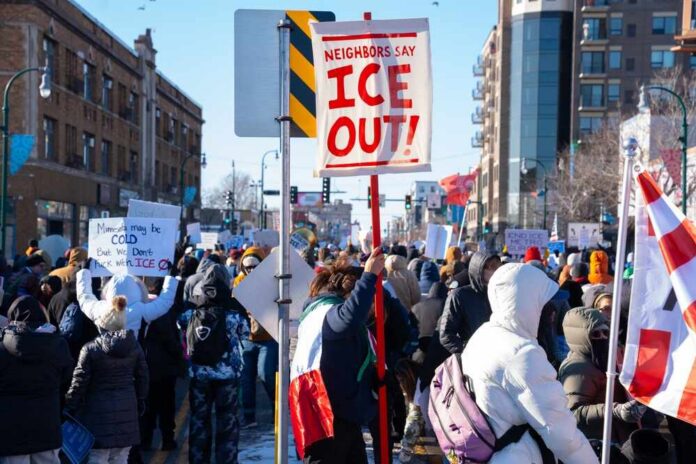
New York City’s mayor is openly calling a federal law enforcement agency “cruel,” “rogue,” and beyond reform — and demanding it be shut down while a deadly clash between agents and a driver in Maine fuels a nationwide fight over who really keeps Americans safe.
Story Snapshot
- Mayor Zohran Mamdani says Immigration and Customs Enforcement (ICE) is a “rogue agency” that fails its public safety mission and should be abolished.
- He argues masked ICE raids are “cruel and inhumane,” spread fear in immigrant neighborhoods, and tear apart families without making cities safer.
- His stance sparked fresh outrage after ICE agents shot a man in Texas and amid reports that a driver tried to ram agents in Maine.
- Dozens of mayors nationwide are now moving to block or restrict ICE operations in their cities, setting up a direct clash with President Trump’s federal government.
Mamdani’s Case Against ICE as a ‘Rogue’ Agency
New York City Mayor Zohran Mamdani has turned up the volume on his demand to abolish Immigration and Customs Enforcement, saying the agency “has no interest in fulfilling its stated reason to exist.” He tells national TV audiences that ICE is supposed to protect public safety but instead “terrorizes people” and rips families apart regardless of their actual legal situation. In speeches and interviews, he brands ICE a “rogue agency” that abuses power, violates rights, and operates with almost no accountability.
Mamdani points to images of masked agents in tactical gear dragging people from cars, homes, and even hospital beds as proof that enforcement has gone off the rails. He says these tactics are “cruel and inhumane” and insists that they “do nothing to serve in the interest of public safety.” To many New Yorkers who fear surprise raids at work or at school, he argues, ICE looks less like law enforcement and more like a secret police force that answers mainly to political orders from Washington.
Deadly Incidents and a Growing Mayor-Led Rebellion
Mamdani’s latest push came after an ICE-related fatal shooting in Houston, where agents killed a man during an operation, prompting him to declare there is “no way to reform this kind of cruelty.” Earlier deaths linked to federal immigration agents, including cases in Minneapolis and along the border, helped shape his view that these are not rare mistakes but part of a broader pattern of excessive force. His comments landed in the middle of a heated national debate, as reports emerged that a driver in Maine tried to ram ICE agents with a vehicle, further escalating tensions around immigration enforcement and public trust.
New York’s mayor is not alone. Mayors in Chicago, Los Angeles, and other major cities have echoed calls to abolish ICE or cut off its funding after controversial shootings and raids. A growing bloc of city leaders from both parties has issued statements blasting “unchecked and reckless” ICE operations and urging Congress to halt new money for the agency until force incidents are fully investigated. In practice, these leaders are pushing local policies that block ICE from city jails, schools, and hospitals unless agents present a judicial warrant, turning immigration enforcement into a front-line battle between city halls and the federal government.
Sanctuary Policies, Public Safety, and Fear in Communities
To back his argument, Mamdani leans on research that shows aggressive immigration enforcement can scare crime victims away from calling the police. One national study found that when local police worked closely with federal immigration programs, Hispanic victims were less likely to report crimes and their victimization increased. Other research on local-federal enforcement deals found mixed or weak evidence that these programs reduce overall crime, raising doubts that heavy-handed tactics actually make neighborhoods safer.
At home, Mamdani has signed executive orders and backed city laws that make New York a stronger “sanctuary” city, sharply limiting when local agencies can share information or cooperate with ICE. He has ordered that ICE may not enter city property such as schools, shelters, and hospitals without a judge’s warrant. He says this is about defending the rule of law and basic dignity, not about ignoring crimes. His message to ICE agents is blunt: if you violate the law, “you must be held accountable,” just like everyone else.
Deep State Fears, Trump’s Agenda, and a Broken Trust
Under President Donald Trump’s second term, ICE has ramped up its enforcement pace and toughness, including more frequent raids and more cooperation deals with local law enforcement. Supporters say this is needed to remove dangerous criminals and enforce immigration laws that Congress passed. But critics like Mamdani claim the real goal is to build a political story of being “tough” on immigrants, not to fix the deeper problems in the system. They argue that billion-dollar budgets for ICE have grown even as the share of detainees with serious criminal records has fallen, suggesting resources are used to chase low-level cases while violent crime and drug trafficking remain serious problems.
The voice of New York speaks!
“Abolish ICE” – Zohran Mamdani Trashes ICE, Defends Man Who Attempted to Ram Agents in Maine * The Gateway Pundit * by Jordan Conradson https://t.co/ZiyuIE8Ohb
— DrunkLeprechaun (@HerbertLadin) July 14, 2026
For many Americans on both the right and the left, this fight feeds a wider fear: that powerful federal agencies act like a “deep state,” serving elites and political talking points more than ordinary people. Mamdani’s attacks on ICE tap into that anger by showing masked agents disrupting hospitals and city streets while Washington debates talking points on cable news. At the same time, many conservatives see calls to abolish ICE as proof that some city leaders care more about shielding illegal immigrants than about protecting citizens, which deepens the sense that the federal government has lost control of its basic duties.
What Comes After ‘Abolish ICE’?
Even among critics, there is no simple plan for what should replace ICE. Some policy experts and city leaders argue for a new, narrower agency focused only on serious cross-border crime, with strict rules on the use of force, full transparency, and required body cameras for all agents. Others call for moving most immigration work to civilian offices that handle visas and legal status, leaving only a small unit to deal with real threats. For now, Mamdani’s demand is clear: stop the raids, end the fear, and build an immigration system where “humanity” is at the heart, not an afterthought.
What remains unsettled is whether Washington will listen. With Republicans in control of Congress and President Trump defending ICE as a key part of his “America First” agenda, the odds of abolishing the agency anytime soon are low. But the growing wall of resistance from mayors, research questioning the safety benefits of harsh enforcement, and public frustration with federal power all point to one reality: the fight over ICE is really a fight over who the government serves — and whether ordinary Americans still have a say when powerful agencies decide how hard the law will hit their communities.
Sources:
youtube.com, nyc.gov, abcnews.com, bloomberg.com, washingtonexaminer.com, nypost.com, foxnews.com, usatoday.com, jeelani-law.com, rand.org, ojp.gov, prb.org, bostonglobe.com, washingtonpost.com