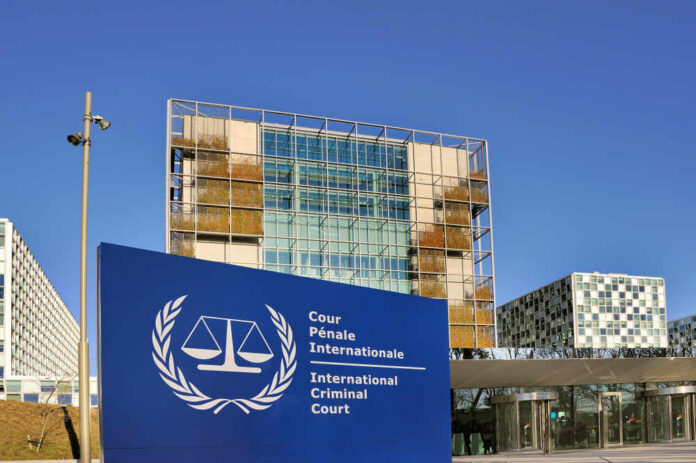
For the first time, Washington is using financial warfare to punish foreign judges simply for putting Americans and U.S. allies under investigation.
Story Snapshot
- The Trump–Rubio team has sanctioned at least 11 International Criminal Court officials, including judges and prosecutors, over cases touching U.S. troops and Israeli leaders.
- The White House says the court has “no jurisdiction” over Americans or Israelis and calls its actions against them “illegitimate and baseless.”
- The sanctions freeze assets in the United States, block business with American companies, and restrict travel to the country for targeted court officials.
- Supporters see a defense of national sovereignty; critics warn this is an attack on judicial independence that deepens distrust in global institutions.
Rubio’s Sanctions Campaign Against the International Criminal Court
Secretary of State Marco Rubio has turned up the pressure on the International Criminal Court by wielding U.S. sanctions against its top officials. Under Executive Order 14203, first signed by President Donald Trump, Rubio has designated judges and prosecutors whose work touches U.S. forces in Afghanistan or Israeli leaders tied to the Gaza war. The U.S. government says these figures crossed a line by trying to investigate or prosecute Americans and Israelis without consent, and it labels their actions “illegitimate and baseless.”
Rubio’s June and December sanctions rounds hit judges Solomy Balungi Bossa, Luz del Carmen Ibáñez Carranza, Reine Adelaide Sophie Alapini-Gansou, Beti Hohler, Gocha Lordkipidze, and Erdenebalsuren Damdin. The State Department tied some directly to authorizing the Afghanistan investigation and to approving arrest warrants for Israeli Prime Minister Benjamin Netanyahu and former Defense Minister Yoav Gallant. Their assets in the United States are frozen, and American citizens and companies face penalties if they do business with them. In everyday terms, their bank accounts, credit cards, and even tech services linked to U.S. firms can be cut off.
Executive Order 14203 and the U.S. Sovereignty Argument
Executive Order 14203 is the legal tool behind this campaign. Trump’s order authorizes asset freezes and travel bans on anyone who helps the International Criminal Court investigate, arrest, detain, or prosecute U.S. officials or certain allied officials, including Israelis. A White House statement makes the core claim clear: because the United States and Israel never joined the court’s founding treaty, the Rome Statute, the court “has no jurisdiction” over their nationals. This builds on the American Servicemembers’ Protection Act of 2002, which was passed by Congress to block court authority over U.S. troops abroad.
Many Americans on the right and left hear this and see a familiar pattern. They feel global bodies often ignore U.S. voters while targeting American service members and allies, all while the federal government fails to fix problems at home. Supporters of the sanctions believe Washington has a duty to shield troops and commanders from what they view as politicized “lawfare” by distant elites in The Hague. Critics respond that refusing outside scrutiny looks like asking for a blank check to wage war without consequence, especially when past conflicts have left civilians dead and angry.
How the International Criminal Court Claims Jurisdiction
The International Criminal Court tells a very different story about its authority. Its founding treaty says the court can act when war crimes, crimes against humanity, or genocide occur on the territory of a country that has joined the court, even if the accused person’s home country did not sign. Afghanistan has been a State Party since 2003, and Palestine joined in 2015, so the court argues it can investigate foreign nationals for acts committed there, including Americans or Israelis. Legal scholars say this model does not impose treaty duties on the United States itself but relies on territorial consent from member countries.
Under the court’s rules, its role is supposed to be “complementary” to national courts. That means it steps in only if a country is unwilling or unable to genuinely investigate and prosecute possible crimes. From the court’s view, if national systems shield powerful figures or refuse serious probes, its judges have a duty to act. U.S. officials reply that American military and civilian courts are functioning and have investigated wrongs in places like Afghanistan, so they see outside review as an insult and a threat. Both sides claim to defend justice, but they disagree sharply on who gets the last word.
Global Backlash and the Deep State Debate
United Nations human rights experts and many allied governments have condemned the U.S. sanctions, warning they undermine the court’s independence and justice for victims. The International Criminal Court itself says Washington’s measures are a “blatant assault” on judicial autonomy and could scare judges away from tough cases. Former court officials in Europe are now urging the European Union to pass laws that shield judges from U.S. financial pressure. To them, letting one country punish foreign judges for doing their jobs opens the door for every powerful government to bully courts when rulings cut against its interests.
BREAKING: “TRUMP WANTS TO BE ABLE TO COMMIT WAR CRIMES ON THE TERRITORY OF COUNTRIES THAT HAVE ACCEPTED THE COURT’S JURISDICTION – THAT’S WHAT THIS IS ABOUT."
The US State Department has launched a plan to “disable” and “dismantle” the International Criminal Court (#ICC), which… pic.twitter.com/r2KeFVNNep— franya (@franyafranya) July 14, 2026
At home, the clash feeds a broader sense that the system is rigged. Many conservatives see the court as part of a globalist network that targets America while giving rivals a pass, and they cheer Rubio’s vow to “dismantle” it brick by brick. Many liberals worry the same moves protect war makers and defense contractors, not ordinary soldiers or civilians, and they see sanctions as one more sign that elites close ranks when power is at stake. Both sides, in different ways, look at this fight and see a deep state world where unelected actors on all sides play games with justice while regular people pay the price.
Sources:
bbc.com, washingtonexaminer.com, thehill.com, townhall.com, theepochtimes.com, thenationaldesk.com, english.aawsat.com, x.com, icc-cpi.int, legal-tools.org, theguardian.com, justiceinfo.net