On a crowded New Jersey Turnpike, a young couple and one trooper turned an iPhone charger into a life-saving tool to bring a “healthy” baby into the world.
Story Snapshot
- A Jersey City mom delivered her son on the shoulder of the New Jersey Turnpike when labor progressed too fast for her to reach the hospital.
- Her husband and a New Jersey State Trooper helped with the birth and used a phone charger to clamp the umbilical cord until medics arrived.
- The baby, Archer William Fast, is healthy, and his birth certificate lists mile marker 113.3 on the Turnpike as his official birthplace.
- The dramatic roadside birth highlights growing worries about access to maternity care and the rise of out-of-hospital births across the United States.
Frantic minutes on the New Jersey Turnpike
Kristen and Alex Fast were driving from Jersey City to a nearby hospital when her contractions suddenly became much stronger and closer together. Traffic was heavy on the eastern spur of the New Jersey Turnpike in Secaucus, and Alex realized they were not going to make it in time. He pulled over near mile marker 113.3 and called 911 for help, as his wife was already in active labor in the car. Those minutes turned a routine drive into a fight to deliver their baby safely on the roadside.
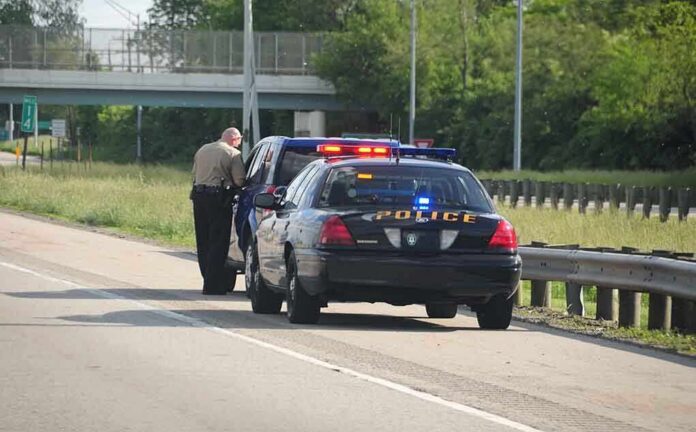
New Jersey State Trooper Freddie Guacamaya was dispatched to the scene and arrived to find Kristen in the final stage of labor. The New Jersey State Police later said that when he got there, the mother was actively delivering, and he helped guide the birth on the side of the highway. Within about 25 minutes of Kristen’s first strong contractions, baby Archer William Fast was born at 12:45 p.m., right there on the shoulder of Interstate 95. For Trooper Guacamaya, it was the first time he had ever delivered a baby.
An improvised cord clamp and a “Jersey boy” story
Once Archer was born, the family still faced one urgent medical problem: the umbilical cord needed to be clamped to stop bleeding until paramedics arrived. Alex and Trooper Guacamaya looked for anything that could work and grabbed an iPhone charging cable from the car to tie off the cord. It was not a sterile medical clamp, but it was tight enough to do the job in that moment. Emergency medical workers soon reached them, took over care, and transported mother and baby to the hospital for full evaluation.
Hospital staff later confirmed Archer was healthy, just three days before his due date. His birth certificate now lists “New Jersey Turnpike I‑95, mile marker 113.3” as his official place of birth, making him, as his mother joked, “as Jersey as it gets.” The family has shared photos and video of the scene, including the handwritten note marking the exact time and location of his birth. Their story quickly spread on local news and social media as an example of quick thinking and teamwork under stress.
Roadside births and a strained maternity system
This dramatic birth fits into a larger pattern of more babies being born outside hospitals in the United States. National data show that out-of-hospital births rose by about 85 percent from 2004 to 2017, reaching about 1.6 percent of all births. Most of these happen at home or in birth centers by choice, but a small share occur in “other” spots, including cars and highways, when labor moves faster than expected. Emergency roadside deliveries like Archer’s remain rare, yet they occur often enough that police and first responders train for them every year.
The rise in out-of-hospital births is happening at the same time many communities face what experts call “maternity care deserts.” These are counties with no hospital offering labor and delivery and no obstetric providers. A recent report found that living in such areas raises the risk of preterm birth compared with counties that have full access to maternity services. When women must travel longer distances to reach a hospital, they are more likely to run into traffic, bad weather, or sudden changes in labor that can turn a short drive into an emergency.
Shared worries about safety, access, and over-medicalization
For many Americans, Archer’s story lands in the middle of two strong feelings about childbirth today. On one side, families worry that the health system is stretched thin and uneven, with rural and low-income areas lacking basic maternity care. They see stories like this and ask why giving birth safely needs luck, a helpful trooper, and a phone charger on a busy highway. On the other side, many women feel hospitals push too many medical interventions, from inductions to surgeries, even when labor is progressing normally.
Research backs up both sets of concerns. Studies show the share of out-of-hospital births is rising, partly because some parents want to avoid what they view as unnecessary procedures and costs. At the same time, medical groups warn that unplanned births outside hospitals can be riskier if complications such as heavy bleeding or problems with the baby’s breathing occur far from advanced care. That tension reflects a broader frustration across the political spectrum: families do not trust that the system will give them safe, respectful, and timely care when they need it most.
Sources:
nypost.com, people.com, nj.com, abc7ny.com, yahoo.com, instagram.com