France’s decision to station combat troops in Finland for a new NATO mission pushes the alliance’s military line deeper into the Arctic, raising fresh questions about security, escalation, and who is really steering Europe’s future.
Story Snapshot
- France will station a battle unit in NATO’s new Forward Land Forces Finland, near the Russia border.
- The mission is led by Sweden and built around a 600-soldier core that can quickly move into northern Finland.
- Finnish leaders call the deployment “historic” and say it deepens defence ties and deterrence in the High North.
- Supporters see protection; critics worry that another troop build-up fuels tension and empowers distant elites.
France’s New NATO Mission on Russia’s Northern Doorstep
French leaders have agreed to send ground troops to a new NATO battle group in Finland, placing French soldiers much closer to Russia than ever before. This force will join NATO’s Forward Land Forces Finland, a multinational group set up after Finland joined the alliance and brought a 1,340-kilometre border with Russia under NATO’s umbrella. The French unit will rotate into the area of operations in Lapland and work under a Swedish-led command, focused on the High North’s cold, remote terrain.
According to a joint statement from Finland, Sweden, and France, Paris will contribute a full battle unit that is fully integrated into the Forward Land Forces structure. The plan is not for a one-time visit but for recurring rotations, meaning French troops will become a regular part of NATO’s presence in the region. France will also help train “critical enablers,” such as logistics and communications teams, which keep a modern force moving and connected across long Arctic distances.
How Finland and Sweden Changed NATO’s Northern Strategy
Finland’s NATO membership in 2023 and Sweden’s in 2024 forced alliance planners to rethink the entire northern defence map. Finland added a huge land border with Russia, while Sweden gave NATO new reach over the Baltic Sea and Arctic air and sea routes. NATO responded by creating Forward Land Forces Finland in June 2026, its ninth multinational battlegroup, with Sweden as the “framework nation” in charge of the mission’s core structure and planning.
The heart of Forward Land Forces Finland is a 600-soldier Swedish unit based in Boden, a northern Swedish city positioned to move quickly across the border to Rovaniemi in Finland when needed. Other allies—including the United Kingdom, Nordic countries, Italy, and now France—have signalled they will add troops and capabilities over time. NATO says these battlegroups along the eastern and northern flanks are meant to deter attacks by showing that any move against one state will trigger a joint military response.
France Deepens Its Nordic Role After a “Historic” Trial Run
Before signing on to the new battle group, France tested its role in the region with a long deployment of about 180 soldiers from its 27th Mountain Infantry Brigade to Finland from late February to early June 2026. Finnish Army officials called that mission “historic” and said it laid the foundation for deeper defence cooperation and better ability to fight together on Europe’s northeastern flank. That earlier deployment helped French troops learn Finland’s harsh winter conditions and rugged terrain, which matter in any Arctic conflict.
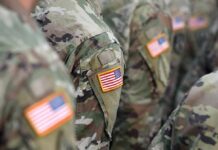
During the same period, large NATO exercises brought thousands of troops from France, the United States, the United Kingdom, Poland, Italy, and Hungary into Finland’s forests for combined training. These drills aimed to prove that forces from many nations can communicate, move, and fight as one group despite different languages and equipment. France has also signed security agreements with Nordic partners and is exploring ways to link its nuclear deterrent more closely with their defence plans, signalling a long-term political and military commitment to the region.
Deterrence, Escalation, and Public Doubts About Elites
NATO leaders say Forward Land Forces Finland strengthens deterrence, but they do not release clear public metrics that show exactly how much safer the region becomes. Neither Finland nor NATO has shared a specific threat assessment that explains which Russian units, weapons, or tactics this French deployment is designed to counter. The mission’s detailed tasks, such as rules of engagement or exact defence scenarios, remain classified or simply undisclosed to the public.
France has announced that, alongside Finland and Sweden, it will contribute troops to NATO's Forward Land Forces rotations in Finland, reinforcing security in the High North. The deployment reflects NATO's continued efforts to strengthen its northern flank following Finland and…
— Peace Maker (@princezar) July 8, 2026
Many experts and media voices have long warned that each new NATO troop build-up near Russia can be seen in Moscow as a provocation, not just a shield. This pattern has repeated across multiple Nordic and Baltic exercises, where one side talks about deterrence and defence while critics speak of escalation and arms races. At the same time, political fights inside France and United States plans to reduce some troop numbers in Europe raise doubts about how stable these northern deployments will be in the long run.
Sources:
insiderpaper.com, nordicdefencesector.com, lieber.westpoint.edu, nato.int, reddit.com, youtube.com, facebook.com