Two crucial columns inside a massive Midtown Manhattan tower buckled and left several floors sagging, turning one of New York’s biggest luxury conversion projects into a sudden warning sign about how far profit-driven development can push aging buildings before something snaps.
Story Snapshot
- Two support columns buckled around the 21st floor of the former Pfizer headquarters, causing floors 21–26 to sag and leaving the high-rise at risk of a partial collapse.
- Officials evacuated the tower and at least seven surrounding buildings, including a school, and set up a collapse zone; no injuries have been reported.
- The building is in the middle of one of New York City’s largest office-to-residential conversions, raising questions about whether safety is keeping up with new high-rise profit plans.
- The exact cause of the failure is still unknown, and local leaders admit the building continues to move, deepening public concern over oversight and enforcement.
What Went Wrong Inside the Midtown Tower
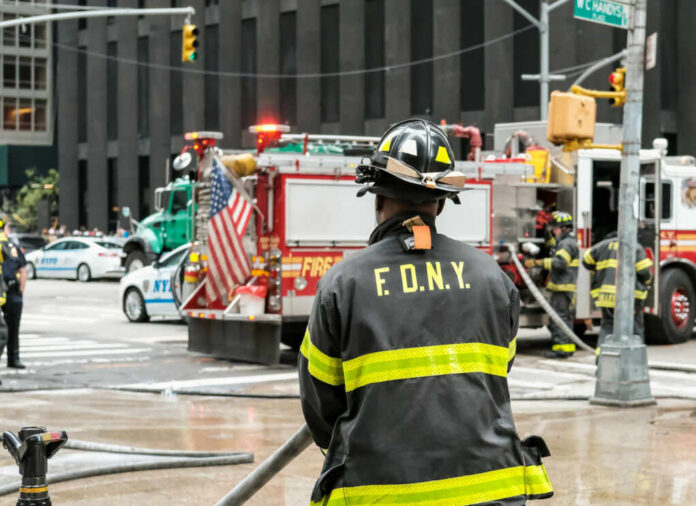
On Tuesday morning, construction workers inside 235 East 42nd Street noticed cracking sounds and saw steel supports starting to bend on the 21st and 22nd floors. They called for help and cleared the site before the damage spread. When firefighters arrived, they found two major structural columns had buckled and several floors above were starting to sag under the weight. A union steamfitter later said key beams were “bending like cigarettes,” showing how close the structure came to a serious failure.
New York City Fire Department officials set up a collapse zone as they realized the risk was not just cosmetic damage but a possible partial collapse inside the frame of the building. Floors from the 21st up through roughly the 26th level were reported to have sagged or cracked, suggesting the load-bearing system in that section had been pushed beyond what it could safely carry. Drone images and on-site readings showed continued movement in at least one compromised column hours after the first alarm, meaning the danger had not passed.
Evacuations, Emergency Response, and Public Safety
Mayor Zohran Mamdani and fire officials ordered a full evacuation of the tower and nearby buildings soon after the call came in just before 8 a.m. Streets around East 42nd Street between Second and Third Avenue were closed to both cars and pedestrians as crews worked to secure the area. Reports from city leaders and local media said at least seven to nine neighboring structures were cleared out, including a hotel and a school with more than 400 children, all moved out before any injuries occurred.
Fire Chief John Esposito told reporters the building had “started to bend and deflect from the weight” and had continued to move even after crews reached the scene. Because the motion was limited to a certain part of the frame, he said officials were mainly worried about a localized collapse instead of the entire tower coming down. Even so, more than 150 firefighters and emergency medical workers were deployed, and engineers began planning how to shore up the damaged floor before allowing anyone back inside.
A Huge Office-to-Residential Conversion Under Scrutiny
The incident did not happen in an old, quiet office block. The tower was once the headquarters of pharmaceutical giant Pfizer and is now in the middle of one of New York City’s largest office-to-residential conversion projects. Under active permits, the developer is adding new stories and reshaping the interior layout to create around 1,600 apartments, which makes the project both highly valuable and structurally complex. This mix of heavy new loads and older systems is what worries many engineers and neighbors.
In New York City, officials warned a high-rise under construction was at risk of collapsing, prompting the evacuation of surrounding buildings.
Video from some 20 floors up shows beams completely buckled, and officials reported that floors inside were sagging.
Crews rushed to… pic.twitter.com/pvH9H0DU89
— PBS News (@NewsHour) July 7, 2026
Past building failures show this kind of risk is not just a freak event. In the Ronan Point disaster in 1968, a tower was extended far beyond its original design without enough backup load paths, and a small gas explosion triggered a deadly collapse. Experts now point out that when older office buildings are stretched taller, widened, or loaded differently for apartments, the margin for error gets thin if every beam and column is not checked and reinforced for today’s demands.
Profit, Oversight, and the Deepening Trust Gap
City records show only a handful of earlier violations and fines tied to this huge and complex project, raising questions among both conservatives and liberals about how tough regulators really are on well-connected developers. Many New Yorkers already feel the system gives big projects a pass while regular people face strict rules and high costs. Seeing a major conversion shaken by buckling columns feeds the belief that safety reviews can take a back seat to speed and profit.
Media outlets and union voices are now asking whether cost-cutting or aggressive design choices played any role, but officials have not yet named a clear cause. Engineers still need to complete a full forensic review of the steel, the load calculations, and the construction methods. For citizens watching from the sidewalk or on live streams, this delay reinforces a wider fear: that the people running big projects and the agencies meant to watch them are part of a closed club, slow to admit mistakes until disaster is right at the door.
What Comes Next for New Yorkers and High-Rise Safety
To restore trust, many experts say the city will need more than a quick fix to this one building. A transparent, independent engineering audit could confirm how close the tower came to collapse and what must change in design rules for future conversions. Releasing the full drone data, structural reports, and safety decisions would also help the public see whether the response was guided by facts or politics.
For now, the damaged tower stands empty near Grand Central Terminal, a tall reminder of the gap between what leaders promise and what residents feel. New Yorkers on both the right and the left share one clear question: if columns in a flagship Manhattan project can buckle without warning, how many other aging towers are being pushed past their limits while officials tell everyone not to worry? That question will not go away when the streets reopen.
Sources:
youtube.com, facebook.com, instagram.com, abcnews.com, washingtonpost.com, fox5ny.com, reuters.com, sciencedirect.com