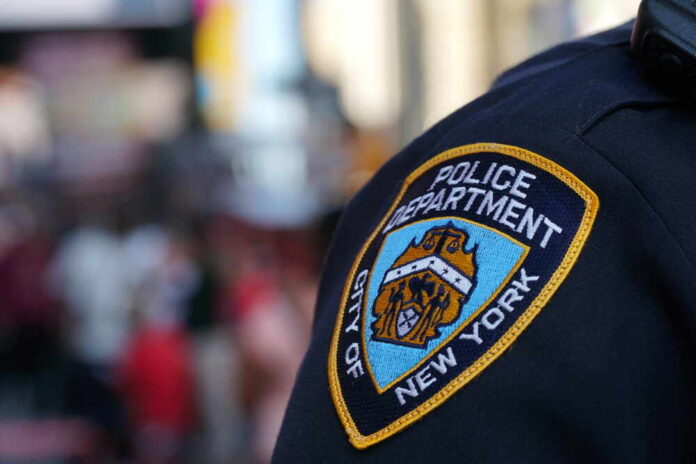
A masked man pulling what appeared to be a gun during Friday prayers at a New York City mosque quickly shifted public attention from the frightening incident itself to a debate over whether it should be investigated as a hate crime.
Story Snapshot
- A masked man pulled a BB gun during Friday prayers at the Muslim Center of New York, causing panic among worshippers.
- A Muslim congregant tackled the suspect and took the gun away; no shots were fired and no one was hurt.
- Politicians and activists quickly argued over labels, with some calling it Islamophobic and others insisting the suspect was himself Muslim.
- No official records have yet confirmed the suspect’s identity, motive, or religious affiliation, leaving key questions unanswered.
What Happened Inside the Queens Mosque
During Friday prayers at the Muslim Center of New York in Flushing, witnesses say a masked man entered the mosque while the imam was giving the sermon and began to pull a gun from his pocket. Worshippers later learned the weapon was a BB gun, but in that moment they did not know it was fake. One Muslim worshipper noticed the threat, rushed toward the suspect, tackled him, and wrestled the gun away. The mosque went into a brief lockdown while people tried to understand what was going on and protect the women’s area. New York City Police Department officers arrived within minutes and arrested the suspect, and reports say no one was injured and no shots were fired.
Community posts describe real fear in the room as worshippers saw a masked person with what looked like a firearm in a sacred space during the holiest weekly prayer. A New York Daily News summary, echoed in social media screenshots, says the masked man “sparked a panic by pulling a BB pistol” in front of dozens of worshippers. Social media posts from community members described widespread fear following the incident, although they do not independently establish the underlying facts. These accounts show a pattern: the focus from those inside was safety and relief, not politics, at least in the first hours after the event.
The Fight Over Whether It Was a Hate Crime
After the incident, public debate moved quickly from “what happened” to “what to call it.” Some leaders and activists framed the event as an Islamophobic hate crime, pointing to the timing during Friday prayers and the use of a gun-like weapon to cause fear in a Muslim house of worship. Supporters of that view argue the incident resembles previous cases in which imitation firearms were allegedly used to intimidate religious communities. Others pushed back, saying there is no evidence of anti-Muslim words, symbols, or prior threats, and arguing that the label “hate crime” should not be used without clear proof of motive.
At the same time, a different narrative spread online. Some social media users, citing unconfirmed details, claimed the suspect, named in posts as Sheikh Haque, was himself Muslim and had been sitting among worshippers before being tackled. These posts implied the incident was an internal dispute or personal crisis, not an outside attack on Islam. But no official arrest record or verified police statement has been released to confirm the suspect’s identity or religious background. That means both sides are arguing over motive and labels before the public has hard facts about who the man is or why he acted.
How BB Gun Incidents Fit a Bigger Pattern
This incident is not the first time a New York City mosque has faced fear from non-lethal weapons. In the Bronx, police reported a pellet gun shooter targeting a mosque several times and hitting at least one worshipper, forcing officers to shield the building. Another case involved a sniper using a BB gun to fire at a Bronx mosque, leading the New York City Police Department to park a large bus outside as protection. In both of those cases, early reports said the mosque was being “targeted,” but did not clearly prove an ideological motive.
The person who did this was most likely a Muslim himself. The Mayor’s post clearly implies otherwise.
——• The claim is accurate: The man arrested for pulling a BB pistol during Friday prayers at the Muslim Center of New York in Queens on July 4, 2026, was Sheikh Haque, 33,…
— Rohin Hattiangadi (@RohinHat) July 6, 2026
These examples matter because they show how often communities now face threats that sit in a gray zone. The weapon looks real enough to create panic. The target is clearly a religious minority space. Prosecutors often require evidence of bias motivation—such as statements, writings, or other evidence—before pursuing hate crime charges. At the same time, lawmakers in New York have moved to tighten rules on BB and pellet guns, treating them more like imitation firearms after several incidents linked them to public fear and crime. That debate over regulation adds another layer of tension between citizens and the state over safety, rights, and trust.
Why This Dispute Fuels Distrust in Government and Media
For many Americans watching from the outside, the Queens mosque incident looks like another example where regular people face danger while officials argue over words. Worshippers saw a masked man with a gun-like object in a house of prayer. A brave congregant stopped him. Police arrested him. Yet days later, the public still does not know the suspect’s verified identity, motive, or mental state because key records have not been released. That kind of silence feeds a belief on both the left and the right that authorities hide information to protect themselves or avoid hard conversations.
Some Muslims worry that if leaders refuse to call this kind of event a hate crime, then threats to their safety will be downplayed. Some conservatives worry that politicians use the hate crime label loosely for headlines while failing to fix deeper problems like mental health crises, policing standards, or the breakdown of social norms. Both sides share a deeper frustration: they see a system where leaders rush to shape narratives instead of calmly providing facts and solutions. As investigators release additional verified information, the public will be better able to evaluate what happened and whether criminal bias played a role.
Sources:
twitchy.com, facebook.com, instagram.com, youtube.com, cbsnews.com, abc7ny.com