Congress is now weighing a warrant rule for federal access to Flock camera data after courts and counties signaled the dragnet may cross a constitutional line.
Story Snapshot
- Rep. Keith Self proposed a bill to require warrants before federal agents query Flock and similar systems.
- A Supreme Court ruling on geofence warrants sharpened legal doubts about bulk location searches.
- Genesee County, Michigan moved to require warrants for any federal access to its Flock data.
- Flock argues roadway scans are public and usually deleted within 30 days, so no warrant is needed.
What changed: Congress and courts are tightening the guardrails
Republican Representative Keith Self introduced the Protecting Rights in Video and Equipment Acquired Discovery Act. The bill would force federal law enforcement to get a warrant before accessing or querying data from local surveillance systems, including automated license plate readers such as Flock cameras. The proposal follows a recent Supreme Court decision that said geofence warrants count as a search under the Fourth Amendment. That ruling raised questions about other broad location queries.
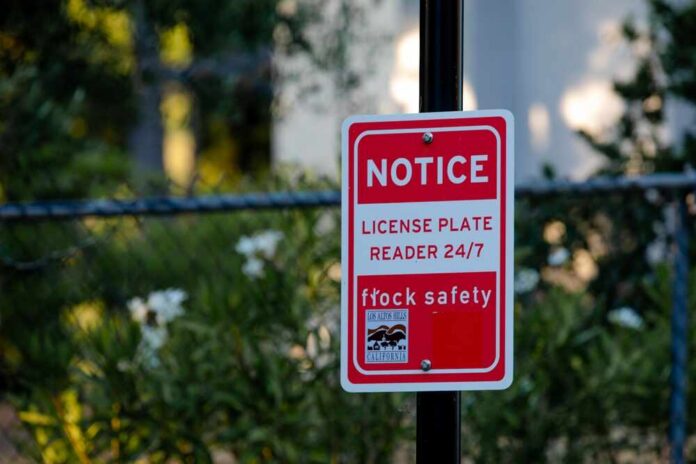
Genesee County, Michigan debated new limits on its 30 Flock cameras. County leaders considered rules that say any federal agency must obtain a warrant to access the local data. The package also included notice and data-sharing controls for outside requests. These steps show local officials are not waiting on Congress. They are setting terms now to avoid silent, backdoor access that can undermine trust across communities.
Why this matters: location history can reveal your life
The Supreme Court’s geofence ruling rested on a simple idea. When police pull large sets of location data, the request can map a person’s private life in ways a single street view does not. The Court treated that kind of bulk search as a protected event that needs a warrant. Civil-liberties groups make a similar case about plate reader databases. They argue that combining many road scans creates a history of where people go, worship, work, and seek care.
Critics say federal agencies can ride along with local networks and avoid a judge. Reporting has described access pathways across thousands of departments and shared systems, sometimes without individualized court orders. Advocates want a bright-line rule so federal users follow the same warrant standard nationwide. They warn that vendor settings and contract terms should not decide constitutional rights behind closed doors.
The other side: Flock says public roads mean no privacy
Flock states that its cameras take point-in-time images of vehicles on public roads, where courts have said people lack a reasonable expectation of privacy. The company also says most images are never reviewed and are deleted on a regular schedule, with a default 30-day retention period. Supporters of this view argue that quick deletion and public capture reduce the privacy risk, and that warrant mandates could slow urgent police work.
Legal uncertainty remains. Local news coverage notes that there is no clear, nationwide warrant rule for Flock database searches today, even after the geofence case. Some experts say the status is unsettled and will likely turn on how courts compare historical plate searches to other digital tracking tools. Until Congress or higher courts decide, the patchwork will grow as counties and states add their own rules.
What to watch next: rules, audits, and real-world use
Watch whether the House and Senate hold hearings on the Self bill and seek agency logs. Lawmakers could demand details on how often federal officers query Flock data and whether those searches link to warrants. Clear numbers would help the public judge scope and risk. If the data show wide, warrantless queries, pressure will rise to set a uniform federal standard that matches the geofence logic.
Police Are Deploying 60 MPH Autonomous Drones to Read Your License Plate from the Sky
If you thought Flock Safety's Automated License Plate Readers (ALPRs) were deeply invasive when they were just mounted to neighborhood stop signs and hidden inside speed trailers, you might… pic.twitter.com/z9KoURjEax
— Deborah (@Deborah07849071) July 24, 2026
Also watch local contracts. Counties and cities can require warrants, shorten retention, and limit sharing. Those steps would narrow quiet pathways that many people on both the right and the left distrust. For readers who feel Washington listens more to vendors than voters, this fight is a test. The core question is simple: should a database that can trace your daily life be searchable by the federal government without a judge’s order?
Sources:
mrsc.org, cleveland.com, dailycaller.com, thenation.com, data.aclum.org