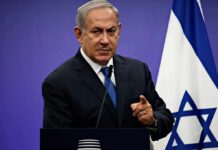
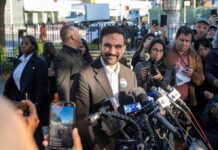
When Zohran Mamdani finally conceded he cannot have Benjamin Netanyahu arrested in New York City, he clarified something larger than a single controversy: the hard boundary between a mayor’s symbolic moral stance and the limited legal authority of local government in the realm of international justice.
Key Points
- New York City Mayor Zohran Mamdani has publicly acknowledged that he lacks any independent legal authority to arrest Israeli Prime Minister Benjamin Netanyahu in New York City.
- Mamdani nevertheless calls Netanyahu a “war criminal” and “architect of a horrific genocide against the Palestinian people,” insisting the Israeli leader is not welcome in New York.
- The city’s law department reviewed “every avenue” and concluded the NYPD cannot execute the International Criminal Court’s arrest warrant for Netanyahu.
- Mamdani has redirected his appeal to the federal government, urging U.S. authorities to enforce the ICC warrant even though the United States is not a party to the Rome Statute and does not recognize the court’s jurisdiction.
- The episode illustrates a recurring pattern in U.S. politics: local officials use expressive, high-profile pledges about foreign leaders that run into constitutional limits, diplomatic immunity, and federal supremacy.
From Arrest Pledge to Public Climb-Down
Zohran Mamdani did not stumble into this dispute by accident. During his mayoral campaign, he pledged to honor the International Criminal Court’s 2024 arrest warrant against Benjamin Netanyahu, promising to seek the Israeli prime minister’s arrest if he came to New York for the United Nations General Assembly. Once in office, he repeated that commitment, telling interviewers he was in “active conversation” with city lawyers about whether New York’s police could detain Netanyahu upon arrival. At that stage, Mamdani presented the question as an open legal problem: whatever New York City law allowed him to do, he said, “that is exactly what we will do.”
Over the following days, his administration put that promise to the test. The city’s Law Department was asked to scrutinize every plausible pathway—invoking the ICC warrant, local criminal statutes, or any overlapping authorities that might conceivably justify arresting a visiting foreign head of government. That review produced a clear answer. In a video posted on social media, Mamdani announced that New York “did not have the independent legal authority to enforce this warrant” and that the NYPD could not lawfully arrest Netanyahu based on the ICC’s order. The mayor’s high-profile pledge had met the brick wall of jurisdictional reality.
The Legal Limits: ICC Warrants, U.S. Sovereignty, and Diplomatic Immunity
To understand why Mamdani’s lawyers reached that conclusion, it helps to unpack the legal architecture that governs arrests of foreign leaders on U.S. soil. The ICC’s warrant for Netanyahu is grounded in the Rome Statute, the treaty that created the court. The United States has never ratified that treaty and officially rejects the ICC’s jurisdiction over its territory and officials. As a result, ICC warrants carry no direct legal force within the U.S.; there is no implementing statute that would authorize American law enforcement to treat ICC process as a domestic arrest directive.
Layered on top of that treaty gap is the federal government’s exclusive control over foreign affairs and the management of diplomatic relations. Arresting a sitting foreign prime minister implicates questions of head-of-state immunity, reciprocity, and international law that are reserved for the national government, not municipal officials. Legal experts quoted across major outlets were blunt: a New York City mayor has “zero law enforcement authority” to order the arrest of a visiting foreign leader, and cannot direct the NYPD or federal agencies to act on an ICC warrant. Even New York’s governor, Kathy Hochul, publicly stated that Mamdani had no power to carry out his threat.
Head-of-government immunity further constrains the terrain. As long as Netanyahu continues to serve as Israel’s prime minister, he enjoys protection under customary international law and U.S. practice, which shield foreign leaders from being prosecuted or detained by host states in routine circumstances. That immunity is not absolute, but any decision to pierce it—especially using the authority of an international court the U.S. does not recognize—would be a federal-level decision, almost certainly requiring congressional action or a dramatic shift in executive policy. The notion that a city could unilaterally make that call simply does not fit the constitutional design.
Mamdani’s Rhetoric: “War Criminal” and “Architect of Genocide”
If the legal analysis circumscribed Mamdani’s operational power, it did not diminish his rhetoric. In the same video where he acknowledged his lack of authority, Mamdani doubled down on his moral condemnation of Netanyahu. Sitting between the flags of the United States and New York City, he looked into the camera and declared: “Benjamin Netanyahu is a war criminal, the architect of a horrific genocide against the Palestinian people.” He went on to say that Netanyahu “is not welcome in New York City, nor is any other war criminal at large.”
These language choices were not incidental. By tying the ICC’s warrant to the vocabulary of genocide and war crimes, Mamdani sought to anchor his stance in the global accountability debate, not merely in local politics. He framed New York’s role as one of refusing complicity—“we cannot end the genocide on our own,” he said, but the city could decide whether its silence “will become another weapon.” In effect, Mamdani turned the impossibility of an actual arrest into a platform for symbolic leadership: if New York cannot physically detain Netanyahu, it can at least deny him the legitimacy of an unchallenged visit.
From City Hall to Washington: Shifting the Demand Upward
Once Mamdani conceded that New York City could not enforce the ICC warrant, he redirected his demand toward Washington. “The federal government, however, does [have authority],” he argued, calling on the U.S. to join the ICC and “execute this warrant.” In that framing, the mayor cast himself as a local advocate for a national policy pivot: ratification of the Rome Statute, acceptance of the ICC’s jurisdiction, and cooperation with its efforts to bring Netanyahu to trial.
Reality again stands in sharp contrast. Successive U.S. administrations—Democratic and Republican alike—have resisted integration into the ICC system, citing concerns about sovereignty, politicized prosecutions, and exposure of U.S. officials and soldiers to foreign tribunals. President Trump has already indicated that his administration has “no plans” to arrest Netanyahu. In other words, the gap between Mamdani’s call and actual federal policy is as wide as the gap between his initial arrest pledge and his municipal powers. But the call itself serves a political purpose: it places moral pressure on national authorities, aligns Mamdani with global human-rights advocates, and signals to his own constituents where he stands.
Expressive Politics Versus Executive Authority
Mamdani’s story is not unique; it fits a recurring pattern in American politics where local officials make declarative, high-salience promises about foreign leaders and international justice that outrun their legal remit. Mayors, governors, and city councils often have strong incentives to engage in expressive politics—statements, resolutions, and symbolic commitments that broadcast moral alignment with global causes. Actual enforcement power, however, remains tightly bounded by constitutional structure: federal supremacy in foreign affairs, statutory limits on arrest powers, and the realities of diplomatic immunity.
Legal commentators have described Mamdani’s initial commitment to arrest Netanyahu as an “unenforceable campaign promise,” precisely because it conflated expressive support for the ICC with concrete operational authority. Once confronted with the constraints, Mamdani performed a familiar maneuver: he publicly recognized the legal limits while amplifying the rhetoric. The arrest is off the table; the condemnation is not. That dynamic—where the symbolic claim survives and even intensifies after the practical pathway is closed—is characteristic of what scholars sometimes call “symbolic enforcement claims”: threats and vows that are politically useful even when they cannot be implemented.
Reactions at Home and Abroad
Unsurprisingly, Mamdani’s stance has drawn both support and sharp criticism. Human-rights advocates and some progressive politicians have echoed his description of Netanyahu as a war criminal and applauded his willingness to invoke the ICC warrant in a domestic political context. Representative allies have leveraged his video as proof that at least some U.S. officials are prepared to articulate charges of genocide and war crimes against Israel’s leadership in plain language.
On the other side, legal analysts have dismissed his original arrest pledge as “utterly ridiculous,” not because they dispute the gravity of the allegations against Netanyahu, but because they view it as a fundamental misunderstanding of municipal authority. Israeli officials, including Israel’s ambassador to the United Nations, have attacked Mamdani’s video as baseless and inflammatory, insisting there is “no legal basis” for him to order Netanyahu’s arrest. Some domestic critics have framed the episode as grandstanding that risks diplomatic friction without any plausible enforcement payoff.
What This Episode Reveals Going Forward
For readers trying to make sense of where this leaves New York, the U.S., and the broader question of international accountability, a few points are clear. First, there is now an on-the-record admission from Mamdani himself that New York City cannot legally arrest Netanyahu or execute the ICC warrant; that question is settled at the municipal level. Second, the ICC warrant exists independently of anything Mamdani says, and it will continue to shape debates about Netanyahu’s travel and international engagement, particularly in states that do recognize the court’s authority.
Third, and most important, the episode underscores how international criminal justice intersects with domestic politics in constrained, often theatrical ways. A mayor can brand a visiting foreign leader a war criminal and declare him unwelcome; he cannot unilaterally convert that judgment into handcuffs. The distance between those two positions is not hypocrisy so much as structure: the U.S. system was built to keep foreign-affairs decisions in federal hands. That structure ensures stability, but it also means that local moral clarity frequently collides with national caution.
In that sense, Mamdani’s climb-down is less an embarrassment than a case study. It shows how far a city can go—reviewing every legal avenue, pushing the envelope rhetorically, refusing symbolic hospitality—without crossing into actions it has no lawful authority to take. For advocates of international accountability, it is a reminder that the path to enforcing ICC warrants in the United States runs through Washington, not City Hall. For voters and observers in New York, it offers a clearer picture of what their mayor can and cannot do when global justice and local politics converge.
Sources:
nypost.com, youtube.com, washingtonpost.com, cnn.com, jpost.com, abc.net.au, foxnews.com, stefanik.house.gov, reddit.com, nytimes.com, timesofisrael.com