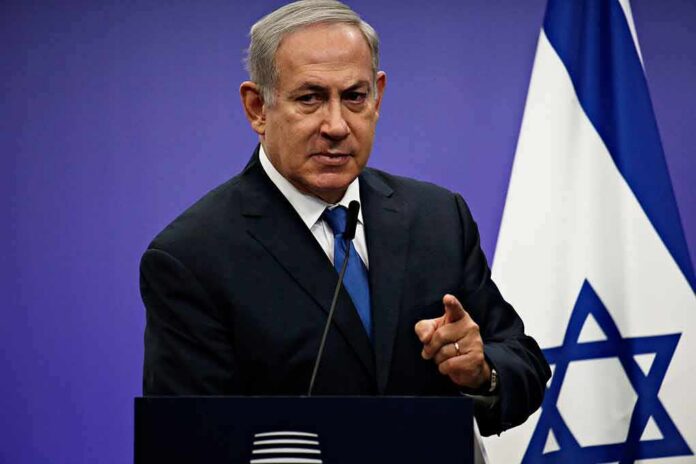
In a tense United Nations hall, Israel’s leader branded Gaza genocide claims “the greatest lie of the century,” and dozens of diplomats walked out as he spoke.
Story Snapshot
- Prime Minister Benjamin Netanyahu denied genocide in Gaza at the United Nations and said Israel acted in self-defense.
- Delegates staged a visible walkout during the speech, showing deep diplomatic rifts over the war.
- Netanyahu cited warnings to civilians, food aid, and vaccinations as proof Israel tried to protect noncombatants.
- Critics, including New York City Mayor Zohran Mamdani, accuse Israel of genocide and cite ongoing legal scrutiny.
What Netanyahu Said And Why It Matters
Prime Minister Benjamin Netanyahu told the United Nations on September 24 that Israel “didn’t commit genocide” but “prevented” one in Gaza, tying the war to the October 7 Hamas attack and wider threats from Iran-backed groups. He framed Israel’s actions as self-defense and said the military aimed at Hamas, not civilians. He also called the genocide charge “the greatest lie of the century,” seeking to reset a debate that now shapes global views of the conflict.
Netanyahu listed steps he said showed civilian protection. He pointed to warnings that urged Palestinians to leave danger zones, and to support that moved food and vaccines into Gaza during fighting. He argued Hamas used hospitals, schools, and mosques for command sites and hid behind civilians, making urban warfare deadlier and slower. These claims seek to answer a central test in genocide debates: whether intent to destroy a group can be shown in words or in deeds that target civilians.
The Walkout And The Battle To Shape Public Memory
Many diplomats left their seats as Netanyahu spoke, a striking image that traveled faster than the policy points in his address. The walkout signaled how isolated Israel can appear in international forums, where outrage often outpaces the slow grind of evidence reviews. Reuters summarized the moment as a “forceful defense” by Netanyahu met by a hostile room, which can tilt public memory toward spectacle and away from the data he cited.
For readers across the spectrum, that contrast feeds a familiar frustration. People see leaders trading charged lines while civilians suffer and institutions stall. Supporters of Israel point to human shields and warnings; critics point to mass casualties and destroyed neighborhoods. Many Americans, left and right, suspect elites use global stages for blame and branding, not solutions. The United Nations scene reinforced that worry: more theater, less clarity about what actually happened on the ground.
Counterarguments And The Legal Cloud
New York City Mayor Zohran Mamdani, one of Netanyahu’s most vocal U.S. critics, said the speech repeated “baseless lies” and argued Israel is committing genocide in Gaza. He has labeled Netanyahu a war criminal and pointed to an International Criminal Court warrant alleging war crimes and crimes against humanity, which, in his view, supports his charge. His stance reflects a wider movement pressing courts, governments, and civil society to punish abuses and halt arms flows.
At the same time, thousands of signatories, including scholars and legal experts, have signed open letters rejecting the genocide label as unsupported by law and evidence. Media coverage shows the information gap is wide. Netanyahu’s cited figures on aid and vaccinations drew attention, but reporters have not verified those numbers in this record. Without public access to military logs, targeting files, and independent audits, both sides argue intent with partial proof, leaving citizens to guess whom to trust.
What To Watch Next
Independent checks would move this debate from slogans to facts. Verified aid and vaccination totals could confirm or weaken Israel’s claims about civilian care. Documented warning timelines and coverage rates could show how many people got out before strikes. Reviews of strike files, including target packets and legal notes, could test whether the military baked civilian protection into decisions. If those records emerge, the argument over intent will shift from podiums to paper.
Why This Fits A Larger American Concern
Americans are tired of powerful people using moral labels while hiding the documents that settle them. They see mass suffering, rising distrust, and leaders who score points instead of fixing problems. Whether you worry most about biased global bodies or about unchecked force in war, the cure is the same: sunlight, records, and independent audits. The United Nations walkout made headlines. The hard proof, if released, would make history.
Sources:
time.com, news.un.org, dw.com, cbc.ca, rmb.reuters.com, newscord.org, reuters.com