

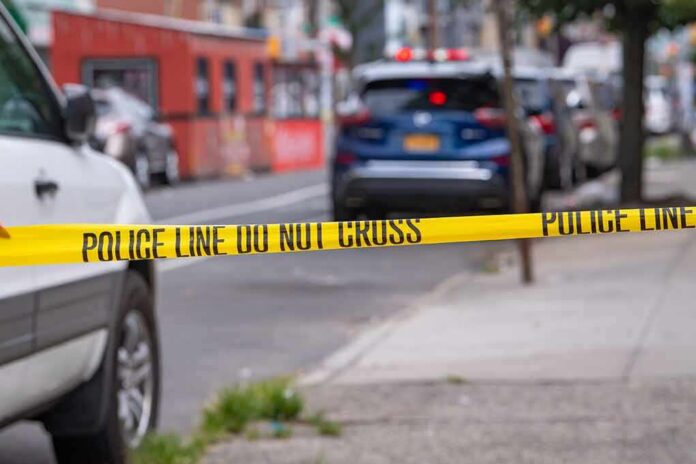
Prosecutors say a Queens mother told 911 “I killed my daughter,” and officers then found the 5-year-old unresponsive with injuries that investigators link to possible asphyxia.
Story Snapshot
- NYPD arrested the child’s mother after a 911 call and a reported admission.
- Police found the 5-year-old unconscious and bleeding inside the family’s Queens home.
- Prosecutors cited preliminary injuries seen in some asphyxia cases; final cause is pending.
- A judge arraigned the mother on a murder charge as the medical review continues.
What Police And Prosecutors Reported Happened In Queens
New York City police said officers rushed to a South Richmond Hill home after a 911 call shortly before 7 p.m. They reported the caller, the child’s mother, said, “I killed my daughter,” according to accounts later described in court and local reports. Officers found 5-year-old Fabiana inside, unconscious and unresponsive, with blood from her nose and mouth. Emergency workers moved fast, but she was pronounced dead after the response. Police arrested the mother at the scene, officials said.
Queens prosecutors charged the mother with murder the next day. At arraignment, they outlined early medical findings from the Office of the Chief Medical Examiner. Prosecutors said the child had facial scrapes and petechiae in the eyes, heart, and lungs. They told the court those findings can appear in asphyxia cases, while stressing the examination was not final. A Queens Criminal Court judge ordered the case forward as the medical review continues and discovery begins.
What The Early Medical Details Show — And What Is Still Under Review
Prosecutors and reporting described injuries beyond facial bleeding. One report cited notes of facial abrasions, petechiae, trauma to the heart and lungs, swelling in the brain, bruises on limbs, and muscle injuries near the shoulder blade and lower back. In court, prosecutors focused on petechiae and related signs that can be seen when the body is deprived of oxygen. The medical examiner had not yet issued an official cause and manner of death at the time of those reports.
Medical literature and training warn that petechiae alone are not proof of asphyxia. Experts teach that such pinpoint bleeding can occur in many settings, including some natural deaths. That is why examiners weigh the full picture: scene evidence, pattern injuries, toxicology, and internal exams. Prosecutors in this case used careful language to reflect that caution, saying the findings can occur in asphyxia cases, not that they prove it by themselves.
How The Case Moves Next Through New York’s Courts
After arraignment on a murder charge, the case heads into standard steps: further lab work, medical examiner updates, and document exchange between the sides. The court will set hearings and review any bail, custody, or protective orders. If prosecutors seek an indictment, a grand jury could hear evidence and vote on formal charges. Defense lawyers may raise mental health or intent issues under New York rules that let evidence of a mental disease or defect speak to a person’s state of mind.
Francis Cabello, 32, — wearing a long white gown and sneakers — stayed mum as detectives led her out of a police precinct and guided her to a waiting car to take her to Queens Criminal Court for her arraignment.
Police charged Cabello with murder Thursday evening, a day after… pic.twitter.com/6E1OAQEJLw
— Crime In NYC (@Crime_In_NYC) October 16, 2026
Families in these cases often face deep grief and public attention before the science is complete. New York courts separate the medical facts from legal standards like intent and responsibility. That takes time. In this case, the mother’s reported 911 statement will likely be a key part of the record. But the final autopsy and any forensic testing will shape how the law views cause, timing, and what actually happened inside that room.
Why This Story Hits A National Nerve
This killing, as charged, sits within a small but painful share of homicides where a parent is accused of killing a child. Research shows filicide has made up roughly 2.5 to 3 percent of homicide arrests over past decades, with most victims age six or younger. Many cases involve hands-on force like strangulation or suffocation. Each event is unique, but the pattern is well known to police, doctors, and courts that handle these tragedies every year.
Readers across the political spectrum share the same core worry here: a system that reacts after harm, not before. Families often see signs of distress but find care that is slow, costly, or confusing. Police answer the emergency call, but they cannot fix the years that led up to it. This is where trust breaks. People see a government quick to talk, but too late to help. Tough, steady work on mental health access and child safety is the path forward, not headlines alone.
Sources:
nypost.com, nytimes.com, nydailynews.com, abc7ny.com, ny1.com, fox5ny.com