
President Trump’s border chief warned Texas’s governor-elect that states cannot open the U.S. border, underscoring a fight over who really holds the power.
Story Snapshot
- Border director Tom Homan said only the federal government controls entry into the United States.
- A federal court filing backs that claim, citing exclusive federal authority over admission and removal.
- Gina Hinojosa says border security is a federal job and denies claiming power to admit migrants.
- The dispute highlights a wider struggle between federal supremacy and state resistance on immigration.
What Homan Said And Why It Matters
Newsmax aired Tom Homan saying, “She has no power to let them cross the border. We control the border,” referring to Texas Governor-elect Gina Hinojosa. He added that unauthorized entrants would be arrested, prosecuted, and deported, and that there would be “zero releases” under the administration’s plan. Homan’s warning speaks to a core public worry: leaders make promises, but real control rests with Washington, not the states. That tension can fuel confusion and anger along the border.
Homan’s comments landed as large migrant groups test the system and as both parties accuse “the elites” of mismanaging the crisis. Many Americans on the right blame past lenient policies and weak enforcement. Many on the left blame harsh tactics and poor planning. Both sides share a view that government is failing to manage the border in a fair, orderly way. Homan’s pledge of “no free ride” aims to show firmness, but it also raises questions about capacity and follow-through.
What The Law Says About Who Controls The Border
The United States argued in federal court that authority to decide who may enter and who must be removed “is vested solely in the Federal government,” citing long-standing law and the Constitution’s Supremacy Clause. Congress’s researchers have also explained that when states pass conflicting rules, federal law usually prevails. Courts have struck down many state measures that intrude on admission, removal, and federal discretion over cases. That record lines up with Homan’s point on who calls the shots at the line.
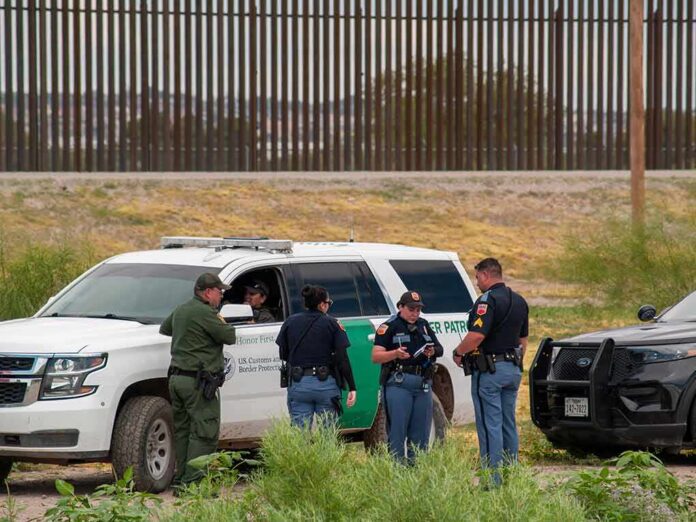
These legal limits do not leave Texas powerless. A governor controls state police priorities and Texas National Guard missions. A governor can choose whether to support or scale back state help for federal operations. But these levers do not allow any state to “open” or “close” a federal border crossing. Federal agents run the ports and patrol between them. That split—state help versus federal authority—has defined the border fight for years, and it often confuses the public about what each level can actually do.
What Hinojosa Says She Will And Will Not Do
Governor-elect Gina Hinojosa says securing the border is a federal responsibility and that she wants more federal resources there. She also says Texas should not help with certain Immigration and Customs Enforcement tactics inside the state. She draws a line between Border Patrol’s job at the border and Immigration and Customs Enforcement’s actions in communities. She says her plan is to keep the border secure while refusing to “facilitate” what she calls chaos from Immigration and Customs Enforcement.
The public record does not show Hinojosa claiming she can let migrants enter the United States. Her statements focus on pulling back state cooperation with some federal enforcement practices while pushing Washington to pay more and staff up. That stance reflects a common state message: help us secure the border, but do not make our taxpayers shoulder the cost, and do not use our agencies for tactics we think go too far. That is a political and policy choice, not an admission policy.
The Stakes For Ordinary Texans And For Migrants
Texans along the border live with the results of federal decisions and state choices. When policies shift, local sheriffs, hospitals, and schools feel it fast. People on the right fear that looser rules invite more chaos and crime. People on the left fear that harsh tactics sweep up families and workers. Both fears grow when leaders talk tough but deliver uneven results. A promise to arrest, prosecute, and deport everyone is hard to meet in a system with limited beds, courts, and officers.
Border Czar Homan Puts Dem Texas Governor-Elect on Notice https://t.co/IP2bTnm2q7
— The Linger Family (@linger_the) November 21, 2026
Clear lines of authority could reduce confusion and abuse. Federal control over entry is settled in law, but states can still help or hinder on the margins. That means coordination matters. It also means leaders must level with the public about what is possible in the near term. Texans deserve order at the border and safety in their towns. Migrants deserve a process that is fast, fair, and firm. Neither goal is met when power struggles replace problem solving.
Sources:
yahoo.com, justice.gov, congress.gov, freep.com, texastribune.org