
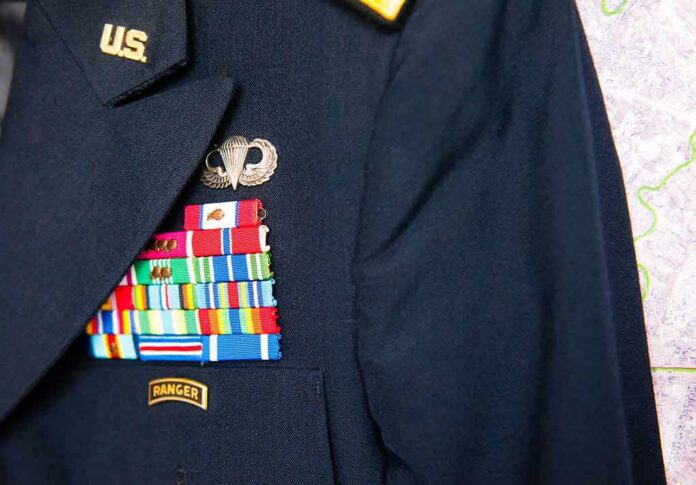
A decorated Air Force major is facing a court-martial after media interviews critical of President Trump were folded into criminal charges, and he is now held alone for most of each day while awaiting trial.
Story Snapshot
- Air Force charged Maj. Jason Watson under Articles 88, 92, and 133; trial set for February 2027.
- Defense says he is isolated 20–23 hours daily with lights on; Air Force disputes “solitary” label.
- Timing: he spoke on CNN while free and was detained the next day, his lawyer says.
- A judge heard arguments to end pretrial confinement; ruling expected in coming weeks.
Charges Tie Speech to Alleged Misconduct
Air Force officials referred Maj. Jason Watson to a general court-martial under Article 88 for contemptuous words against civilian leaders, Article 92 for disobeying orders or regulations, and Article 133 for conduct unbecoming an officer, according to Stars and Stripes. The Intercept reports that prosecutors cited his July 1 protest and two media interviews, including CNN, as part of the case theory. These charges are unusual because they directly link an officer’s public comments to potential crimes under military law.
Article 88 is rare in civilian life but exists in the Uniform Code of Military Justice to protect discipline and political neutrality among officers. Courts have long allowed tighter speech limits for service members than for civilians. That history explains why this case may test the line between punishable conduct and protected criticism inside the ranks. It also shows why people on both the left and right worry when criminal charges appear to include televised speech.
Dispute Over Confinement Conditions
Watson’s lawyer, Chris Mutimer, says his client spends about 20 to 23 hours a day alone, with minimal human contact and lights on day and night, while held at a Maryland county jail under Air Force authority. The Department of the Air Force rejects the “solitary confinement” label and says he is in administrative protective segregation, separated from civilians, with access to the library, chapel, fitness time, medical care, and legal visits. This factual conflict remains unresolved in public records.
NPR-affiliated reporting says Watson did a CNN interview while free and was detained again the next day; the defense argues the timing shows retaliation for his speech. The Air Force points to “continued misconduct” tied to that same interview as its probable cause for renewed detention, framing the move as a legal response rather than punishment. Both claims cannot be true at once, and the full confinement orders and logs are not public, which keeps the core dispute open.
What The Judge Is Weighing Right Now
On November 17, a military judge heard arguments on whether Watson should stay in pretrial confinement and whether conditions are more severe than needed. Stars and Stripes reports the defense sought release, with a ruling expected in the coming weeks. Under military law, pretrial detention cannot be used to punish an accused service member. Conditions must fit a clear need, like risk of flight or new misconduct, not serve as pressure before trial.
Lawyer's take: Service members have fewer speech rights than civilians, but "fewer" isn't "none."
What happened:
An Air Force major is reportedly in pretrial confinement, in near-isolation, awaiting court-martial after publicly criticizing the President and calling for…— Drew Shirley Law (@drewshirleylaw) November 22, 2026
The government’s written rationale, risk findings, and any less-restrictive options have not been made public. The defense says isolation and constant lighting go beyond what policy requires. The Air Force says separation from civilians is mandatory and that Watson retains access to programs and counsel. Clear records from the jail and the Air Force would show who ordered what, and why. Until then, people will fill the gaps with their own mistrust of power.
Why This Case Hits A Nerve Across Politics
Americans across the spectrum see a familiar pattern here: leaders punish speech they dislike while saying “it is just policy.” Conservatives fear a system that once excused riots but now cracks down on dissent. Liberals fear a system that treats criticism of those in power as a crime. Both sides believe elites bend rules to protect themselves. This case touches those fears because it mixes politics, military discipline, and the power to jail before a verdict.
What To Watch Next
Watch for the judge’s ruling on confinement. Look for any move from a county jail to a military brig, which could change conditions and oversight. Read any released charging documents to see how much turns on speech versus concrete acts. Finally, track whether verified records—cell logs, lighting policies, and visitation logs—surface. Documents, not spin, will show if this is lawful segregation or de facto solitary confinement that crosses into punishment before trial.
Sources:
theintercept.com, nhpr.org, ypradio.org, stripes.com, monumentlegal.com, snopes.com, wowktv.com