
New York City Mayor Zohran Mamdani again called President Trump a “fascist” even as both men keep meeting and praising their working relationship.
Story Snapshot
- Mamdani reaffirmed the “fascist” label in multiple public settings while continuing cordial meetings with Trump.
- Trump publicly brushed off the charge and even joked about it during an Oval Office exchange.
- Scholars and analysts dispute the term’s accuracy, often classifying Trump as a populist, not a fascist.
- The clash shows how labels can overshadow policy debates on immigration, foreign wars, and domestic priorities.
What Mamdani Said And Where He Said It
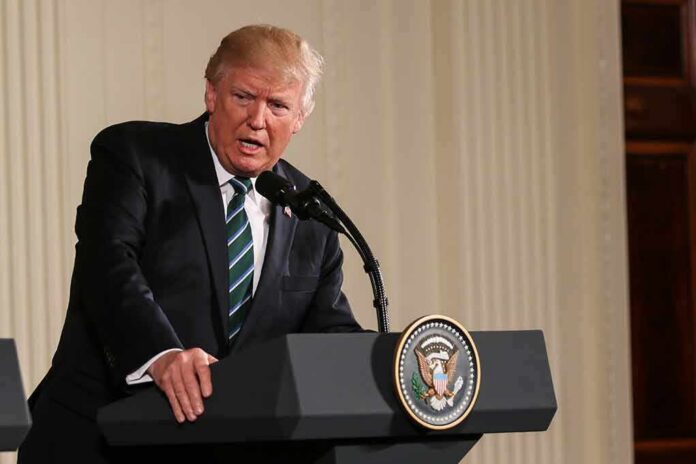
New York City Mayor Zohran Mamdani kept using the word “fascist” to describe President Trump in late 2025 and into 2026. He affirmed the label during an Oval Office press exchange after Trump suggested he “just say yes.” Mamdani replied, “Okay, alright,” keeping his stance on record despite the friendly setting. He also repeated the view on television, saying, “I’ve said it in the past, I say it today,” which underlined his consistency across venues.
Reporters also documented Mamdani citing major policy disputes when pressed on his word choice. He pointed to immigration enforcement, the war in Iran, and “an immense amount of domestic policy,” saying elected leaders should be honest about disagreements with the White House. Those statements helped explain why he uses strong language, but they did not lay out a step-by-step case tying specific presidential acts to academic definitions of fascism.
Trump’s Response And The Optics Of Cooperation
President Trump rejected the fascist label in other settings, saying “Everyone knows that’s not true,” and has cast himself as the opposite of a Nazi when critics raised that comparison. In the Oval Office moment with Mamdani, Trump turned the exchange into banter, which lowered the temperature and made the sound bite memorable. That tone, paired with repeated cordial meetings, fueled coverage that framed the relationship as surprisingly “chummy”.
Conservative and liberal commentators both seized on the optics. Some right-leaning voices argued the meetings confused supporters who view the term “fascist” as a slur, while some on the left warned that friendly photos can blunt serious warnings about democracy. The attention shifted from policy to performance. That shift made many Americans feel like political theater again replaced hard answers on safety, costs, and fairness in government.
Why The Word Fight Matters For Voters
Americans across parties share a core worry: leaders play branding wars while daily problems pile up. Immigration rules are uneven and courts are backlogged. Energy costs and housing strain family budgets. People see a growing gap between the well off and everyone else. Mamdani’s label aims to warn about threats to democracy. Trump’s reply aims to dismiss it as partisan noise. Neither approach alone fixes wages, crime, schools, or border integrity.
When leaders trade labels, citizens lose details. Voters need plain facts: what orders changed asylum, who controls key ports of entry, which budget lines moved on social programs, and how policing policy shifted. Those facts can be measured and judged. Labels cannot be measured in the same way. The more media time spent on the word “fascist,” the less time remains to explain what the government did and whether it helped people.
What The Experts Say About Definitions
Scholars disagree on how to use the word “fascist.” Some analysts argue that Trump’s movement fits better under “right-wing populism” or “authoritarian populism,” not fascism. They point to differences with classic twentieth century regimes on economic control, party structure, and a doctrine of the nation above the people. This view does not call Trump soft. It says the history and the terms are not the same, and mixing them can mislead.
UPDATE: Asked directly whether he would still call Donald Trump a fascist, Zohran Mamdani answered unequivocally: "Yes."#USPolitics #ZohranMamdani pic.twitter.com/RXg51lxXFl
— Hoot Republic (@HootRepublic) November 19, 2026
Other commentators argue that elements of Trump-era politics do echo fascist traits. They cite attacks on institutions and efforts to hold power despite rules. Still, even these writers often stress that clear, dated evidence tied to known criteria is key for such claims. Without that, the fight becomes about rhetoric, not proof. In practice, that leaves the public hearing big words but receiving few documents to test them against.
How To Keep The Focus On What Affects People
Citizens can push leaders to trade labels for ledgers. Ask for side-by-side records: directives on immigration, policing guidance, protest rules, and election procedures. Demand third-party reviews and public release of meeting notes when allowed by law. These steps do not serve the “left” or the “right.” They serve anyone who wants a government that works, respects rights, and answers to the people instead of to insiders and donors.
Sources:
mediaite.com, transcripts.cnn.com, apnews.com