Alberta voters faced their first-ever separation question, a legal doorway to a future binding referendum that stops short of independence today.
Story Snapshot
- The ballot asks whether to start the legal process for a future binding separation vote, not to leave now.
- Elections Alberta lists the measure as Question 10 and governed by an official order in council.
- Canada’s Clarity Act says any lawful secession would still require federal and provincial negotiations.
- Top voices urged unity, warning of economic risk and uncertainty if separation advances.
What Albertans Actually Voted On
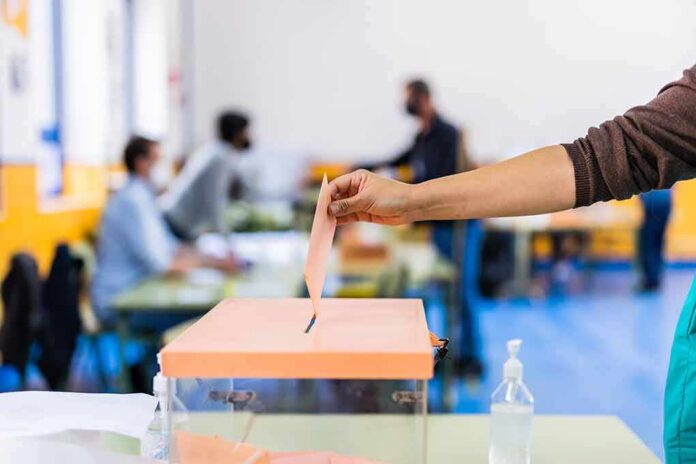
Officials put a separation process question on the provincial ballot as Question 10. The wording gives voters two options. The first keeps Alberta in Canada. The second tells the government to begin the legal steps needed to hold a binding referendum later. The official page states this vote does not directly trigger separation. It only starts a process under the Canadian Constitution toward a later binding vote if supported.
Elections Alberta describes the referendum framework and reproduces the separation wording. The agency notes the vote is run under Order in Council O.C. 160/2026. That confirms the measure is a formal, province-wide question, not an informal poll or party straw vote. The listing also makes clear the result is nonbinding. Any move from this advisory step to a binding referendum needs further legal and political action by the provincial government.
Why This Vote Matters But Does Not Decide Independence
The measure is the first time Alberta has put a separation step to a public vote, giving salience to long-running grievances about federal rules and resource policy. News coverage stresses that voters are not choosing independence today. They are deciding whether to start a path that could lead to a binding referendum later. That layered process sets expectations and reduces claims that this ballot alone settles Alberta’s future in Canada.
Canada’s legal rules shape what happens next. The federal Parliament passed the Clarity Act after the Supreme Court of Canada’s Secession Reference. Under that framework, the House of Commons judges whether a question and any majority are “clear.” A clear result would trigger a duty to negotiate. Lawful secession would still require constitutional amendment talks with the federal government and provinces. Alberta cannot achieve independence through a single provincial vote.
Economic Stakes and Warnings From National Figures
Business and political leaders framed the vote as a high-risk move for Alberta’s economy. Former Bank of Canada governor Mark Carney warned that a vote against Canada would invite years of uncertainty and lost chances for workers and firms. The Canadian Chamber of Commerce projected the process could shrink Alberta’s economy by about 62 billion Canadian dollars per year, signaling serious costs if separation efforts advance.
Majority in Alberta vote to reject referendum question on separation, Carney says they ‘chose unity’ /via @globeandmail https://t.co/s2HZyleIOr
— Maureen O'Mahoney (@cheerio46) October 20, 2026
National party leaders also urged a vote to remain. Conservative leader Pierre Poilievre argued that Alberta gains more room to trade, travel, and grow within Canada than it would alone. He said separation will not solve resource bottlenecks or high costs, and called for reforms that “get the federal government off their backs” while keeping the country together. Alberta’s premier publicly backed remaining in Canada, citing stability for jobs and investment.
How Today’s Ballot Fits a Larger Pattern
Regional frustration in Western Canada is not new. Analysts trace modern Alberta separatism to the 1980 National Energy Program. That episode fueled a view that Ottawa controls Alberta’s energy wealth while the West lacks influence. The issue has cycled between full independence and “more autonomy” plans. Placing a process question on a province-wide ballot marks a sharper test of those views, but it still leaves many hard questions for later.
What Comes Next If Option 2 Leads
If voters choose to begin the process, the Alberta government would start legal steps toward a later binding referendum. Those steps could include new legislation, court reviews, and outreach to federal and provincial counterparts. Even with momentum, the Clarity Act gives the House of Commons a gatekeeping role. Any final deal would require wide agreement and constitutional changes, which are slow and difficult in Canada’s system.
What Voters Still Do Not Know
The ballot question does not spell out the mechanics of a split. It does not define currency, debt sharing, trade rules, borders, public pensions, or Indigenous rights. That gap invites concern across the spectrum. Some fear elites will cut deals that leave regular families paying the bill. Others worry Ottawa will stall reforms and ignore Western voices. Both worries reflect a deeper view that powerful institutions protect themselves first, not the public.
Bottom Line For Readers
Albertans voted on a legal on-ramp, not the off-ramp. The result will signal how much appetite exists to push Ottawa and test Canada’s unity rules. Even a strong “remain” showing will not erase the anger that produced this ballot. If leaders want trust, they must deliver real fixes on energy, trade, and costs. If they do not, more voters may choose the risky road that today’s question carefully opens but does not cross.
Sources:
insiderpaper.com, albertareferendum2026.ca, elections.ab.ca, hppr.org, alberta.ca, cp24.com, globalnews.ca, cbc.ca, bbc.com, afp.com, apnews.com