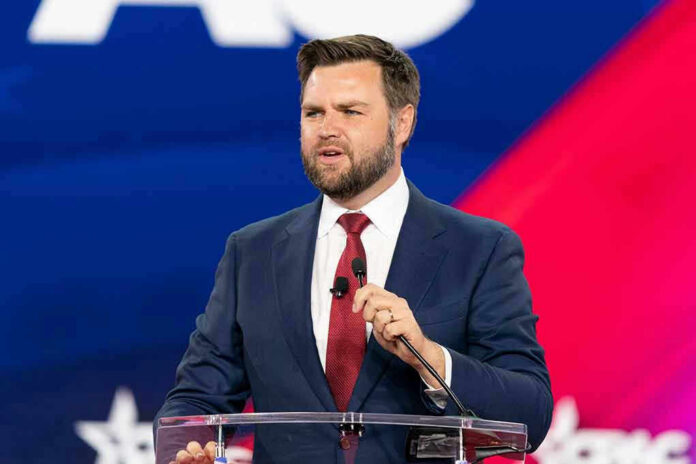
Vice President JD Vance turned a hostile CBS question about alleged “pay-to-play” into a call for facts, due process, and real accountability.
Story Snapshot
- Vance urged patience and proof as reports allege Kimberly Guilfoyle sought $100,000 for access to officials.
- Media published screenshots and claimed messages; Guilfoyle’s lawyer disputed their authenticity.
- No public record shows a payment was made or access delivered, according to multiple outlets.
- State Department’s watchdog and Congress are probing; Guilfoyle resigned amid the scrutiny.
What Sparked The Clash On Air
CBS News asked Vice President JD Vance whether the reported $100,000 “quid pro quo” allegation against then‑Ambassador Kimberly Guilfoyle shows corruption inside the administration. CBS has reported that donor Eric Deters supplied a 292‑page file and screenshots that he says show Guilfoyle seeking a $100,000 payment tied to access to senior officials. NBC News described a message directing payment to American Express because it would not “show up anywhere,” according to Deters’s materials.
Guilfoyle’s attorney told The Wall Street Journal that the Signal messages were “inauthentic in some form,” while not offering a full forensic record to the public. That dispute sits next to another fact: outlets have not established that any $100,000 payment was completed or that access was delivered. Reports describe a request and a refusal by Deters, not a transfer or a scheduled meeting resulting from the alleged deal.
Where The Evidence Stands Right Now
Several outlets say they reviewed messages or reproductions supplied by Deters, while acknowledging the authenticity dispute from Guilfoyle’s side. The Hill reported language about avoiding a paper trail close to Guilfoyle’s Senate confirmation hearing and said Deters refused the request. The Associated Press and NBC News reported that the State Department inspector general opened an inquiry, and that Guilfoyle resigned as ambassador during the controversy. An inspector‑general probe is not a finding; it is a process to test the claims.
A congressional letter from the House Oversight minority cited the alleged payment request and asked questions about American Express records and possible access promises. That letter signals formal interest but does not settle the facts. CBS also reported that sources said the messages were represented to White House officials as authentic, which is a claim about what officials were told, not a public forensic determination. Until investigators publish findings, the record remains mixed: detailed allegations, a defense challenging authenticity, and no proven transfer or delivered access.
Why Both Sides See A Bigger Problem
Americans across the spectrum already doubt that Washington plays by fair rules. Many believe well‑connected people can buy access while regular citizens wait in line. Research on the “revolving door” shows relationships can open doors and shape meetings, even when legal, which feeds the sense that influence is for sale. That backdrop makes the alleged private payment for official help feel plausible to many, even before facts are verified. It also explains Vance’s stress on due process: judge on evidence, not leaks.
Voters who backed President Trump see “pay‑to‑play” as a betrayal of an “America First” promise. Voters on the left see it as proof the system is rigged. Both fear that elites profit while families face high costs and shrinking trust. That shared frustration is the core stakes here. If the messages are authentic and tied to promised access, that would cross a bright line. If they are not, then rushed headlines risk smearing people and distracting from real reform work.
What To Watch Next
Watch for verifiable records, not more spin. Key tests include a complete export of the Signal chats, device‑level forensic results, American Express and bank records, and sworn testimony that matches calendars and call logs. Those items can confirm or debunk the core exchange. The inspector general’s outcome, along with any public congressional findings, will matter more than anonymous claims. Until then, Vance’s message stands: demand proof, protect due process, and punish the guilty if the facts warrant it.
VICE PRESIDENT VANCE: "Donald Trump HATES when people make money off of him."
"He HATES the idea that somebody would come in and say, I'm going to give you a meeting with the President and I'm going to get rich because I gave you access to the President. The President would… pic.twitter.com/kDZSzR16st
— Sergeant News Network (@sgtnewsnetwork) October 18, 2026
The larger fix reaches past one scandal. Congress can tighten ethics rules around private payments, speed up transparency on communications by senior officials, and improve watchdog timelines so facts surface faster. Sunlight helps honest leaders and exposes the rest. That is how you cut the “deep state” feeling—by making the system show its work, every time.
Sources:
redstate.com, wsj.com, cbsnews.com, nbcnews.com, apnews.com, newsweek.com, cambridge.org