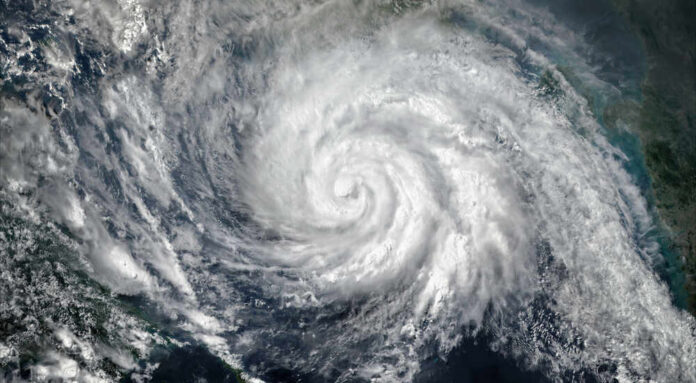
As Super Typhoon Bavi’s 180 mph winds tore across tiny Rota, Americans saw yet again how a remote U.S. territory can face “uninhabitable” conditions with little national attention or accountability.
Story Snapshot
- Category 5 Super Typhoon Bavi’s eye passed directly over Rota with winds over 150–180 mph.
- Officials warned parts of the island could be “uninhabitable for weeks” with major structural damage.
- Guam was hit with record rainfall, flooding, and hurricane-force gusts, but early reports showed no deaths.
- The storm highlights how far‑flung U.S. citizens depend on distant federal agencies and “elite” decision‑makers when disaster strikes.
Super Typhoon Bavi Slams Rota With Category 5 Winds
Super Typhoon Bavi made landfall on Monday over Rota, a small United States territorial island in the western Pacific just north of Guam, with the eye of the storm passing directly over the island. The United States National Weather Service (NWS) reported winds of more than 150 miles per hour, equivalent to a Category 5 hurricane, while later forecasts and media reports cited sustained winds near 180 miles per hour with gusts up to 215 miles per hour. For an island of fewer than 2,000 people, that level of wind is not just frightening—it is life‑changing.
National Weather Service meteorologists issued an extreme wind warning for Rota and urged residents to treat the oncoming gusts “as if a tornado was approaching,” sheltering in interior rooms away from windows. Forecast discussions warned that if Bavi’s core passed over or very close to Rota, much of the area could be “uninhabitable for weeks, perhaps longer,” especially where homes were not built with reinforced concrete. These alerts underscore a broader problem many Americans see: ordinary people scrambling to protect their families while relying on distant experts and agencies to sound the alarm in time.
Major Damage Reports But Miraculously No Deaths
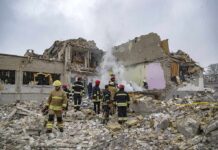
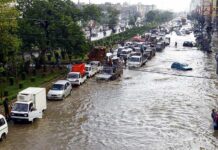
Local officials on Rota reported “major damages,” including forecast winds up to 290 kilometers per hour, downed power poles, and at least one fallen cellphone tower that cut off service. Streets were flooded, cars were flipped, and many non‑concrete homes were believed to have suffered roof failure or wall collapse, though full engineering assessments are still pending. Despite this destruction, early reports from emergency managers described zero fatalities and only one injury, calling the outcome “a miracle” given the storm’s intensity. In a country where people often feel leaders value property and politics over lives, that kind of survival stands out as a rare bit of good news.
At the same time, the lack of clear communication from the island during and after landfall shows how fragile the system is. Damage estimates had to rely on scattered radio calls and limited visual evidence because cell service and some communication towers were down. There is still no public, independent engineering audit that details how many structures failed and how many can be repaired. For many Americans who mistrust official narratives, that gap between dramatic meteorological warnings and slow, incomplete damage data feeds the sense that disasters are managed from far away, with working families left in the dark about what help will arrive and when.
Record Rain, Flooding, and Wider Impacts Across Guam and the Marianas
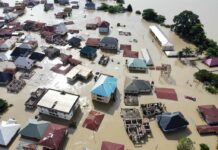
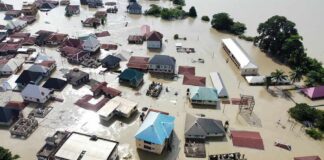
While Rota took the direct hit, Bavi’s reach was far wider. Guam, another United States territory, saw 12 to 15 inches of rain and wind gusts between 100 and 110 miles per hour, causing flash flooding and making some roads impassable. One station on Guam recorded 12.64 inches of rain in a single day, setting a new daily rainfall record and overwhelming drainage in low‑lying neighborhoods. Typhoon and flash flood warnings also covered Tinian and Saipan, where authorities braced for destructive winds and storm surge even though the eye did not pass directly overhead.
Residents across the Northern Mariana Islands were already struggling to recover from earlier storms, including Super Typhoon Sinlaku, which had left hundreds displaced months before. Bavi hit while power lines, roofs, and basic services were still being repaired, turning a slow recovery into another emergency. This pattern—communities never fully rebuilt before the next disaster—feeds a shared frustration on the left and right. People see ordinary families stuck in cycles of damage and repair, while large contractors, insurers, and federal agencies argue over money and paperwork far from the islands themselves.
Climate, Politics, and the Deep State Debate Around Bavi
Media outlets and some scientists quickly linked Bavi’s strength to record‑hot ocean waters and a strong El Niño pattern, arguing that climate change is helping fuel more intense Pacific storms. For many conservatives, this can feel like elites using a disaster to push broader climate agendas, especially when those agendas are tied to costly energy policies that raise fuel and power prices. For many liberals, Bavi looks like proof that decades of delay on climate action are now landing hardest on poor and remote communities with the fewest resources to adapt.
Our disaster teams are on the ground and ready to help after Super Typhoon Bavi made landfall in the Northern Mariana Islands, where communities are still picking up the pieces from Typhoon Sinlaku just three months ago.
Bavi was the strongest storm to ever hit the island of… pic.twitter.com/ErLl8BcwBD
— American Red Cross (@RedCross) July 7, 2026
Both sides, though, see the same core problem: real American citizens in Guam and the Northern Marianas depend on distant federal officials, complicated aid systems, and often‑unseen “deep state” decision‑makers when disaster strikes. Bavi brought catastrophic winds, record rain, and serious damage, yet most of mainland America only glimpsed it through short clips and headlines. As federal agencies, from the Federal Emergency Management Agency (FEMA) to the National Weather Service, move into their long recovery phase, the storm raises a hard question that unites frustrated conservatives and liberals alike: if the government cannot reliably protect or rebuild small U.S. islands hit by a clearly forecast Category 5 storm, how ready is it for the next big shock closer to home?
Sources:
youtube.com, aljazeera.com, nytimes.com, euronews.com, dailymotion.com