Ukraine’s wartime government fired its most popular defense minister — and the streets erupted for two straight days in a dozen cities.
Story Snapshot
- President Volodymyr Zelenskyy dismissed Defense Minister Mykhailo Fedorov on July 15, 2026, triggering rare public protests across 12 Ukrainian cities.
- Fedorov built Ukraine’s drone warfare program, helped cut Russian access to Starlink, and claimed drones now cause 95% of Russian casualties.
- Zelenskyy admitted the dismissal came down to an open feud between Fedorov and military chief Oleksandr Syrskyi, calling it an “invidious choice.”
- A senior Air Force colonel resigned in protest, and frontline soldiers voiced strong support for Fedorov’s return.
A Firing That Shook the Streets
On July 15, 2026, Zelenskyy removed Mykhailo Fedorov as Ukraine’s defense minister. Within hours, crowds filled city squares. By the second day, protests had spread to Kyiv, Kharkiv, Lviv, Odesa, Dnipro, and seven other cities, with over 1,000 demonstrators in Kyiv alone demanding Fedorov’s return. For a country at war, public protests against the president are rare — and the scale of the backlash caught many observers off guard.
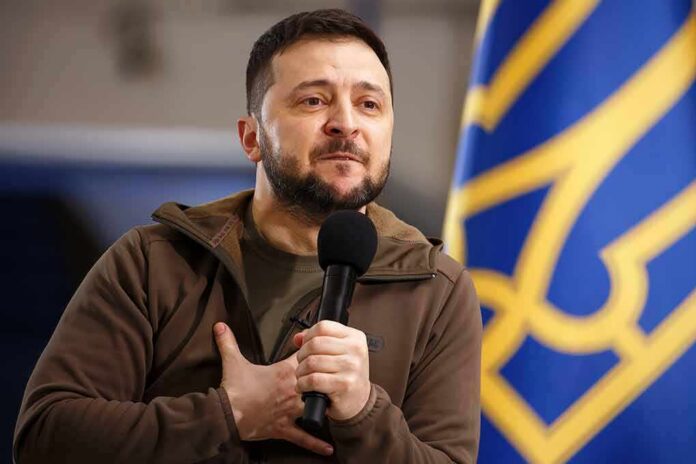
Zelenskyy did not explain the firing publicly until the protests forced his hand. He then told lawmakers that Fedorov and Commander-in-Chief Oleksandr Syrskyi “failed to collaborate effectively” and that the two men “wouldn’t sit down together without me.” He described the Ministry of Defense and the General Staff as “fighting each other while the country is at war.” He called the decision an “invidious choice” — but did not initially explain it to the public.
What Fedorov Built — and Why Soldiers Backed Him
Fedorov was not a traditional military figure. He came from Ukraine’s tech world and pushed hard to modernize how Ukraine fights. He built a drone-first procurement model that favored battle-tested weapons over older systems. He helped persuade Elon Musk to cut off Russian military access to Starlink. He also secured U.S. licenses for Ukraine to produce Patriot missiles domestically and set up an after-action review system that improved how Ukraine intercepts Russian drones and missiles.
Frontline soldiers and veterans said they backed Fedorov because they saw real results. Fedorov himself claimed that drones now account for 95% of all Russian casualties — a striking figure that, if accurate, reflects a major shift in how the war is being fought. He also said he exposed billions in defense spending and faced resistance from within the military establishment. No independent audit has confirmed the exact amounts, and Syrskyi has not publicly provided evidence that he blocked any specific reforms.
A Pattern of Leadership Clashes
This is not the first time Zelenskyy has removed a top military leader under pressure. In January 2024, he pushed out Commander-in-Chief Valery Zaluzhny after a public rift over war strategy. That dismissal also drew criticism. Ukraine has now seen major military leadership turnover roughly every six to twelve months since 2023 — a pattern that raises questions about stability at the top during an active war.
Ukrainian cities showed no signs of cooling down on the second day of protests
This video is from Kyiv
Thousands of people took to the streets demanding the resignation of Commander-in-Chief Syrskyi and the reinstatement of Fedorov as Minister of Defense
Syrskyi is criticized… pic.twitter.com/Wi0g851WB5
— Smaliy (@smaaaliy) July 18, 2026
The internal conflict has real costs. Colonel Pavlo Yelizarov, deputy commander of the Ukrainian Air Force, resigned directly in response to Fedorov’s dismissal, calling it “a great evil for the country’s defense potential.” Zelenskyy offered Fedorov a role as an advisor. Fedorov declined. Zelenskyy’s proposed replacement, Ihor Klymenko, faces opposition in parliament, leaving the situation unresolved. Russian state media and pro-Kremlin social accounts celebrated the firing, framing it as a blow to Ukraine’s drone warfare edge — a sign of how closely Ukraine’s adversaries are watching the fallout.
What’s Still Unknown
Key questions remain unanswered. Zelenskyy cited unresolved mobilization and recruitment failures as part of his justification, but no public data has been released to back that up. Fedorov did not respond to those specific claims with numbers of his own. The claim that Syrskyi actively blocked modernization efforts comes only from Fedorov — no internal documents, meeting records, or independent investigations have confirmed it. Both sides are making serious accusations, and neither has put hard evidence on the table for the public to evaluate.
What is clear is this: Ukraine is fighting for its survival while its top defense leaders were feuding badly enough that the president had to choose between them. Whether Zelenskyy made the right call is a debate Ukraine will keep having. But the fact that citizens took to the streets — in wartime — to demand accountability from their own government is a signal that even under extreme pressure, Ukrainians are watching who leads them and why.
Sources:
bbc.com, dw.com, lemonde.fr, theglobeandmail.com, newsukraine.rbc.ua, kyivindependent.com, youtube.com