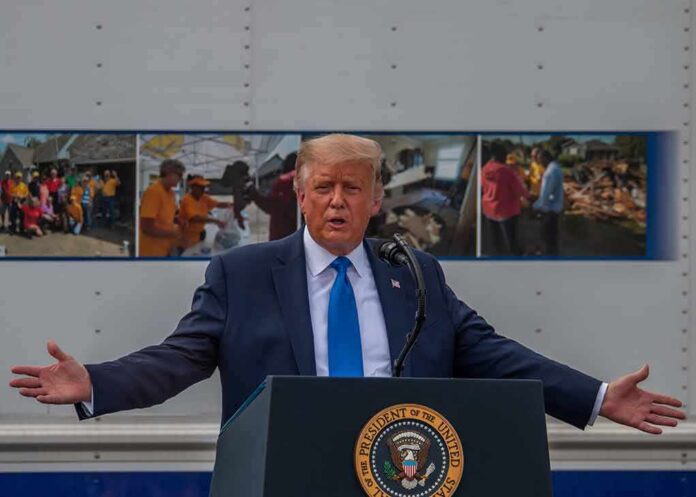
President Trump has turned Iran’s own demand for war reparations back on Tehran, pushing a compensation fight that reaches across decades of conflict and could complicate already tense talks over the Strait of Hormuz.
Quick Take
- Trump said Iran should pay compensation for Americans and others harmed in Iran-linked attacks and conflicts.
- He tied that demand to Tehran’s own push for war reparations in talks over reopening the Strait of Hormuz.
- Trump named the USS Cole attack and roadside bomb victims as part of his case.
- The dispute shows how money claims are now being used as leverage in a wider power struggle.
Trump Escalates the Compensation Fight
President Trump said he will demand payment from Iran for “all of the people that they have killed and gravely wounded,” according to reporting from Reuters and other outlets. He framed the move as a direct answer to Iran’s request for war damages during talks tied to the Strait of Hormuz. The result is a new bargaining fight that mixes wartime blame, money, and diplomacy in one move.
Trump also said his team would raise the issue in future negotiations, showing that he wants the demand treated as part of the broader Iran file, not as a side note. In reporting from USA Today and the BBC, he linked the payment request to roadside bomb victims, “many conflicts,” and families affected by Iran-backed violence over many years. That gives the claim a wide political and historical reach.
Why the USS Cole Reference Matters
Trump singled out the 2000 attack on the USS Cole and said families of the dead should be compensated. That reference matters because it broadens the argument beyond the current war and into older U.S. grievances tied to Middle East violence. In plain terms, Trump is not just asking for payback over one conflict. He is trying to attach a price tag to a long record of bloodshed that Americans still remember.
His message also echoes a larger pattern in which both sides use compensation as leverage, not just as legal repair. Reuters reported that Iran had demanded payment for war damage as part of talks over sanctions, shipping, and the reopening of the strait. That makes the dispute feel less like a courtroom claim and more like a hard-nosed power play, with each side trying to force the other to concede first.
A Broader Power Struggle Over Money and Access
The fight comes at a time when the Strait of Hormuz remains a key pressure point for global energy and regional security. Iran has tied reopening the waterway to demands for war reparations, an end to sanctions, and other concessions, while Trump has answered with his own compensation demand. For readers tired of elite-driven foreign policy games, the pattern looks familiar: huge claims, vague accountability, and ordinary people left to absorb the cost.
Trump Demands Iran Pay Compensation as Hormuz Deal Hopes Fade#Iran #StraitOfHormuz #USIran #DonaldTrump #IranNews #Hormuz pic.twitter.com/MdTFpoy3my
— DM NEWS ENGLISH (@DMNEWSENGLISH) August 11, 2026
Trump’s position also reflects how modern state conflicts now blend military force, economic pressure, and public messaging. The White House and news reports show that the administration is using the compensation issue as a negotiating weapon, not a separate humanitarian program. Whether either side ever pays is unclear. What is clear is that the argument has become part of the larger struggle over sanctions, regional control, and who gets to set the terms of peace.
Sources:
facebook.com, reuters.com, aljazeera.com, huffpost.com, youtube.com, economictimes.indiatimes.com, en.yenisafak.com