
President Trump said Russia and China are not helping Iran in any serious way, even as public reports list concrete ties that look like help.
Story Snapshot
- Trump said any Russian or Chinese aid to Iran is “very low,” or not happening.
- He argued Moscow and Beijing have “too much to lose” and the U.S. would spot help fast.
- Reporting cites Chinese oil purchases and satellite imagery support tied to Iran.
- Other reports detail Russian military-technical links and intelligence sharing with Tehran.
What Trump Said And Why It Matters
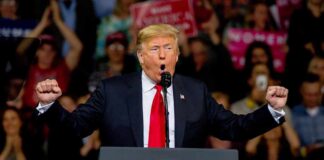
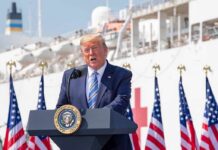
President Trump wrote that he does not believe Russia or China are helping Iran “at all,” adding that if they are, it is “at a very low level.” He said both countries have “too much to lose” and that the United States would detect any aid “very fast.” His message sets a clear public line on deterrence and risk for Beijing and Moscow while leaving room for minor, indirect activity that falls short of major support.
Trump’s claim, carried by major outlets, frames aid as either nonexistent or minimal. That framing emphasizes costs for Russia and China if they cross a line. It also signals confidence in U.S. detection. But the statement did not cite specific intelligence in public. The gap between a strong presidential assertion and the lack of visible proof invites scrutiny. It also raises a familiar question: what counts as “help” in practice?
Evidence Of Economic And Technical Links To Iran
Public reporting describes Chinese economic ties that keep Iran’s oil flowing. One analysis said China took more than 80 percent of Iran’s shipped oil in 2025, giving Tehran vital revenue despite sanctions. The same reporting cited United States sanctions on China-based satellite and geospatial firms that allegedly supplied imagery to Iran, including photos of U.S. and allied sites, which would be a specific form of support if confirmed.
Other accounts point to a broader pattern. A corporate filings review reported Chinese space companies placed more than 20 satellites into orbit for operators tied to Russia’s war effort and for Iran’s military between 2021 and 2025. A regional outlet said China provided access to the BeiDou-3 navigation system, which could improve missile and drone accuracy for Iran if used that way. These claims describe capabilities that can aid the Iranian military ecosystem.
Russian Cooperation And Intelligence Activity
Reports also describe Russian links. A foreign minister statement in March acknowledged a military-technical cooperation agreement with Iran and the supply of certain military equipment. Other reporting said Russian satellites completed at least two dozen imagery surveys across the Middle East over a short period, suggesting mapping that could have downstream value if shared. These items point to cooperation, even if the exact scale or battlefield effect is unclear.
A summary from financial media cited U.S. officials who linked Chinese-source satellite imagery to an Iranian strike that killed three American troops. That same coverage referenced shipments of components used in drones and missiles produced by Iran. These are serious claims because they connect commercial or foreign sources to lethal results. They also show how dual-use tech can blur the line between commerce and military aid.
Why The Definitions Drive The Debate
The core clash is not only about facts; it is about definitions. “Helping Iran” can mean buying oil, selling dual-use tech, giving satellite pictures, sharing intelligence, or sending troops and weapons directly. Trump’s statement reads as a claim about significant military backing. The reporting catalogs many forms of assistance that stop short of open intervention. Both can be true depending on where the bar is set for “substantial” support.
Trump says China and Russia have “too much to lose” by helping Iran and says Washington would quickly detect any supporthttps://t.co/K0wRkDFKuu#Iran #China pic.twitter.com/r71CJyDRoe
— Eastora News (@eastoranews) October 13, 2026
For readers across the political spectrum, the stakes are plain. People see powerful states and companies move money, data, and parts around the world while Washington argues over labels. Conservatives and liberals alike worry that elites play by separate rules, and that government talks tough but struggles to cut these flows. This story shows that gaps in definitions, secrecy, and enforcement can leave citizens feeling that the system serves the connected first.
Sources:
mediaite.com, rmb.reuters.com, hindustantimes.com, newsweek.com, charter97.org, unn.ua