

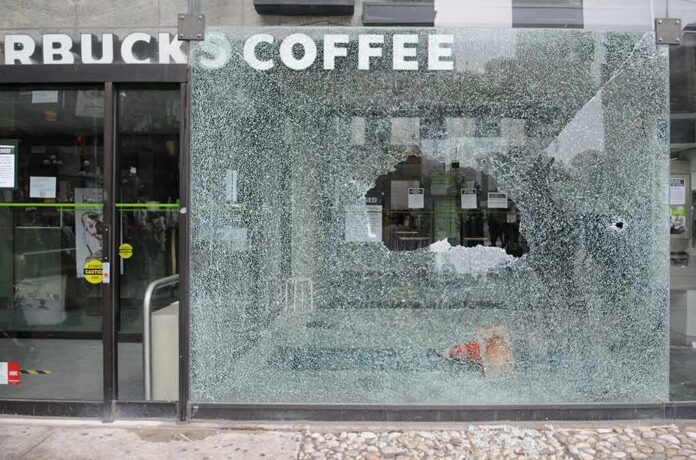
Hooded rioters looted shops and hurled firebombs in central Frankfurt after a Gen Z-led protest turned violent, jolting Germany’s financial capital and raising fresh questions about public safety and political accountability.
Story Highlights
- At least two Frankfurt stores were looted and several more were damaged, according to on-scene reporting.
- Frankfurt police reported smashed windows, ongoing violence, and Molotov cocktails thrown at emergency services.
- Authorities sealed off a major shopping street as officers clashed with rioters and worked to restore order.
- Germany’s interior ministry signaled tough penalties for looters while praising a strong police presence.
What Happened In Frankfurt
Reuters reported that masked rioters looted at least two stores in Frankfurt on October 31, with more shops damaged as a large youth-led protest devolved into street violence. Police in the city described “violent disturbances” and said shop windows were smashed. Officers faced attacks as they tried to control the situation. Witness accounts noted Molotov cocktails aimed at emergency services, adding a dangerous edge to the unrest. Authorities moved to contain the violence as the night wore on.
German media reported that police closed Die Zeil, a major shopping street in central Frankfurt, after rioters targeted storefronts and clashed with officers. Water cannons were used in parts of the country as protests spread beyond Frankfurt, but the most serious reports of looting came from the financial hub itself. The demonstration was part of a broader youth campaign pushing for better education and relief from rising living costs, drawing tens of thousands nationwide before the violence began.
How Officials Responded
Germany’s interior minister signaled there would be tough penalties for those who looted and attacked property, while also praising the heavy police presence for preventing wider chaos. The stance underscored a familiar tension for leaders: protect the right to protest while moving fast to stop criminal acts that endanger the public. Police statements focused on safety risks to officers and bystanders. Leaders will likely face pressure to show swift arrests and clear charges in the days ahead.
Authorities did not immediately present detailed links between the protest organizers and those who committed the crimes. Reporting shows a pattern that often appears in large demonstrations: many march peacefully, while a smaller group escalates to violence and opportunistic theft. This distinction matters for how communities judge both the cause and the crackdown. Early reports set the facts on damage and looting, but full arrest records and charging documents will sharpen accountability later.
Why This Matters Beyond Germany
Frankfurt’s unrest highlights a growing stress point in many democracies: people feel squeezed by higher costs and weak services, and they take to the streets. Most protesters aim to be heard, not to break the law. Yet even limited looting can dominate headlines, spook businesses, and deepen public fear. Prior research on civil disorders suggests looting happens in a minority of events but can spread quickly once it starts, often in wave-like surges inside targeted stores.
🚨 Footage of rioters smashing the window of a Gun Shop and attempting to loot it in Frankfurt, 🇩🇪 Germany, after a Gen Z protest turned violent on Oct 31. Police seized two weapons and made multiple arrests amid window-smashing, looting of other stores, and #Molotov Cocktails… pic.twitter.com/kCCLOALQ5c
— aal (@aaldillah) November 1, 2026
For readers in the United States, the scene echoes debates at home. People across the spectrum worry that leaders miss basic duties: keeping streets safe, holding criminals to account, and fixing schools and living costs before anger boils over. When police and emergency crews face firebombs, the social fabric frays. When peaceful protesters get lumped in with looters, trust also breaks. Both failures feed the view that systems serve elites, not citizens, and that no one is fixing root problems.
Sources:
youtube.com, reuters.com, rmb.reuters.com, dw.com, uk.news.yahoo.com