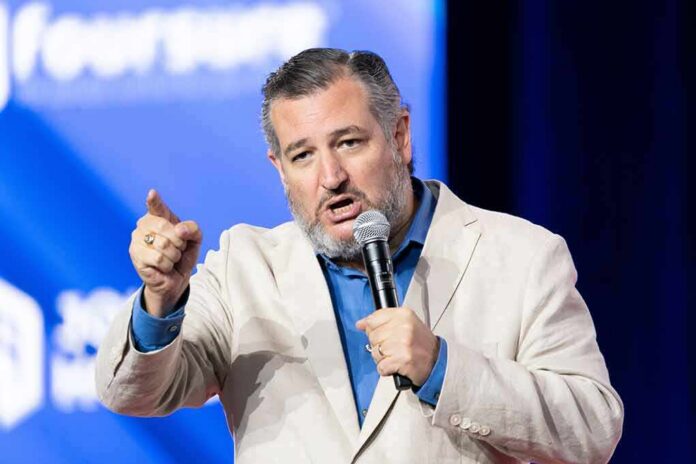
Senator Ted Cruz mocked Abdul El-Sayed as a “jihadist leprechaun,” turning a heated Michigan Senate fight into a test of facts, faith, and political lines.
Story Snapshot
- Cruz’s insult spotlights claims tying El-Sayed to the Muslim Brotherhood despite no public evidence of his personal affiliation.
- El-Sayed has disavowed the Muslim Brotherhood and rejected imposing religious law in the United States.
- Critics lean on a half-sister’s old posts about family ties, which do not show El-Sayed’s own membership.
- An undercover-video report raised passport questions, but key records and full context remain unclear.
Cruz’s Remark Escalates a Contentious Senate Race
Senator Ted Cruz’s “jihadist leprechaun” line at a campaign stop jolted the already bitter Michigan Senate race. The jab tied directly to long-running claims about Abdul El-Sayed and the Muslim Brotherhood. The Detroit News reported no public evidence has shown El-Sayed personally belonged to or was affiliated with the group. The insult may energize some voters, but it also risks hardening divisions. The slur frames faith and ethnicity as punchlines, not policy. Voters deserve facts, not ridicule.
El-Sayed has publicly disavowed the Muslim Brotherhood when asked on camera. He also said he does not support using religious doctrine to shape United States law. Those answers address core fears from both the right and the left about foreign influence and religious rule. They also reflect a basic American value: government must remain neutral on faith. The dispute now rests on whether critics can present verified records connecting El-Sayed to the organization, rather than family claims.
What The Evidence Shows And What It Does Not
Available reporting ties the allegations mainly to old posts by a half-sister who said their family had long ties and that their mother was active decades ago. Those posts do not show El-Sayed’s own membership, actions, or knowledge. One outlet noted the posts do not establish what the mother did, whether El-Sayed knew, or whether he had any connection himself. A Michigan Public fact check added that claims about the mother’s past work do not prove support for terrorism or El-Sayed’s affiliation.
The passport question clouds the picture further. A report about an undercover video framed Representative Rashida Tlaib as saying it did not matter whether El-Sayed had an Egyptian passport. But the public record lacks a complete unedited recording, chain-of-custody, or verified documents resolving his current or past citizenship status. That gap leaves room for campaigns to spin. Clear, on-the-record documents would close it. Until then, it is a talking point, not a settled fact.
Why This Fight Resonates With Voters Across Parties
Many Americans see a deeper pattern here. Politicians hurl charged claims while hard evidence lags. Partisans drive headlines; institutions rarely run neutral, public checks that settle doubts. Coverage often blends three separate issues—personal affiliation, family association, and citizenship status—into one cloud of suspicion. That mix can mislead voters and feed bias. It also distracts from core concerns such as wages, prices, security, and schools that families want Washington to fix.
Campaigns know sharp lines and viral clips move donations and turnout. But that also breeds cynicism. People on the right worry about national security and truth. People on the left worry about discrimination and civil rights. Both sides suspect the political class plays games while problems pile up. The responsible path is simple, even if it is not flashy: produce records, verify claims, separate what family members said or did from what the candidate did, and keep faith and ethnicity off the insult list.
Sources:
twitchy.com, detroitnews.com, townhall.com, newsweek.com, edition.cnn.com