
The U.S. military says five people died when American forces struck two suspected drug-smuggling boats in the Eastern Pacific, a stark escalation in how Washington is fighting narcotics at sea.
Story Highlights
- U.S. Southern Command reported two strikes on suspected trafficking vessels, with five killed.
- Reuters corroborated the basic timeline and split casualty count across two boats.
- Officials cited intelligence on narco-trafficking routes; evidence has not been publicly released.
- The approach departs from the Coast Guard’s traditional seize-and-prosecute model.
What U.S. Command Says Happened
U.S. Southern Command reported that Joint Task Force Southern Spear carried out strikes on two vessels in the Eastern Pacific at the direction of the Secretary of War, killing five people total—three on one boat and two on the other. The command said intelligence identified both boats as moving along known narco-trafficking routes and engaging in narcotics smuggling. Reuters separately reported the same casualty split and the two-target sequence, aligning with the military’s account of the operation.
Reuters quoted Secretary of War Pete Hegseth saying the vessel was known to be involved in narcotics smuggling and was carrying drugs, while traveling on a known trafficking route. The official releases did not include vessel names, registration, or photos. The military did not publicly share the intelligence that led to the targeting decision, and the identities or nationalities of the five deceased were not provided in the available records. Those details limit what the public can verify about the boats and crews.
How This Fits a Larger Shift at Sea
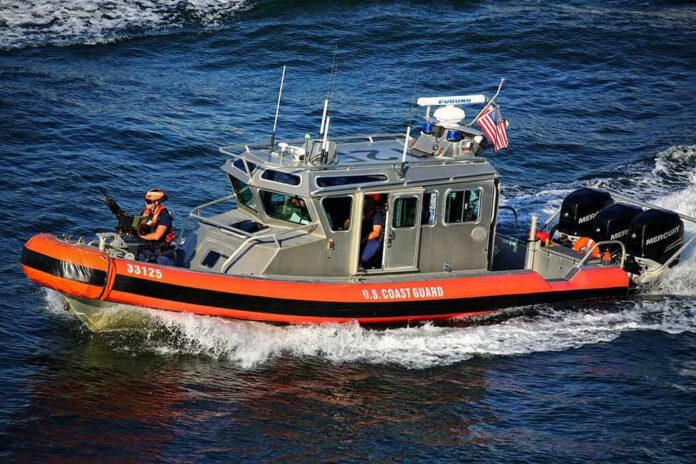
The strikes mark a shift from how maritime drug cases often worked for decades. The United States Coast Guard has usually intercepted, boarded, and seized suspected smuggling boats, then sent crews into the justice system. That approach removed drugs from the pipeline and produced evidence for court. Today’s lethal strikes treat certain boats as lawful military targets, which can disrupt smuggling fast but may also leave little recoverable evidence for public view or prosecution records.
This change lands in the middle of a bigger counternarcotics campaign that spans the southern Caribbean Sea and the Eastern Pacific. Analysts have noted that the government often cites classified intelligence to justify targeting calls at sea, while outside observers cannot see cargo or communications to test those claims. That asymmetry is common in maritime operations that rely on surveillance and pattern-of-life analysis rather than seizures on the open ocean.
Why It Resonates With Public Frustration
Many Americans want hard hits on cartels that flood communities with lethal drugs. Others worry when the government uses deadly force without sharing proof the targets carried contraband. Both views reflect a growing belief that Washington’s systems are not transparent or accountable enough. Clear results matter, but so do facts people can inspect. When officials do not show evidence, trust often falls, even if the intelligence behind the scenes is sound.
This case highlights a basic trade-off. Rapid military action can stop boats before they land cargo. Traditional interdiction can seize drugs and build public court records. The Coast Guard’s historic model produced visible seizures and case files, but smugglers adapted. Military strikes move faster and hit harder, yet they may not produce the kind of proof the public expects to see. Policymakers now face choices about speed, transparency, and the rule of law at sea.
What To Watch Next
Watch for any declassified summaries or imagery that show why these boats were labeled drug traffickers. Look for coordination with the Coast Guard or partner nations on search-and-rescue or evidence recovery. Track whether Congress demands briefings on the targeting process and confidence levels. Also follow whether future cases return to board-and-seize tactics or continue these strikes in the Eastern Pacific, where traffickers run fast boats and low-profile craft across long sea lanes.
Sources:
insiderpaper.com, southcom.mil, wsbtv.com