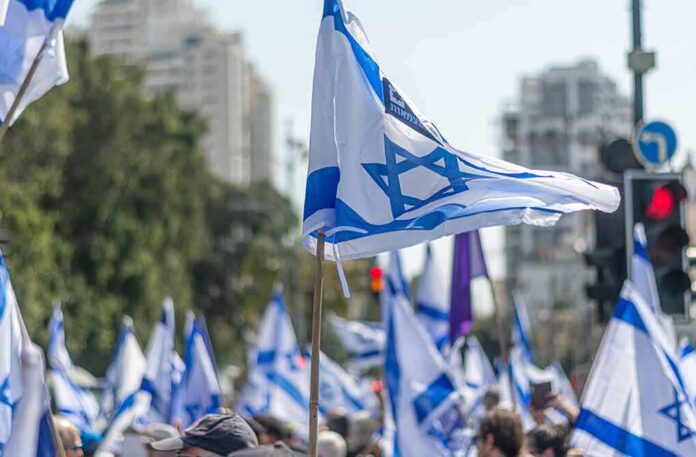
Israelis voted to fill all 120 seats of the Knesset in the first national election since the October 7, 2023 attack, a wartime test of leadership and coalition power.
Story Highlights
- Election held Tuesday, October 27, 2026, to choose the 26th Knesset.
- Vote uses nationwide proportional representation; 61 seats needed to govern.
- More than seven million Israelis were eligible to vote, according to reporting.
- Many outlets framed the race as a referendum on Prime Minister Benjamin Netanyahu.
What Happened on Election Day
On Tuesday, October 27, 2026, Israelis went to polling places across the country to elect the 26th Knesset, Israel’s parliament. The election came three years after the October 7, 2023 attack and during an ongoing period of regional tension. Broadcasts and live pages tracked turnout and reported partial counts, while official certification follows later under Israel’s process. Media coverage widely described the vote as the first national election since the October 7 attack.
The ballot determined all 120 parliamentary seats. Parties that clear the legal threshold share seats in proportion to their vote totals nationwide. No single party has ever commanded a large majority on its own, so coalition talks usually decide who governs. Any government must assemble at least 61 seats to hold a working majority and pass budgets, laws, and key appointments. That math shapes campaign strategy, election night messaging, and the bargaining that follows.
Why This Vote Matters
Major outlets said the election doubled as a verdict on leadership and crisis management, with special focus on Prime Minister Benjamin Netanyahu and his allies. Security, the cost of living, and government performance all featured in the campaign’s closing arguments. Voters faced choices about war aims, hostage issues, social divisions, and the economy after years of conflict and political churn. The outcome will set the course for policy, cabinet posts, and Israel’s ties with the United States and regional powers.
More than seven million citizens were eligible to cast ballots, according to contemporaneous reporting, reflecting a broad electorate with diverse views and priorities. Israel’s system gives smaller factions leverage if they can pass the threshold and join a bloc. That structure can amplify voices from both the right and the left. It also means that narrow margins can swing control, making turnout and late-count ballots important to final seat shares.
How Israel’s System Shapes the Result
Israel uses nationwide proportional representation with a legal threshold that parties must clear to enter the Knesset. Seats are then allocated proportionally until all 120 are assigned. After counting, the president tasks a party leader with trying to form a coalition. Parties bargain over ministries, budgets, and policy lines to reach at least 61 seats. If talks fail, a rival leader may get a chance, or the country can face another election cycle.
📌 Israeli Elections: Key Parties and Political Alliances
♦️ Israelis headed to the polls on Tuesday in the first general election since the October 7, 2023, attack, amid a contest to form the next government. Around 7.3 million people are eligible to vote.
📌 Key Parties and… pic.twitter.com/GZUPRNiKTr
— Al Majalla (@AlMajallaEN) October 27, 2026
This election’s timing and tone were conditioned by conflict. Reporting detailed how war and security risks shaped campaign themes, media focus, and voter concerns. Still, voters had many issues on their minds beyond security, including prices, public services, and political integrity. For Americans watching from afar, the process highlights a core tension familiar at home: citizens want safety, fairness, and competent service, while party leaders compete in a high-stakes struggle for power and survival.
What Comes Next
Exit polls and partial counts often lead early narratives, but official results and coalition agreements determine who governs. Parties will test alliances, weigh red lines, and measure public promises against the trade-offs needed to reach 61 seats. International partners will watch for signals on Gaza policy, Iran deterrence, and economic reforms. For Israelis, the test is simple to state and hard to meet: can elected leaders form a stable government that puts public needs ahead of political gain?
Sources:
youtube.com, israelielection.org, israel.com, jta.org, apnews.com