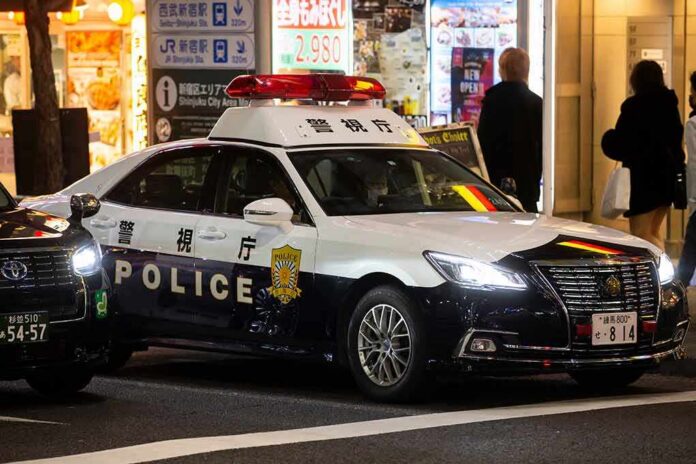
A U.S. Marine accused of strangling a Japanese woman and stealing her wallet has triggered a 30-day curfew for thousands of troops on Okinawa.
Story Snapshot
- Okinawa police arrested Lance Cpl. Devin Jacob Ballard, 20, on suspicion of strangling Anna Yagi, 39, at a Naha hotel and stealing her wallet and backpack.
- Security footage reportedly showed a man entering the hotel with Yagi and leaving alone; police found Ballard in a nightlife district the next night.
- Ballard denies the allegations and told investigators he knows nothing about the case.
- The U.S. military ordered a 48-hour operations pause, an alcohol ban, and a monthlong midnight-to-5 a.m. curfew for all personnel on Okinawa.
- Japanese officials, including the defense minister, filed formal protests and demanded stricter discipline from U.S. forces.
Police Detail Allegations Against Marine
Okinawa prefectural police said they arrested Ballard, stationed at Futenma Air Station, on suspicion of killing Yagi early Saturday at a hotel in Naha’s Wakasa district. Police said Yagi died of asphyxiation after pressure was applied to her neck. Investigators also allege Ballard stole her wallet and backpack before leaving the scene.
Police said security camera footage showed a man entering the hotel with Yagi and leaving by himself a short time later. The following night, a patrolling officer reportedly spotted Ballard walking in an entertainment district in nearby Okinawa City. Officers questioned him there before taking him into custody.
Marine Denies Any Knowledge of the Crime
Ballard has denied the allegations. He told investigators he does not know anything about what happened, according to Japanese reporting on the case. No transcript of a full interview or formal confession has been made public. The case has been forwarded to prosecutors, but Ballard has not been convicted of any crime, and the arrest remains an accusation, not a legal finding of guilt.
Military Locks Down Base Life for a Month
Lieutenant General Watson ordered all U.S. military personnel on Okinawa to pause operations for 48 hours starting Wednesday. During that window, troops faced “no off-base liberty allowed” and a total alcohol ban, both on and off base. Watson called it a “period of reflection” meant for leaders to retrain personnel on standards of conduct before the longer curfew began.
Once the pause ended, a 30-day curfew took effect. Service members must stay on base, in their quarters, or at their off-base residences between midnight and 5 a.m. every night through early November. The restrictions apply broadly to personnel across the island, not just those connected to Ballard’s unit, affecting daily life for thousands of troops and their families.
Tokyo Demands Accountability From Washington
Japan’s Defense Minister Koizumi called the killing “unacceptable” and pledged a strong formal protest to U.S. officials. The vice foreign minister separately protested directly to the U.S. ambassador. Okinawa’s governor said past U.S. military efforts on human rights education had proven “completely ineffective,” reflecting frustration that runs deeper than this single case.
The U.S. military is imposing a monthlong curfew in Okinawa after the arrest of a marine on suspicion of murdering a local woman https://t.co/9jaKfAMCXb
— TIME (@TIME) October 7, 2026
The Marine Corps said it takes the allegations “very seriously” and expects every Marine to meet the highest standards of behavior, adding that it is cooperating with Japanese authorities while Ballard remains in local custody. That statement mirrors language U.S. forces have used after past incidents on Okinawa, where crimes involving American troops have long fueled local anger over the island’s heavy military footprint.
A Familiar Cycle on a Base-Heavy Island
This is not the first time a violent crime has forced U.S. forces into emergency restrictions on Okinawa. Similar curfews followed a 2017 drunk-driving death and earlier cases dating back decades, each time sparking outrage, protests, and temporary discipline before life returned to normal. Researchers who study the island note that anger over noise and jet traffic often blends with anger over crimes tied to U.S. bases and troops.
That pattern raises a question many Americans and Japanese citizens share regardless of politics: whether tough-sounding punishments like curfews and alcohol bans actually change behavior, or whether they are mostly public relations moves that fade once headlines move on. Okinawa’s governor already voiced that skepticism this week, saying past training efforts made little difference. The case now heads to Japanese prosecutors, where the legal process, not the curfew, will determine what actually happened.
Sources:
time.com, abcnews.com, nbcchicago.com, japan-forward.com, stripes.com, aa.com.tr, foxnews.com