
A federal judge ordered Homeland Security agents to stop going door-to-door questioning people about their citizenship and voter status in nine states, ruling the practice likely violated federal law against voter intimidation.
Quick Take
- A California judge blocked Homeland Security field operations targeting suspected noncitizen voters in nine states.
- The court found the government used “flawed” data that misidentified U.S. citizens as noncitizens.
- Judges said the operations likely broke the Voting Rights Act’s ban on voter intimidation.
- Research shows confirmed noncitizen voting is extremely rare, while studies on voter-ID laws show mixed effects on turnout.
Judge Blocks Door-to-Door Citizenship Checks
U.S. District Judge Araceli Martínez-Olguín issued a preliminary injunction stopping the Department of Homeland Security from running “elections-related field operations and field interviews” in nine states. The states include California, New York, Missouri, Connecticut, Georgia, Nevada, Pennsylvania, and others named in the lawsuit. The order came weeks before Election Day, after nurses’ unions and immigrant-rights groups sued over the visits.
The lawsuit, California Nurses Association v. U.S. Department of Homeland Security, argued the visits scared lawful citizens away from voting. The judge agreed the government could not target people it knew, suspected, or should have known were U.S. citizens. Plaintiffs said agents sometimes showed up armed at private homes to question residents about immigration status tied to voter rolls.
Court Finds a Pattern of Errors
Martínez-Olguín wrote that the government relied on data it knew was inaccurate. She said the records often misidentified citizens as noncitizens, a mistake that could scare eligible voters out of casting ballots. The judge, an appointee of President Joe Biden, called the operations a likely violation of the Voting Rights Act’s protection against voter intimidation.
Local officials in Los Angeles County separately warned that a related Justice Department demand for ballot records could slow down election processing right before voters go to the polls. Civil-rights groups say both actions, taken together, put pressure on election workers and voters at the exact moment turnout matters most.
How Rare Is Noncitizen Voting, Really?
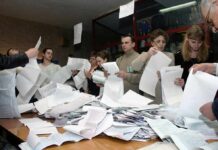
Confirmed cases of noncitizens voting are extremely uncommon. A nationwide review of 42 election jurisdictions that counted 23.5 million votes in 2016 found only about 30 incidents of suspected noncitizen voting referred for further review. That small number sits at the center of the debate over whether aggressive enforcement is solving a real problem or creating a new one.
Supporters of stricter checks say even rare cases justify action to protect election integrity. Critics counter that when enforcement efforts rely on bad data and intimidate citizens in the process, the cost to lawful voters may outweigh the benefit. Courts weighing this case sided with the second view, at least for now.
What the Voter-ID Research Shows
The broader fight over election rules includes voter-ID laws, a separate issue from DHS field operations. A large nationwide study covering 1.6 billion observations from 2008 to 2018 found strict ID laws had no measurable effect on registration or turnout, for any group defined by race, gender, age, or party. Other research paints a less settled picture.
A separate study using a different statistical method found turnout dropped after strict photo-ID laws took effect, with white voters recovering faster than minority voters in later elections. A federal government review of ten studies found mixed results too: five showed no effect, four showed turnout drops, and one showed an increase. The debate remains unresolved on ID laws specifically.
What Happens Next
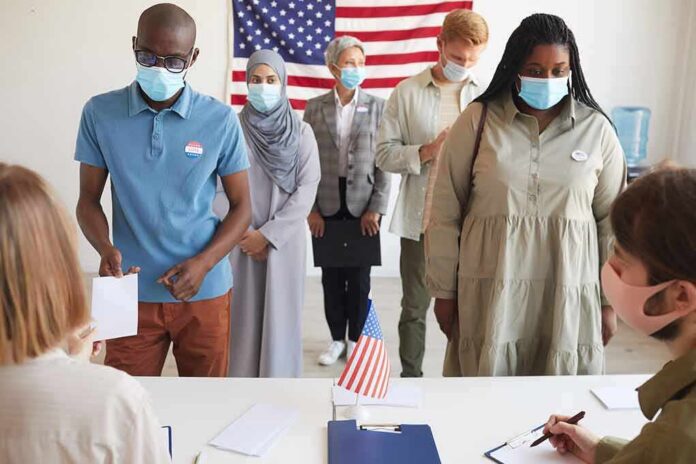
The injunction keeps Homeland Security out of the nine named states for now, though the case continues in court. Lawyers for both sides are expected to keep arguing over how far federal agents can go in checking voter rolls without crossing into intimidation. For voters, the immediate effect is clear: the door-to-door checks are paused heading into the next election.
The case highlights a tension many Americans across the political spectrum recognize. Government efforts meant to secure elections can end up burdening the very citizens they’re supposed to protect, especially when built on flawed data and carried out under tight deadlines before voters head to the polls.
Sources:
latimes.com, protectdemocracy.org, commondreams.org, bnd.com, opb.org, cases.justia.com, columbia.edu, academic.oup.com