In an extraordinary split, a Republican-led House now weighs impeaching the sitting defense chief for alleged unauthorized war against Iran.
Story Snapshot
- Rep. Thomas Massie filed eight impeachment articles against Defense Secretary Pete Hegseth, centering on alleged unauthorized Iran hostilities.
- The privileged resolution forces House action within two legislative days, ensuring a vote or motion to table.
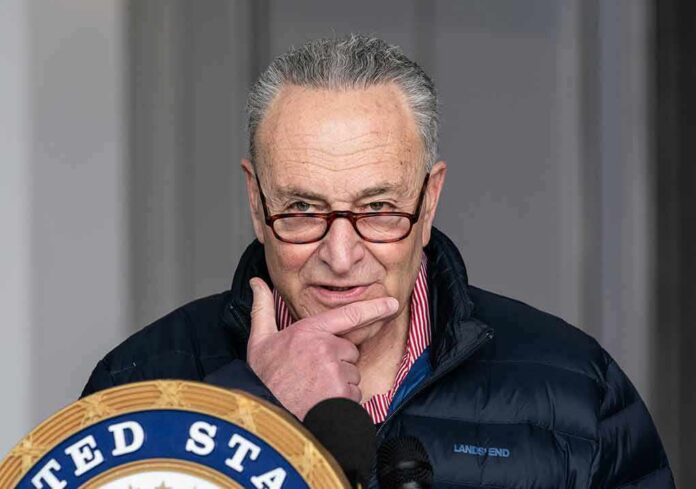
- Senate Democratic Leader Chuck Schumer urged a Senate trial if the House impeaches Hegseth.
- Hegseth and the White House say every operation was lawful, ordered by President Trump, and notified to Congress.
What The House Is Voting On And Why It Matters
Rep. Thomas Massie introduced a 34-page impeachment resolution with eight articles against Defense Secretary Pete Hegseth on November 9, 2026. Three articles allege Hegseth initiated and continued hostilities against Iran without congressional approval, and beyond War Powers limits. Other articles cite Yemen strikes, lethal actions targeting suspected drug-trafficking boats, alleged retaliation against Senator Mark Kelly, and the seizure of Venezuela’s Nicolás Maduro. The scope invites a broader abuse-of-power case, not only a war-powers fight.
The resolution is “privileged,” which triggers action within two legislative days. That means House leaders must allow a vote, refer the measure to committee, or move to table it, rather than ignore it. This process ensures public accountability, at least to a first vote. Even supporters admit impeachment is not removal. Conviction and removal would require a two-thirds Senate vote, which remains a high bar in today’s polarized Congress.
How The Iran Allegations Collide With Longstanding War Powers Tensions
Massie argues Hegseth “waged the Iran war” without a declaration of war, specific authorization, attack on the United States, or imminent threat, and kept hostilities past War Powers timelines. That claim taps a long-running dispute over who can start or sustain military force. Congress holds the power to declare war, while presidents, as commander in chief, have often used force without a formal declaration. The line between limited operations and “war” has been blurry for decades.
War Powers rules were designed to force notification and limit unauthorized hostilities. But presidents of both parties have treated them as flexible. Critics say that practice sidelines voters and their representatives. Supporters argue fast-moving threats require speed and secrecy. This case tests whether Congress will actually enforce its own deadlines and red lines, or revert to speeches without teeth. The House vote will show if members want to draw a brighter boundary now.
Schumer’s Pressure And The White House Rebuttal
Senate Democratic Leader Chuck Schumer backed Massie’s push, saying Hegseth must stand trial in the Senate if the House impeaches him. That stance adds unusual cross-party pressure. Yet impeachment would still face a steep climb to reach two-thirds in the Senate. Republican leaders and President Trump are likely to defend their defense secretary, framing the case as politics dressed up as process. The outcome will hinge on how many Republicans break ranks.
Here is a list of all who are in favor or in support of the impeachment of Secretary of War, Pete Hegseth.
🏛️ Elected officials 🏛️
– Thomas Massie (@RepThomasMassie), R-KY, introduced the eight articles and is forcing the vote
– Yassamin Ansari (@RepYassAnsari), D-AZ, sponsor… pic.twitter.com/zyAiWmI5El— Tiffany Savage 🇺🇸 (@patriot_savvy) November 10, 2026
Hegseth rejects the charges as a stunt. He says every cited mission, including Iran and Yemen actions, counter-narcotics strikes at sea, and the Venezuela operation, was lawful, ordered by President Trump, approved through his chain, and reported to Congress. He argues critics confuse policy disagreements with “high crimes,” and that punishing leaders for “successful” operations would harm morale and invite enemies to test the United States. The White House echoes that view.
What We Know, What We Do Not, And Why It Affects You
The public record confirms a formal, detailed impeachment filing and a fast House clock. It confirms Schumer’s call for a Senate trial if articles pass. It also confirms Hegseth’s and the White House’s claims of lawful orders and congressional notice. What the public has not seen are the underlying legal memos, targeting orders, or classified war notifications that could settle the core dispute. That secrecy leaves citizens stuck between dueling claims.
For many Americans, this fight echoes a deeper frustration: leaders of both parties too often stretch rules, hide the ball, and only argue after the fact. Conservatives see wars without votes and a Congress that ducks hard choices. Liberals see concentrated power and weak oversight. Both worry elites protect themselves first. This case forces a choice. Either Congress reclaims real war powers, with facts and votes, or it signals the status quo will continue.
Sources:
youtube.com, massie.house.gov, cnbc.com, npr.org, bbc.com, abc6onyourside.com, ms.now, abc7news.com, the-journal.com