
A federal judge hit pause on President Trump’s 250-foot arch, forcing the government to prove it has the legal authority it says it already has.
Story Snapshot
- Judge Tanya Chutkan temporarily blocked construction for 14 days while lawsuits proceed.
- The National Capital Planning Commission approved the project 8-4 after hours of public comment.
- Plaintiffs say the Commemorative Works Act requires new, specific authorization from Congress.
- The administration argues a 1925 law already authorized a monument at Memorial Circle.
What the Court Did and Why It Matters
Judge Tanya Chutkan issued a two-week order stopping work on the proposed 250-foot arch near Arlington National Cemetery. Her order came hours after a federal planning commission cleared the project to start. The judge also required fast notice to the court before any construction step, signaling concern about an imminent start. The order is temporary and does not decide the final outcome. It preserves the status quo while the court reviews the legal claims in more detail.
The pause matters because once heavy equipment moves in, damage to a historic area can be hard to undo. Courts often step in briefly when parties claim agency actions broke the rules or skipped steps. Here, the plaintiffs say the government moved ahead without required authorization from Congress. The judge’s order gives time to test those claims in full. It also reminds agencies that speed cannot replace clear legal authority.
The Legal Fight Over Who Can Approve a Monument
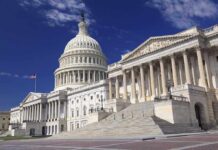
The core dispute turns on the Commemorative Works Act. That law generally requires Congress to specifically authorize new memorials on federal land in Washington, D.C., and its surroundings. Veterans, a historian, and later the District of Columbia and Virginia argue that this rule applies to the arch. They say agency approval alone is not enough for a permanent, 250-foot structure at Memorial Circle and that construction should not begin without a new law from Congress.
The administration responds that Congress already spoke a century ago. Officials and National Capital Planning Commission leaders point to a 1925 statute tied to the Arlington Memorial Bridge. That law contemplated a pair of tall memorial columns that were never built. Supporters say the arch fulfills that original design intent, so no new approval is needed today. They argue the old authorization still stands and allows design changes to complete the long-delayed plan.
NCPC’s Approval Amid Public Pushback
The National Capital Planning Commission voted 8-4 to give final site and building approval. The vote followed hours of public testimony, much of it against the project. The approval means the project cleared a key procedural step while lawsuits were pending. Commission leaders called the arch a gateway honoring the nation and its veterans and described security benefits. Critics questioned the rush and whether all legal and planning requirements were met before greenlighting construction.
Commission approval does not end the court’s role. Plaintiffs can still ask a judge to block action if the process violated federal law. The temporary halt suggests the court saw enough risk of harm to slow things down. The administration had signaled work could start soon after approvals and notices. That timeline helped drive the emergency request that led to the two-week pause while the legal issues are sorted out.
What Both Sides Need to Prove Next
The plaintiffs must show that the Commemorative Works Act covers this project and that it demands a new, specific act of Congress. They also raised claims that the structure would exceed height limits, though those arguments will require exact statutory details and site rules. Their strongest lane is the clear-text rule that new memorials in the capital region need Congress to sign off, not just agency approval, for permanent, commemorative structures.
BREAKING UPDATE:
A federal judge has promptly blocked construction of Trump's 250-foot triumphal arch near the entrance of Arlington National Cemetery after a panel stacked with Trump allies approved it. https://t.co/UJEmXVOLK8 https://t.co/Iqe1QZ31F6
— Kyle Griffin (@kylegriffin1) November 6, 2026
The administration must show that the 1925 authorization still has force and fits a 250-foot arch, not only the never-built columns. It also needs to defend the commission’s process as complete and lawful. If the 1925 law covered the site and left design discretion, that could satisfy authorization. If not, the court may find the project cannot proceed without Congress. Until then, the judge’s order blocks construction while these questions get a full hearing.
Sources:
cbsnews.com, npr.org, archpaper.com, nbcnews.com