

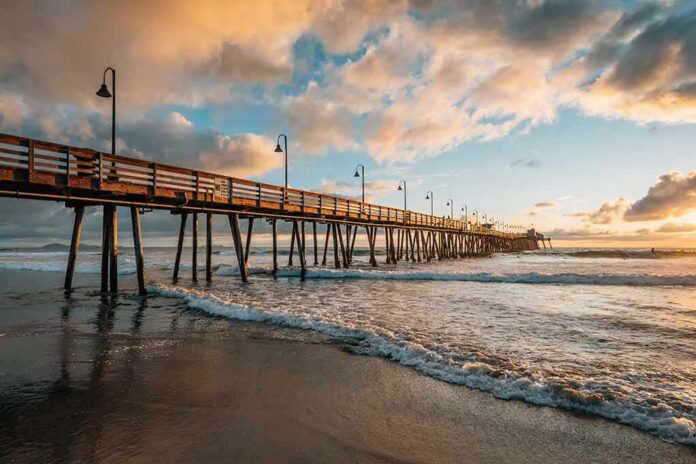
A massive wave during peak king tides ripped the end of Pacifica’s ocean pier into the sea, on camera, as coastal flooding hit the Bay Area.
Story Snapshot
- King tides and powerful waves knocked off the L-shaped end of Pacifica Municipal Pier.
- City warnings about large waves, strong currents, and rising water came before the collapse.
- The pier had been closed since June because of structural damage at its base.
- Flooded streets and high surf across the region confirmed severe coastal conditions that morning.
What Happened at the Pacifica Pier
On November 25, around late morning, heavy surf slammed the Pacifica Municipal Pier as king tides peaked. An end section shaped like an “L” broke off and fell into the ocean. Local television crews and bystanders captured the collapse as waves pounded the structure. A Pacifica police officer described the section giving way as the surf hit again and again. The Associated Press reported that king tides and strong waves destroyed part of the pier as officials warned of flooding.
City officials had already told people to stay away from the shoreline. Their alert cited large waves, powerful currents, and rising water levels that posed a serious safety risk. The surf also pushed water into low-lying streets around the Bay Area. Local outlets reported coastal flooding from the morning tide cycle. KQED said massive waves took down a major portion of the pier during those peak conditions that flooded nearby roads.
Why This Section Failed
Reporters on the scene and city voices linked the failure to the one-two punch of king tides and pounding surf. NBC Bay Area said the end section gave way as “massive waves” struck the pier. SFGATE described a wave tearing the section away amid historic king tides along the coast. This account aligns with the timing, visible footage, and wider flooding. The facts show severe water and wave energy were present when the structure failed.
The pier was not in full service before the collapse. KCRA reported the city had closed it in June after finding structural damage at the base. That matters because stressed parts with prior wear can lose strength. When large waves arrive, the margin for safety is smaller. Together, these conditions can turn routine storm hits into a break. Media coverage focused on the surf and tides but also noted this earlier damage.
Wider Coastal Strain and Maintenance Gaps
California agencies have warned for years that coastal structures face rising risks from higher water, erosion, and strong surf. State guidance explains that these pressures stack up and can overwhelm aging assets without steady upkeep. That picture fits what locals saw: flooded streets, damaged seawalls, and now a broken pier. The event highlights a basic civic test. Towns must keep older public works in safe shape as design conditions change, or accept closures and failures.
This is not only a blue-coast issue or a red-coast issue. People across the map want government to maintain what already exists before chasing new projects. They also want clear risk plans that match today’s conditions, not yesterday’s. When warnings go out and assets still fail, trust drops. The pier collapse shows how nature’s force and long-running maintenance needs can meet in one bad morning—and leave residents paying the price in lost access and safety worries.
What Comes Next for Pacifica
City leaders will likely secure the site, review debris, and assess what can be saved. They will face choices about repair, rebuild, or removal. Those choices need updated engineering on wave loads and foundation conditions, not guesswork. They also need a funding plan that does not drag on for years. People who fish there, walk there, or bring visitors there want a timeline, plain talk, and a design that can handle days like November 25.
Massive waves battered the Northern California coastline on Wednesday (November 25), causing part of the Pacifica Municipal Pier to collapse during king tides. The pier had been closed since June after cracks were discovered in its structure. Authorities warned residents and… pic.twitter.com/aKFGqFbYZE
— NDTV World (@NDTVWorld) November 26, 2026
The collapse also raises a familiar accountability issue. Who inspects, who funds, and who signs off on fixes when warnings are known months ahead? The pier’s June closure shows officials flagged concerns. But the break during a forecasted king tide shows how little slack remained. Voters on the left and right share the same bottom line here. They want basic stewardship to work. They want the system to protect public places before the next high-water day arrives.
Sources:
youtube.com, nbcbayarea.com, newsweek.com, kqed.org, sfchronicle.com