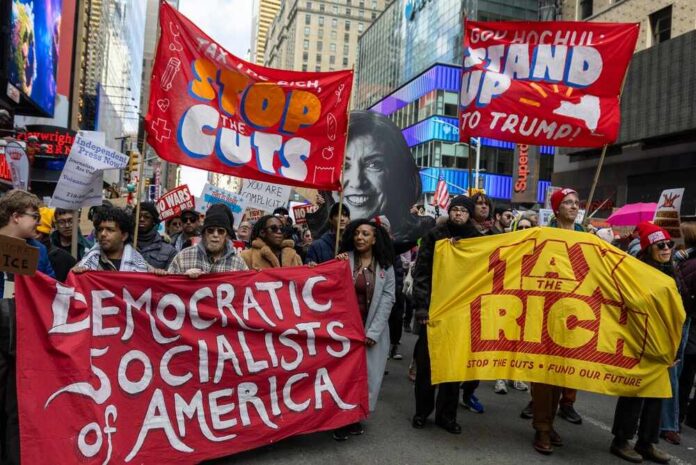
After a sweeping midterm win, the Democratic Socialists of America used a Manhattan rally to demand new Democratic leaders — before caucus elections even start.
Story Snapshot
- Democratic Socialists of America called for replacing Hakeem Jeffries and Chuck Schumer at a New York City post-election event.
- Democrats posted their biggest congressional gains in years, sharpening a fight over who should lead the caucus.
- Six newly elected House members were identified as backed by Democratic Socialists of America, signaling a larger progressive bloc.
- House Democratic leadership elections are set for November 18 and 19, giving the timing real stakes.
What The Rally Demanded And Why It Matters
Organizers and participants at a Democratic Socialists of America-led march in Manhattan said Democrats must dump “corporate” leaders and install figures who will push a more populist agenda. One marcher said, “Maintaining the current state of affairs is insufficient,” in a call aimed squarely at House and Senate leadership choices. The demand came days after Democrats captured large gains in Congress, a result some on the left see as a mandate for change inside the party.
House Democrats will choose leaders on November 18 and 19, which raises the stakes of any public push to influence the caucus vote. Reports said Hakeem Jeffries in the House and Chuck Schumer in the Senate were still favored to retain top roles, but activists argued the party should shift course after the midterm wave. The timing shows a classic leverage play: make noise before members cast secret ballots and try to shape what “winning” means for the next Congress.
How Big Is The Democratic Socialists Of America Footprint?
Progressive media identified six incoming House members as backed by Democratic Socialists of America: Angela Gonzales-Torres, Claire Valdez, Darializa Avila Chevalier, Chris Rabb, Donavan McKinney, and Melat Kiros. That gives organizers a visible beachhead, though far short of a majority of the caucus. The group’s presence matters because even a small bloc can pressure leaders by withholding votes, forcing floor debates, or tying support to policy demands, as other factions have done in recent years.
Still, the available reporting does not show that Democratic Socialists of America drove the midterm sweep on its own, or that voters endorsed a wholesale leadership purge. Analysts said Democrats won big, but the party remains ideologically broad, with moderates still numerous. That means the left has influence but not command. The gap between a noisy rally and actual caucus votes is real, especially when incumbents control donor networks, committees, and relationships inside Congress.
What Each Side Is Arguing About Party Direction
Progressives argue the wave came from promises on working-class issues and foreign policy shifts, so leadership should reflect that agenda. Coverage of the Democratic Socialists of America event also highlighted calls to rethink United States policy toward Israel, a stance that splits Democrats and could define early tests for leaders. Supporters say new leaders would move faster on economic relief, housing, and health care, and would listen to base organizers who helped turn out voters.
If @RepJeffries & @SenSchumer allow these Leftists to force them out of these Leadership roles at this Critical Time.. then The Democratic Party will truly be dead & over. These ignorant DSA Leftists forced out Biden, didn’t vote for Kamala and hounded Jasmine C. Stand Strong!!!
— Ms. Pat (@ItsMeMsTrish) November 8, 2026
Party insiders counter that the current leaders recruited candidates, raised money, and won races, so continuity is the safer path. Reporting said Hakeem Jeffries and Chuck Schumer were expected to prevail in the caucus, reflecting institutional strength after the midterms. For many Democrats, keeping proven leaders signals stability against President Trump and a Republican Congress. For skeptics on both right and left, the fight feeds a broader worry that Washington power stays locked in, while everyday costs and public trust keep sliding.
Why This Fight Resonates Beyond The Left
This clash reflects a larger American frustration: people see leaders talking past real pain on prices, energy, immigration, and wages. Voters on the right blame elite global agendas and weak borders. Voters on the left blame concentrated wealth and shrinking safety nets. Both sides doubt Washington will change itself. The Democratic Socialists of America push is one more test of whether a small faction can force a larger party to act, or whether the system absorbs dissent and keeps the same hands on the wheel.
What To Watch Next
Watch the November 18 and 19 House Democratic votes for any surprise defections or demands tied to leadership support. Track whether the six Democratic Socialists of America-backed newcomers coordinate on early bills or committee asks, which would show real muscle beyond slogans. Finally, listen for any public commitments from Democrats to back or oppose Hakeem Jeffries or Chuck Schumer. On paper, the establishment is favored. In practice, a tight margin can make a small bloc matter a lot.
Sources:
nypost.com, edition.cnn.com, mercurynews.com, abc6onyourside.com, democracynow.org