Minnesota lawmakers just moved to police how federal immigration agents operate inside the state—setting up a high-stakes clash between state politics and Washington’s enforcement power.
Quick Take
- The Minnesota Senate passed SF 4992, a bill that targets masked or unidentified federal immigration enforcement activity during operations.
- The proposal would require federal agents to identify themselves and their purpose and adds procedures tied to warrants and courthouse interactions.
- A key provision creates a private right of action, allowing Minnesota residents to sue federal agents for alleged constitutional violations.
- Supporters frame the bill as transparency and safety; critics argue it could hinder immigration enforcement and raise officer-safety concerns.
What Minnesota’s SF 4992 Would Require of Federal Agents
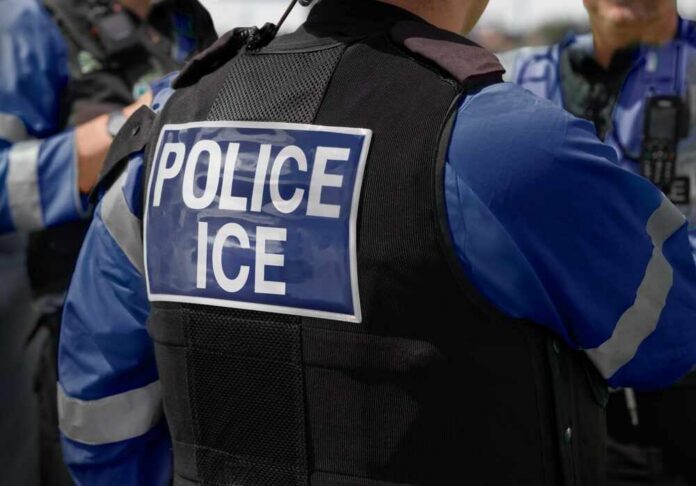
Minnesota’s Senate has advanced SF 4992, legislation aimed at restricting how federal immigration enforcement personnel operate during actions in the state. Based on the bill description in available materials, the measure would prohibit federal agents from concealing their identities and would require them to identify themselves and state their law-enforcement purpose. The legislation also addresses warrant handling and includes provisions affecting enforcement activity in sensitive locations such as courthouses and hospitals.
The policy argument from supporters is straightforward: if an armed officer is exercising state-coercive power—detaining, searching, or entering spaces—citizens should be able to tell who that officer works for. That principle is broadly consistent with constitutional accountability traditions. The operational reality, however, is that federal agencies often justify masks and tactical anonymity as a safety measure, particularly when political tensions around immigration enforcement are high.
The Lawsuit Provision Raises the Stakes Beyond “Mask Rules”
The most consequential piece of SF 4992 is not the identification requirement itself; it is the private right of action allowing residents to sue federal agents for constitutional violations. That tool shifts accountability from internal agency discipline and federal courts alone toward a broader, citizen-driven litigation model. In practice, that can mean more lawsuits, more legal costs, and more deterrence of aggressive enforcement tactics—even before any court determines whether a claim has merit.
Because immigration enforcement is a core federal responsibility, any attempt by a state to regulate the manner of federal operations can invite a preemption fight. The uncertainty about how these provisions will interact with federal legal protections, including questions around sovereign immunity and the scope of remedies. That uncertainty matters: the bill could become a vehicle for years of court battles that drain public attention and resources while leaving communities unclear about what rules actually apply.
Ellison and the National Push: “No Secret Police” Politics Comes to Minnesota
Minnesota Attorney General Keith Ellison has played a central role in the broader push behind this approach. In July 2025, Ellison joined a coalition of 20 state attorneys general urging Congress to pass a federal proposal commonly referred to as the “No Secret Police Act,” arguing that visible identification improves safety and accountability. The Minnesota Senate bill fits that same framework, now pursued at the state level during the 2025–2026 legislative session.
For conservatives who prioritize clear lines of authority, this moment highlights a recurring tension: states seeking to constrain federal power when the federal policy direction is unpopular locally. Minnesota’s political environment as progressive and protective toward immigrant communities—helps explain why the state is pressing ahead even though Republicans control Washington in 2026. The practical question is whether transparency requirements are being written narrowly to prevent impersonation and abuse, or broadly enough to obstruct enforcement.
Public Safety Funding, Courthouse Rules, and the Broader Enforcement Picture
The immigration enforcement bill is unfolding alongside other public safety activity at the Capitol. The Minnesota House passed a related public safety funding package (HF3230/SF3432) on May 6, 2026, by a 92–42 vote, with funding totals cited at $24.17 million for the 2026–27 biennium and $11.14 million directed to Capitol security. The same environment fueling security spending is also shaping the debate over what “safe” enforcement looks like.
SF 4992’s courthouse and hospital-related provisions also matter beyond immigration politics. Courthouses are where due process is supposed to be clearest, and hospitals are where people seek urgent care regardless of status. Requiring formal procedures for warrants and interactions in these settings may reassure residents who fear chaotic enforcement. At the same time, the research notes missing details on implementation timelines and hospital policy specifics, limiting how confidently anyone can predict real-world impact.
What to Watch Next: Implementation, Litigation, and Federal Response
SF 4992 had passed the Minnesota Senate and was awaiting final legislative action. If enacted, the next phase likely shifts from politics to law: agencies adjusting tactics, courts evaluating suits, and possible federal challenges if Washington argues Minnesota is interfering with federal duties. Even supporters should want clarity quickly, because vague rules breed selective enforcement and mistrust.
The larger significance is that this isn’t only an immigration story; it is a governance story. Americans across the spectrum increasingly suspect institutions protect themselves first and ordinary people last. Minnesota’s bill sells itself as transparency, while critics see potential sabotage of enforcement. The only durable outcome will come from clear standards that protect constitutional rights and officer safety without turning law enforcement into a political weapon—at either level of government.
Sources:
SF 4992 (Minnesota Revisor of Statutes) – Bill Text/Versions