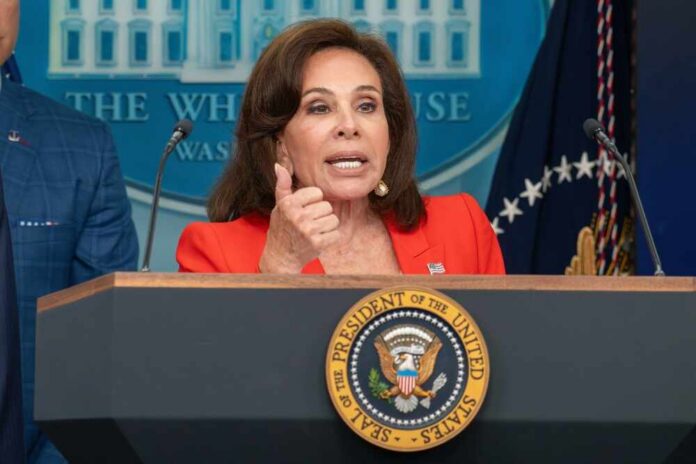
A grand jury unanimously rejected U.S. Attorney Jeanine Pirro’s rushed attempt to indict six Democratic lawmakers over a social media video defending constitutional military oaths, exposing a politically motivated prosecution that even a prosecutor-friendly system couldn’t stomach.
Story Snapshot
- Grand jury unanimously rejected indictments against six Democratic lawmakers with military backgrounds who posted a video reminding troops not to obey illegal orders
- U.S. Attorney Jeanine Pirro abruptly escalated a low-priority inquiry into an indictment push within weeks, bypassing normal procedures and failing to identify violated statutes
- The case has been shelved following the rejection, with House Democrats demanding a probe into potential prosecutorial misconduct
- The failed prosecution marks another setback for Pirro’s office, which has faced repeated grand jury rejections and judicial rebukes over politicized cases
Failed Indictment Attempt Against Democratic Veterans
U.S. Attorney Jeanine Pirro’s office shelved its pursuit of six Democratic lawmakers after a grand jury unanimously rejected indictment requests in mid-February 2026. The targeted legislators—Senators Elissa Slotkin of Michigan and Mark Kelly of Arizona, plus Representatives Jason Crow of Colorado, Maggie Goodlander of New Hampshire, Chrissy Houlahan of Pennsylvania, and Chris Deluzio of Pennsylvania—all share military or intelligence backgrounds. The prosecution centered on a November 2025 social media video where these lawmakers reminded military personnel of their constitutional obligation to refuse illegal orders, posted in response to rhetoric about executing domestic political opponents for treason.
Rushed Timeline Raises Questions About Political Motivation
The investigation displayed unusual characteristics from its inception. FBI agents notified the lawmakers of interview requests on November 25, 2025, but the inquiry languished through mid-January 2026 without prosecutors identifying specific violated statutes. Defense attorneys received vague contacts from prosecutors who couldn’t articulate what laws their clients allegedly broke. Then in late January 2026, Pirro abruptly ordered her team to seek indictments despite internal reservations. This compressed timeline—weeks instead of the typical months for complex cases—culminated in special counsels Steven Vandervelden and Carlton Davis presenting the case to a grand jury during the week of February 10-14, 2026.
Grand Jury Delivers Unanimous Rebuke
The grand jury’s unanimous rejection represents a stunning rebuke in a system structurally favorable to prosecutors. Former D.C. U.S. Attorney’s office prosecutors noted the rarity of such outcomes, given that grand juries typically hear only prosecution evidence without defense representation. The rejection occurred despite prosecutors having every procedural advantage. By February 16-17, 2026, Pirro’s office officially shelved the case. The White House praised Pirro’s alignment with President Trump’s agenda, while critics pointed to a pattern of failed politicized prosecutions from her office, including previous unsuccessful attempts to indict former officials like Miles Taylor and Christopher Krebs.
Congressional Oversight and Constitutional Concerns
House Democrats responded swiftly to the revelation. On February 19, 2026, Representatives Robert Garcia and Jamie Raskin sent a letter demanding documents from Pirro’s office and referring her and the two special counsels to the Department of Justice’s Office of Professional Responsibility for investigation. The lawmakers argued the prosecution attempt represented government overreach threatening First Amendment protections and the constitutional right of citizens—including elected officials—to remind military personnel of their oath to the Constitution. The targeted legislators had simply reiterated established military law requiring service members to disobey illegal orders, a principle fundamental to civilian control of the military and protection against authoritarian abuse.
Broader Pattern of Prosecutorial Failures
This case fits within a troubling pattern at Pirro’s U.S. Attorney’s office. Multiple sources report the office has faced repeated grand jury rejections on what critics describe as baseless and hyper-political charges, including failed prosecutions on minor offenses. Judicial rebukes have accumulated as well, with courts questioning the office’s handling of cases. Former Acting Assistant Attorney General Mary McCord highlighted concerns about career prosecutors being bypassed in favor of politically appointed special counsels. The office’s struggles raise fundamental questions about the proper role of federal prosecution and the dangers of weaponizing the justice system against political opponents, a concern that transcends partisan divides and strikes at constitutional governance.
Sources:
A Case Against 6 Democrats Lacked Urgency. Then Came a Swift Bid for an Indictment – GV Wire
Jeanine Pirro’s Failed Attempt to Indict Democrats – Politico
Jeanine Pirro’s Office Shelves Pursuit – AOL
House Democrats Letter to DOJ Regarding Failed Member Indictments