
Federal prosecutors asked a California court to set aside tens of thousands of mail ballots flagged as likely cast by noncitizens, and state officials refused to comply without verifiable proof.
Story Snapshot
- The Department of Justice (DOJ) delivered a list of more than 20,000 suspected noncitizens and sought to hold their ballots pending review.
- Los Angeles County declined to process the DOJ’s password-protected thumb drive and said the claims lacked method and evidence.
- Federal prosecutors announced 28 criminal cases tied to alleged unlawful registration or voting, adding pressure but not proving scale.
- California officials said they cannot reject ballots based on unverified matches and warned about harm from false flags.
What DOJ Asked California To Do
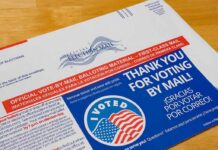
The Department of Justice filed suit on October 15, 2026, saying it had identified more than 20,000 registered voters as likely noncitizens and asking a court to require election officials to set aside mail ballots from those voters until citizenship could be checked. Acting leadership framed the request as segregation, not cancellation, to allow time for verification. Two days earlier, federal officials had delivered a password-protected thumb drive with names, birth dates, and addresses to Los Angeles County’s elections office.
The federal request targeted a narrow operational step before ballots were counted. Prosecutors said local officials lacked a way to resolve federal citizenship flags quickly before canvass deadlines. The plan would hold ballots tied to listed voters while records were checked, then allow eligible ballots to count. The goal was to avoid wrongful disenfranchisement while also preventing illegal votes. The approach depended on fast, reliable data sharing that the record shows did not occur.
How California Officials Responded
Los Angeles County Registrar-Recorder Dean Logan said the county could not withhold or refuse to count ballots based on unverified allegations and unconfirmed data matches. He said the thumb drive referenced individuals across California, not only within Los Angeles County, creating a scope and jurisdiction problem for his office. He also said the Department of Justice did not provide the underlying evidence, data sources, or methods used to label people as noncitizens, so the county could not act on it.
California Secretary of State Shirley Weber said an earlier federal estimate of about 190,000 possible noncitizens went public without proof, yet later fell to roughly 20,000 without a clear method for the change. She said state law allows only United States citizens to register and requires removal of ineligible registrants, but that such steps must rest on verifiable information. County leaders warned that acting on unverified lists could wrongly target lawful voters and damage trust in the process close to Election Day.
Criminal Cases Add Heat, Not Clarity
While the civil fight continued, the Department of Justice announced criminal enforcement actions against 28 people accused of unlawful registration, false citizenship claims, or illegal voting in California. One case involved a Belizean green card holder accused of registering as a citizen and voting in multiple elections, according to reporting on the charges. These cases show that noncitizen voting can happen and is a crime. They do not prove that all 20,000 flagged voters are noncitizens or that their ballots were cast or counted.
Los Angeles County's registrar just told a federal court the county has nothing beyond a voter's own word to prove citizenship.
California Admits in Federal Court: We Have No Way to Verify Voter Citizenship Beyond What the Voter Claimshttps://t.co/kY6BkfhZwF#ElectionIntegrity…
— Profilo politics (@profilopolitics) October 21, 2026
Local leaders said the arrests were being used to suggest widespread fraud even though they argued such cases are rare. Critics warned that publicizing unverified lists can chill lawful voting, especially when names are not vetted one by one. The timing, days before ballots are processed at scale, raised the stakes. The clash mixed legal questions about federal and state roles with an immediate need to protect both ballot access and ballot integrity.
Why This Fight Resonates Beyond California
Voters across the spectrum see a deeper problem: large systems that cannot verify key facts in real time. California says it relies on sworn declarations and established procedures to remove ineligible voters, but it rejects broad list purges without proof. The Department of Justice says it has evidence that demands urgent checks before counting. Both positions accept that wrongful disenfranchisement and illegal voting are harms that must be prevented, yet they disagree on process and proof.
Past reviews show that database matching can mislabel lawful voters as noncitizens, especially when records are old, names are common, or people naturalize after data snapshots. Errors can shake faith in the system and can block legal votes if officials move too fast. At the same time, real violations do occur and can also erode trust if ignored. The core fix is not a headline or a raid. It is fast, auditable, person-by-person checks with shared data and clear rules.
What Matters Now
Courts will decide whether and how California must respond to the federal list. The narrow test is practical: can officials confirm a voter’s citizenship fast enough to protect both eligible ballots and election timelines? A workable plan would include secure data exchange, transparent methods, and an appeals path for voters who are flagged in error. Voters deserve a system that verifies claims with proof, not politics, and that counts every lawful vote once—and only once.
Sources:
twitchy.com, usatoday.com, edition.cnn.com, dailynews.com, latimes.com, ctpublic.org, straitstimes.com, hawaiitribune-herald.com