When a nuclear cooperation agreement promises both decades of commercial opportunity and a potential pathway to uranium enrichment, it stops being a routine energy deal and becomes a pivotal test of how far the United States is willing to bend its nonproliferation standards for strategic partners.
Key Points
- President Trump has approved a 30-year U.S.–Saudi civilian nuclear cooperation deal that anchors Saudi Arabia’s program in American technology and firms.
- The agreement is a formal Section 123 pact under the Atomic Energy Act, coupled with a bilateral safeguards arrangement, and must undergo congressional review.
- Unlike past “gold standard” agreements, this deal leaves open a future pathway for uranium enrichment in Saudi Arabia after a joint study of commercial viability.
- Supporters see a strategic win that keeps Saudi nuclear development under a U.S. umbrella; critics warn it dilutes long‑standing nonproliferation norms and could spur a regional arms race.
The Architecture of the U.S.–Saudi Nuclear Deal
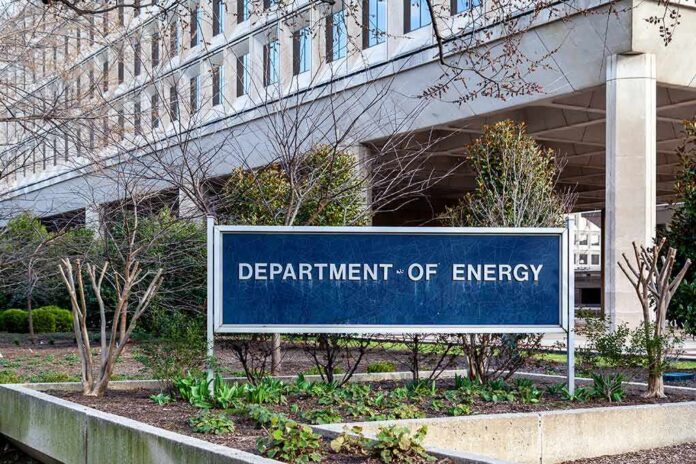
The core of the new arrangement is a civilian nuclear cooperation agreement negotiated under Section 123 of the Atomic Energy Act of 1954, the legal mechanism that governs U.S. nuclear exports and cooperation. In public statements, the Department of Energy has described the pact as a “historic” framework that will guide collaboration for roughly three decades, with American companies running commercial nuclear power plants on Saudi soil and supplying reactors and fuel. A separate bilateral safeguards agreement was signed alongside it, intended to codify how the two governments will account for nuclear material and facilities.
Structurally, this is the familiar 123 template: the agreement sets the legal conditions under which U.S. technology, fuel and services can flow; Saudi Arabia commits to use them for peaceful purposes and to keep the system under international oversight. The deal now moves to Congress, which has a fixed review period—90 days in this case—to examine the terms and decide whether to allow it to enter into force. In commercial terms, it is designed to be worth billions of dollars, positioning American firms as the kingdom’s “civil nuclear cooperation partners of choice.”
What Makes This Agreement Different: The Enrichment Question
What turns this deal from a conventional energy partnership into a nonproliferation debate is its treatment of the nuclear fuel cycle, particularly uranium enrichment. Enrichment—the process of increasing the concentration of fissile uranium‑235—is the same technology base that can produce reactor fuel at low levels and, if taken to high levels, weapons‑usable material. For the past decade and a half, the benchmark for tight nonproliferation controls has been the U.S.–UAE “gold standard” agreement, in which Abu Dhabi voluntarily foreswore enrichment and reprocessing and accepted enhanced inspection.
By contrast, internal administration documents and reporting indicate that the Saudi agreement deliberately does not embed that gold standard. An Energy Department memo seen by journalists confirms that the pact omits provisions that would prohibit Saudi enrichment and reprocessing, and does not require the kingdom to adopt the International Atomic Energy Agency’s most intrusive inspection protocol with broad access and short‑notice visits. Instead, the agreement establishes a pathway: U.S. and Saudi officials will conduct a joint, roughly two‑year study to determine whether domestic enrichment in Saudi Arabia is commercially viable compared with importing fuel.
If that study concludes that enrichment makes economic sense, the agreement appears to allow for the creation of a U.S.-built enrichment facility on Saudi territory, supplying fuel for Saudi reactors. Some reporting suggests that if Washington objects to enrichment in the kingdom after the study, Riyadh would be barred from pursuing it with other foreign partners for a period—on the order of ten years—but those constraints are softer than an outright renunciation. The administration stresses that the agreement does not obligate the U.S. to transfer fuel-cycle technology; it only creates a legal channel through which such cooperation could be approved.
Supporters’ Case: Strategic Alignment and Managed Risk
Advocates of the deal, both inside the administration and in segments of the nuclear industry, frame it as a pragmatic way to reconcile energy, commercial and security interests. In their view, Saudi Arabia is going to develop nuclear power; the relevant question is whether it does so under U.S. and IAEA oversight or with technology from suppliers whose nonproliferation standards are weaker. By locking in American firms as lead partners for reactors, fuel supply and operational support, the agreement keeps Riyadh’s nuclear infrastructure tied into a web of U.S. regulations, export controls and monitoring.
Supporters underline that the agreement explicitly limits cooperation to peaceful uses of nuclear energy and includes standard nonproliferation language required under the Atomic Energy Act. Energy Secretary Chris Wright and other officials have publicly assured that the pact “upholds the highest standards of nuclear safety and nonproliferation” and that any sensitive technologies will be managed within those constraints. They note that the joint enrichment study does not prejudge the outcome; it could conclude that importing fuel remains more cost‑effective, in which case the practical impetus for building enrichment capacity would be weak.
There is also a broader strategic logic at work. Saudi Arabia is a central actor in global energy markets and regional security, and successive administrations have worried that if Washington insists on maximalist conditions—such as permanent renunciation of enrichment—Riyadh could simply turn to Russia, China or others willing to accept looser safeguards. Proponents argue that imperfect cooperation under a U.S.-led framework is preferable to no cooperation and a parallel, less regulated program built with other suppliers.
Critics’ Concerns: Eroding Norms and Regional Signaling
Arms control specialists and many nonproliferation advocates see the same design features as dangerous rather than pragmatic. Their central contention is that the agreement abandons key elements of the U.S. policy that has gradually raised the bar for nuclear cooperation since the 1970s, weakening a norm that enrichment and reprocessing should be tightly constrained in regions of high strategic tension. The Arms Control Association has characterized the Saudi pact as a deal that “opens the door” to future uranium enrichment in the kingdom without strong international verification, warning that this combination significantly increases proliferation risk.
Several expert analyses highlight that the agreement neither requires Saudi Arabia to adopt the IAEA’s Additional Protocol—the instrument that enables more intrusive inspections and broader access—nor locks in the UAE‑style renunciation of fuel‑cycle activities. A letter from the State Department to Congress, described in Reuters reporting, acknowledges that the proposed 123 agreement lacks the stringent measures many lawmakers have pressed for, even as it positions U.S. industry at the forefront of Saudi nuclear development. From an arms‑control perspective, that tradeoff—commercial and strategic gain in exchange for relaxed guardrails—is precisely the problem.
Regionally, critics worry less about an imminent Saudi bomb than about precedent and signaling. Allowing one major Middle Eastern state a structured pathway to enrichment, even if delayed and conditional, can encourage others to seek similar rights or capabilities, complicating efforts to keep the region free of national fuel‑cycle plants. Israeli former officials and independent analysts, cited in international coverage, have voiced concern that the deal could ultimately enable Saudi Arabia to move closer to weapon‑relevant technology, especially if regional rivalries with Iran intensify. In that scenario, the agreement might be judged not by its immediate technical safeguards but by the long‑term dynamics it releases.
How This Fits the Larger Pattern of Nuclear Diplomacy
To understand the stakes, it helps to place the Saudi agreement within the broader evolution of U.S. nuclear diplomacy. Section 123 agreements have always involved a balance between promoting peaceful nuclear trade and reducing the risk that partners could divert civilian programs toward weapons. Over time, especially after cases like India and Pakistan, the United States has pushed for tighter constraints: comprehensive IAEA safeguards, bans on enrichment and reprocessing in sensitive regions, and political commitments against acquiring fuel‑cycle plants.
The UAE agreement became emblematic of that trajectory. By voluntarily accepting the gold standard, Abu Dhabi gave Washington a model to point to when asking other partners to accept similar limits. The Saudi pact, by design, steps away from that model. It keeps the formal legal and safeguards architecture intact but relaxes two of the informal norms—no domestic enrichment and maximal inspection—that many in the nonproliferation community had hoped would become standard practice.
At the same time, it reflects a recurring reality: major states with grand energy and security ambitions rarely accept permanent renunciation of capabilities they perceive as strategic. Saudi leaders have been explicit in public and private that they see enrichment rights as a matter of sovereignty and parity with other global players. The Trump administration’s agreement is one attempt to manage that aspiration—to shape it within a U.S.‑centric framework rather than confront it head‑on.
🚨 #BREAKING: US President Donald Trump has said Washington will not move forward with a civilian nuclear agreement with Saudi Arabia unless Riyadh agrees to normalise diplomatic relations with Israel under the Abraham Accords.
Trump's remarks link future US-Saudi nuclear… pic.twitter.com/Br2cWvt75Z
— The CBIJ (@TheCBIJ) July 24, 2026
What to Watch as the Agreement Moves Forward
Because the agreement must pass through congressional review, its next phase will be as political as it is technical. Members skeptical of the deal will focus on the enrichment study language, the absence of a gold‑standard renunciation clause, and the level of IAEA oversight Saudi Arabia commits to in parallel. They have levers—resolutions of disapproval, conditions attached to future export licenses—that can narrow the practical room for fuel‑cycle cooperation even if the underlying 123 pact enters into force.
Over the coming years, several questions will determine whether the deal is remembered as a responsible compromise or a weakening of norms. Does Saudi Arabia adopt the Additional Protocol, giving inspectors broader authority and access? Does the joint study find that domestic enrichment is genuinely commercially justified given global fuel markets, or does it serve mainly as a political bridge to a capability the kingdom wants for strategic reasons? And, if an enrichment facility is proposed, what technical and operational controls—such as low enrichment limits, ownership structure and real‑time monitoring—are built into its design?
The agreement that President Trump has greenlit does not answer those questions by itself; instead, it creates the framework within which they will be resolved. For now, the evidence supports two simultaneous truths: the deal is a substantial strategic and commercial win for U.S. nuclear industry and U.S.–Saudi alignment, and it moves the United States away from the strictest nonproliferation template it has promoted in the Middle East. Whether that recalibration looks, in hindsight, like necessary realism or avoidable drift will depend less on the signing ceremony than on how both governments choose to operate inside the framework they have just built.
Sources:
gatewayhispanic.com, aljazeera.com, 2001-2009.state.gov, washingtonpost.com, saudipress.com, bbc.com, youtube.com, armscontrol.org, cbsnews.com, reuters.com, thebreakthrough.org, nbcnews.com, pbs.org, fp4america.org, usatoday.com