An 18-year-old soldier was shot dead during firearms training at a Pennsylvania Army base, and the man who pulled the trigger is now pleading guilty to killing him.
Story Snapshot
- Sean Stark, 38, a civilian firearms instructor at Letterkenny Army Depot, has agreed to plead guilty to involuntary manslaughter.
- Private First Class Krystofer Lopez, 18, of Biglerville, died March 12 after being shot in the chest during a training exercise.
- Federal prosecutors say Stark acted with “reckless disregard for human life” during the training.
- Stark faces up to eight years in prison and has been suspended indefinitely from his depot job.
- Lopez’s family is speaking out, demanding more accountability as the plea moves forward.
A Young Soldier’s Death During Routine Training
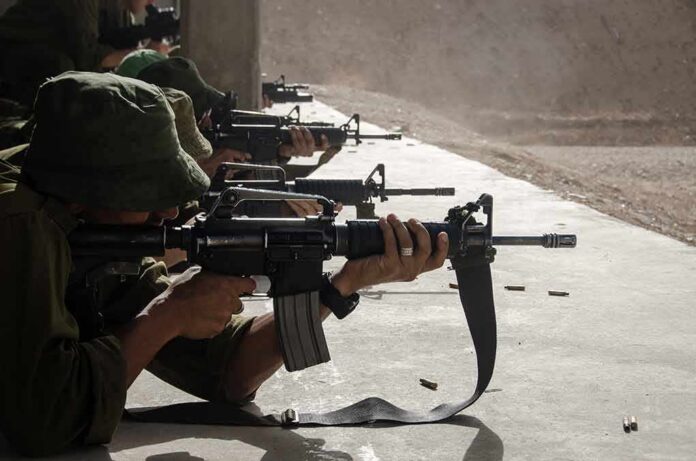
Krystofer Lopez, an 18-year-old Army private first class from Biglerville, Pennsylvania, died March 12 after being shot during firearms training at Letterkenny Army Depot near Chambersburg. Family members told local reporters Lopez was shot in the chest and died later that day at Chambersburg Hospital. The Army Criminal Investigation Division opened an investigation into the shooting soon after.
Federal prosecutors say Sean Stark, 38, of Carlisle, ran the training session where Lopez was killed. The U.S. Attorney’s Office for the Middle District of Pennsylvania charged Stark with involuntary manslaughter, saying he killed Lopez “while conducting firearms training in a grossly negligent manner”. Stark worked as a civilian employee in the depot’s Directorate of Emergency Services before he was suspended.
Instructor Agrees to Plead Guilty
Stark did not fight the charge in court. Instead, he agreed to waive his right to a grand jury indictment and plead guilty directly to the involuntary manslaughter charge. Court documents describe his conduct as “grossly negligent” and carried out “with reckless disregard for human life”. A judge has not yet scheduled the formal plea hearing, but the deal is already filed with the court.
If convicted under the terms of the plea deal, Stark could face up to eight years in federal prison. That maximum reflects the seriousness of the charge, even though involuntary manslaughter does not require proof that Stark meant to kill Lopez. Prosecutors only had to show his actions showed extreme carelessness that any reasonable trainer would have known was dangerous.
Defense Calls Shooting Unintentional and Tragic
Stark’s attorney, Edward Paskey, said his client and his family offered their “deepest condolences” to Lopez’s family. Paskey described the shooting as “unintentional” and called the circumstances surrounding it “tragic”. That statement does not dispute the facts laid out by prosecutors. It focuses instead on Stark’s state of mind, arguing the death was an accident rather than an intentional act.
Family Pushes for Accountability
Lopez’s parents have publicly responded to the charge and plea, calling for accountability in their son’s death. Letterkenny Army Depot confirmed it is aware of the federal charges and the plea agreement against the employee, identified as working within the depot’s emergency services division. The base did not release further details about how the training exercise was set up or supervised that day.
🔴 Civilian firearms instructor pleads guilty in fatal shooting at Pennsylvania Army depot
Sean Stark, 38, a civilian shooting instructor at Letterkenny Army Depot, pleaded guilty Monday in federal court to involuntary manslaughter in the March 12 shooting death of PFC Krystofer… pic.twitter.com/qrlsQF5ddm
— NewsTongue (@NewsTongueX) September 23, 2026
One detail has drawn attention from outside reporting: the shooting reportedly involved an M17 handgun, a weapon the Army has fielded broadly across its ranks. Separately, one outlet reported the Department of Justice has blocked release of the autopsy report while the investigation continues. Neither detail changes the core facts prosecutors laid out, but both point to unanswered questions about exactly how the training was run.
Why This Case Reflects a Bigger Pattern
This case follows a pattern seen across the federal court system. Roughly 90 percent of federal convictions come from guilty pleas rather than trials, according to legal researchers who study the courts. That means the public often learns about deadly incidents like this one mainly through negotiated charging documents, not a full public trial record. A guilty plea shows prosecutors felt confident in their case, but it does not always explain every technical detail of what went wrong.
For a family that lost an 18-year-old son during what should have been standard military training, and for a public increasingly skeptical of how institutions handle their own failures, this case lands at a familiar intersection. A young soldier is dead. A civilian instructor faces prison time. And many of the operational details behind the tragedy remain outside public view, even as the legal process moves toward a resolution.
Sources:
military.com, justice.gov, post-gazette.com, yahoo.com, militarytimes.com, wfmd.com, ground.news, recordsfinder.com