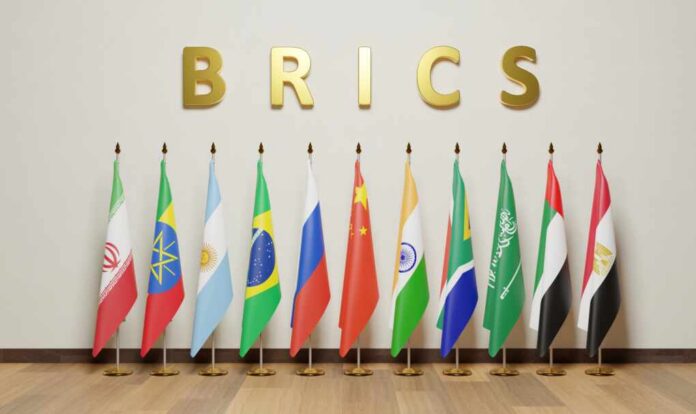
The “Will for Peace 2026” naval exercise, held in South African waters, has ignited a global controversy, laying bare the deepening geopolitical tensions and challenging the cohesion of the BRICS grouping. While framed by some media as an official BRICS naval drill, the event—primarily led by China and hosted by South Africa—has been disowned by key members like India and Brazil, who abstained.
Story Overview
- Controversy arises as the exercise is mischaracterized as a BRICS naval drill.
- Iran’s participation causes friction amid US criticism.
- India and Brazil abstain, questioning BRICS solidarity.
Mischaracterization of Naval Drills
The naval exercise “Will for Peace 2026,” held from January 9-16, 2026, in South African waters, has been misrepresented by some media outlets as a BRICS naval drill. This drill, primarily led by China and hosted by South Africa, involved select BRICS and BRICS+ nations, but was explicitly not a formal BRICS event according to India. The exercise’s branding has led to debates, particularly because key members like India and Brazil did not participate actively.
India, the chair of BRICS for 2026, distanced itself from the event, emphasizing it as a South African initiative rather than an official BRICS exercise. This decision reflects India’s strategic autonomy and desire to maintain balanced relations with the United States, which has criticized the event. The absence of India and Brazil highlights internal divisions within BRICS, especially given Iran’s controversial participation, which has been a focal point of criticism by the US.
The "BRICS Naval Drill" That Wasn'thttps://t.co/v7RKNajJZP
— Tom Pauken II. (@tmcgregorchina) January 27, 2026
Geopolitical Tensions and US Criticism
The inclusion of Iran, which fully participated despite reported orders for limited involvement, has heightened tensions. The United States, under the Trump administration, has expressed strong disapproval of South Africa’s engagement with Iran, emphasizing the potential impact on US-South African relations. This event has become a flashpoint for broader geopolitical tensions, underscoring the challenges of balancing relationships between emerging powers and Western nations.
South Africa’s government, led by President Ramaphosa, faces domestic and international scrutiny as it investigates whether Iran’s full participation was in defiance of official directives. The inquiry’s findings, expected soon, could clarify the situation and potentially ease tensions.
Impact on BRICS and Global Dynamics
The “Will for Peace 2026” exercise tests the cohesion of BRICS+, bringing to light the hesitancies of India and Brazil regarding military cooperation under the BRICS umbrella. This event could influence future BRICS dynamics and South Africa’s foreign policy orientation, highlighting the complexities of navigating between BRICS cooperation and Western alliances.
The exercise amplifies global debates on maritime security and de-dollarization, especially with China’s growing influence in the Indo-Pacific region. As the inquiry progresses, stakeholders will closely watch its outcomes, which could have significant implications for international relations and economic policies.
Watch the report: China, Russia conclude BRICS+ naval drills in South Africa amid controversy • FRANCE 24 English
Sources:
China, Russia Conclude BRICS Naval Drills in South Africa Amid Controversy
Iran’s Entry into BRICS Naval Drills Raises Concerns in South Africa
Will for Peace Drills: BRICS Tests Waters for Military Cooperation
China and Russia in BRICS Naval Exercise Hosted by South Africa, Iran Drops Out