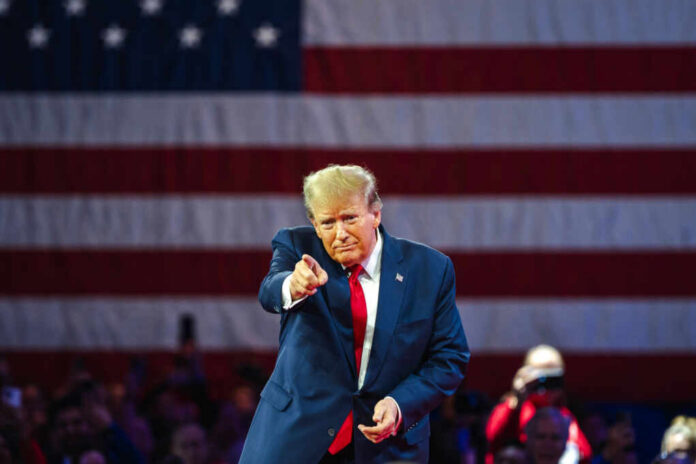
President Trump is now openly threatening to bomb Iran’s bridges and power plants next week unless its leaders agree to his terms for ending the war and reopening the Strait of Hormuz.
Story Snapshot
- Trump says nightly U.S. airstrikes on Iran will continue and could expand to civilian infrastructure if no deal is reached.
- He warns that bridges and power plants are “next week” targets, echoing earlier promises to send Iran “back to the Stone Ages.”
- U.S. Central Command says hundreds of Iranian military sites have already been hit to protect commercial shipping in the Strait of Hormuz.
- Critics on both sides fear the war is sliding into a dangerous pattern where threats grow, but clear endgame and costs to ordinary people remain murky.
Trump’s New Threat: Bridges and Power Plants “Next Week”
President Donald Trump told Fox News that U.S. strikes on Iran will continue every night and that the campaign could soon target bridges and electric power plants if Iran does not come back to negotiations. He said, “Next week it gets really bad for them because next week comes the power plants. Next week comes the bridges,” describing plans to “knock out all their power plants” and “all their bridges” unless Iran “gets to the table and negotiate.” These comments follow fresh rounds of airstrikes ordered in response to Iranian attacks around the Strait of Hormuz.
Trump has repeated versions of this threat for weeks, framing it as leverage to force a deal that reopens the Strait of Hormuz and ends Iran’s missile and nuclear activities. In earlier press events, he said the United States could destroy “every bridge in Iran” and render “every power facility” permanently useless “over a period of four hours” if Iran refused his conditions. He has also claimed that American forces have not yet “even begun to dismantle what’s remaining in Iran” and warned that bridges would be “next, followed by electric power plants.” The message is simple and blunt: agree soon, or face massive destruction.
What Has Already Been Hit in Iran
The current war has already seen large-scale strikes on Iranian military targets, especially around the Strait of Hormuz, a key route for global oil and gas. U.S. Central Command reports that, across several nights, American forces have hit hundreds of sites linked to missiles, drones, naval forces, and coastal radar, aiming to stop attacks on commercial ships. One recent update said more than 80 military installations were struck along Iran’s southern coast after multi-vessel attacks in the strait. Another public release noted that commercial vessel transits continue through the corridor despite Iran’s claims to have closed it, suggesting the U.S. has partly met its near-term goal of keeping shipping moving.
Earlier in the conflict, joint U.S.–Israeli operations known as Operation Epic Fury targeted Iranian leadership and major infrastructure starting in late February 2026. That campaign reportedly killed Supreme Leader Ali Khamenei and hit thousands of military and naval assets over several weeks. By March, Central Command said roughly 6,000 targets in Iran had been struck, including dozens of ships and minelayers used to threaten sea lanes. Even with these heavy blows, Iran has continued missile and drone launches at U.S. partners in the Gulf, and analysts say the strikes have not yet forced Tehran to give up control over the Strait of Hormuz.
Ultimatums, Deadlines, and a Deal That Never Quite Arrives
Trump’s bridge-and-power-plant threats sit inside a pattern of deadlines and ultimatums that have defined this war. He has multiple times given Iran fixed hours to accept wide-ranging demands, including reopening the Strait of Hormuz, ending ballistic missile work, and shutting down its nuclear program. Reports describe him warning that if Iran does not agree by 8 p.m. Eastern Time on specific dates, the United States will take out every bridge and power facility, pushing the country “back to the Stone Ages.” At one point, he said a whole “civilization will perish tonight” if Iran missed his deadline, language that raised alarms about civilian harm and possible war crimes.
Yet despite this extreme pressure, a stable agreement has not appeared. There was a short-lived ceasefire understanding in June tied to opening the strait, but its exact terms were never published, and each side accused the other of violations after new vessel attacks. Trump has said there was an 11-hour negotiating session where “everything was agreed to” before Iran demanded last-minute changes and walked away. Iranian officials, for their part, blame Washington for bad faith, point to continued strikes during talks, and insist they will not concede under threats. The result is a cycle many Americans recognize from years of foreign policy: big promises, unclear documents, and no clean finish.
Risks for Civilians, Energy Costs, and the “Deep State” Debate
Trump’s plan to target bridges, power plants, and possibly desalination facilities goes far beyond hitting missile launchers and small warships. These are systems ordinary people rely on for travel, light, heat, and clean water every day. Destroying them on a nationwide scale would likely cause long-term suffering for civilians and major shocks to global energy markets, which already feel pressure from fighting in the Strait of Hormuz. Oil prices have climbed on each new round of threats and strikes, feeding the sense among many Americans that foreign wars keep driving up gas, food, and living costs at home.
🇺🇸| United States: Fourth Consecutive Night of Massive Airstrikes and Resumption of Naval Blockade
On July 14–15, 2026, U.S. forces launched massive airstrikes against Iran, marking the fourth consecutive night of military operations since the conflict escalated.
◼️ Scale and…
— Aprajita Nafs Nefes 🦋 Ancient Believer (@aprajitanefes) July 15, 2026
People on the right and left share a growing worry that the federal government is making these decisions without a clear plan for how they end or who pays the price. Military briefings stress “self-defense” and talk about safeguarding personnel and shipping, but they rarely spell out how many nights of bombing it will take, or what limits exist on hitting civilian infrastructure. Think tanks note that Iran has survived long blockades before and may endure this one for months, meaning strikes alone may not change its behavior. That raises a hard question many Americans are now asking: are these threats about protecting the country, or are they feeding a permanent war machine that answers more to elites and contractors than to citizens?
Sources:
thegatewaypundit.com, centcom.mil, reuters.com, stripes.com, themedialine.org, aljazeera.com, nytimes.com, understandingwar.org, cbsnews.com, cfr.org, npr.org, youtube.com, x.com