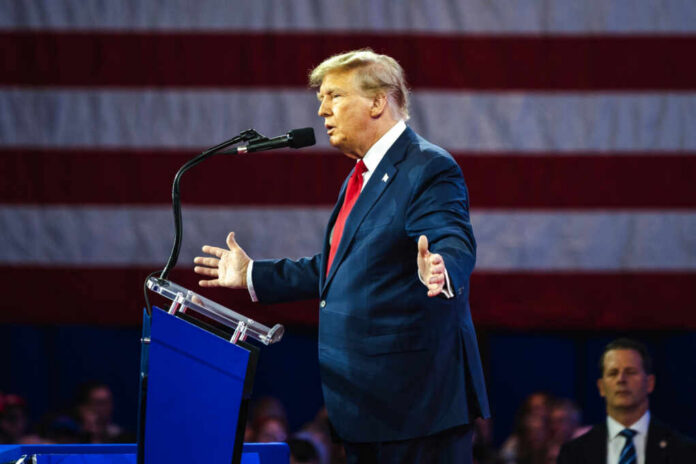
As Donald Trump brands progressive Democrats a “communist menace,” many Americans hear their deepest fears about a government that no longer works for them echoed back from the Oval Office itself.
Story Snapshot
- Trump is warning that “communism” is the greatest threat to American freedom, tying it to progressive Democrats and recent primary wins.
- His speeches compare today’s alleged communist danger to World War I, World War II, Pearl Harbor, and the 9/11 attacks, saying it is even worse.
- Republican leaders are pushing the same language, framing midterm elections as a choice between “communism” and “common sense.”
- The rhetoric taps into long‑standing anger on left and right about corrupt elites and a government that seems to ignore ordinary Americans.
Trump’s New Midterm Message: Communism As America’s “Greatest Threat”
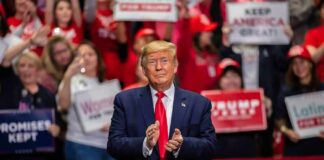
President Donald Trump has made “communism” the center of his message as the country heads toward the 2026 midterm elections. In the last two weeks alone, a Reuters review found he used the word 81 times in public remarks, from Oval Office exchanges to major speeches at Mount Rushmore and on the National Mall. He tells voters that communism is “the most serious threat to our country since its existence” and “a mortal threat to American liberty,” ranking it above past wars and terror attacks.
Trump’s language has grown most intense around the nation’s 250th birthday events. At Mount Rushmore, he warned that communism is “the greatest threat to our country, including World War I, World War II, Pearl Harbor or even 9/11,” and vowed that “America will never be a communist country.” On July 4, speaking to thousands in Washington, he compared communism to a cancer that must be “cut out fast,” then promised that citizens would “vanquish” it and keep building a “bigger and better” America.
Linking Progressive Democrats And Immigration To A “Communist Menace”
Trump is not talking about foreign regimes alone; he is tying the alleged communist threat directly to progressive Democrats at home. After several democratic socialist primary wins in states like New York and Colorado, he called their victories “the greatest threat to our country since its founding.” In speeches, he has branded left‑wing candidates and activists “hardcore, godless communists” who want to “completely destroy the traditional American way of life,” framing the midterms as a civilizational clash between Republican “common sense” and left‑wing extremism.
His warnings also reach into the immigration debate, which already divides the country. At Mount Rushmore, Trump said there is “a resurgence of the communist menace in our land, including from newcomers to our country who embrace ideas totally opposed to our way of life and our great success.” That line joins anti‑communist fear with anger over illegal immigration and cultural change, themes that both conservatives and many disillusioned liberals see as signs that leaders have lost control and are putting global agendas ahead of ordinary Americans.
Republican Echoes And The Long History Of Red‑Scare Politics
Top Republicans have picked up Trump’s wording and carried it into the wider campaign. House Speaker Mike Johnson told a television audience that “communism” and related ideologies have led to the murder of “tens of millions” in the last century and must be fought. A Trump spokeswoman said that “Democrats’ embrace of socialism and communism” is an “existential threat” and that the president will keep contrasting that danger with his “America First” agenda. Other party voices now describe the election as a choice “between communism and common sense.”
This kind of language has deep roots in United States politics. Historians note that anti‑communist campaigns surged in the 1950s, when Senator Joseph McCarthy and others warned of hidden communists in universities, unions, Hollywood, and the government itself. Many careers were destroyed and civil liberties were weakened in the name of fighting internal enemies. Earlier and later, Republican leaders used fears of communism to attack New Deal reforms and Democratic foreign policy, rallying voters who felt elites were pushing the country toward socialism and away from traditional American freedoms.
Why This Rhetoric Resonates With Angry Voters On Left And Right
Trump’s focus on communism hits a nerve because many Americans already feel the system is rigged against them. Linguists and political scientists who study his speeches say he uses “communist” as a shortcut for “un‑American,” telling supporters that progressive candidates are not “like us” and threaten their way of life. Lines such as “You can be a communist or you can be a patriot. You cannot be both” draw a hard moral line, casting his critics as enemies of the nation rather than simply political opponents.
For older conservatives, this warning echoes long‑standing worries about “woke” agendas, globalism, high energy costs from green policies, and government spending they see as reckless. For many older liberals, it mirrors fears about growing inequality, harsh treatment of immigrants, and what they view as discrimination against minorities. Both groups increasingly believe a small group of elites runs Washington for its own benefit. When Trump talks about a “communist menace” inside the country, he is speaking to that shared sense that the federal government is failing the people.
Trump’s Anti‑Communism Week And The Battle Over American Identity
Trump’s recent speeches build on earlier official steps that framed communism as a core threat to American identity. In 2025, he issued a White House proclamation declaring “Anti‑Communism Week,” honoring victims of communist regimes and calling on Americans to “stand united in defense of the values that define us as a free people.” That language matches his current claim that communism must be “vanquished quickly” so the nation can remain strong and free. For many who feel shut out of the American Dream, such vows sound like a long‑overdue defense of their liberty.
At the same time, experts warn that branding all progressive or democratic socialist ideas as “communist” blurs important differences and can fuel more division. Some policies that get labeled “communist” in Trump’s speeches—such as expanded childcare, fairer taxes, or stronger worker protections—are backed by movements that still operate within a democratic framework. The deeper fight, then, is less about a planned economy and more about which values will shape the country’s future and whether a distant political class will keep making those choices without truly listening to the people who live with the results.
Sources:
zerohedge.com, reuters.com, taipeitimes.com, cnn.com, wunc.org, washingtonpost.com, facebook.com, dsausa.org, usatoday.com, huskiecommons.lib.niu.edu, terpconnect.umd.edu