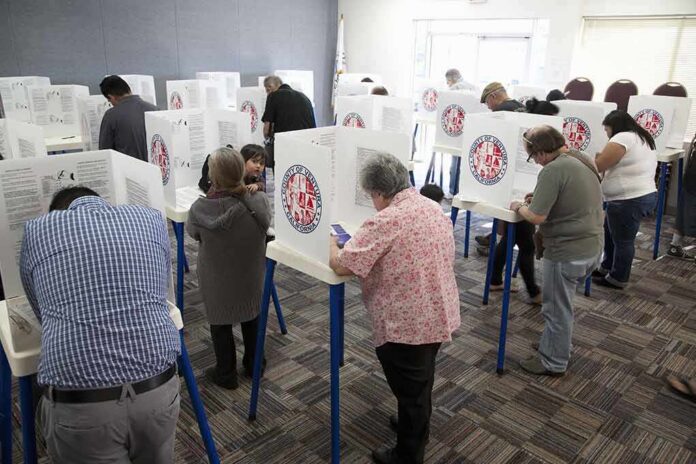
Maryland lawmakers advanced a constitutional amendment that could enable a new congressional map before 2030, putting the state’s lone Republican-held U.S. House seat in sharper jeopardy if voters approve it.
Story Snapshot
- Maryland’s House advanced a redistricting amendment that allows mid-decade map changes, pending voter approval.
- Supporters frame it as a legal fix and voter-driven process, not a permanent shift.
- The move follows a national trend of using ballot measures and big outside money to fight for map control.
- Virginia’s recent high-spend, referendum-driven map battle offers a nearby case study in risks and outcomes.
What Maryland’s Amendment Would Do
Maryland’s House of Delegates approved a constitutional amendment that would allow lawmakers to redraw congressional districts before the next census, if voters sign off at the ballot box. Reports describe the measure as ending or loosening state limits on partisan gerrymandering and shifting more control back to the legislature. If enacted, a mid-decade map could affect the state’s single Republican-held seat. The proposal still needs action by the Maryland Senate and then voter approval to take effect.
Supporters describe the change as a lawful adjustment that restores voter control over the final map. They argue the approach mirrors recent push efforts in neighboring states, where campaigns stress that voters, not politicians, make the final call in a public vote. Backers say the measure focuses on process and timing, not on locking in one party’s advantage. They also point to sunset or safeguard language used in similar campaigns elsewhere to limit long-term effects.
Why This Fits a Larger National Pattern
Redistricting fights have moved from once-a-decade chores to year-round political battles. Parties now use constitutional amendments, court cases, and rapid-response map changes to protect or flip U.S. House seats. National committees and allied groups are willing to invest heavily to change who draws the lines and when they draw them. Observers say these fights blend legal process with win-at-the-margins strategy. The real contest is control of the pen before the next election.
Advocates argue these ballot measures return power to voters in a clear yes-or-no choice. Critics counter that the same tools can be used for aggressive partisan maps. Both claims can be true in different states because the rules vary, and because each side pursues every legal edge. That mix is why mid-decade changes feel less like tidy reforms and more like hardball tactics wrapped in process language.
Lessons From Nearby Virginia’s Referendum Fight
Virginia’s recent referendum, backed by large-scale outside spending, sought to allow a mid-decade redraw and enact a legislature-drafted map. Ballotpedia’s summary shows the plan would have shifted several Republican seats toward Democrats if fully implemented. Spending and messaging framed the vote as a voter-centered fix, but the process sparked court challenges and policy pushback. One local station estimated total political spending approached one hundred million dollars across efforts tied to the vote and related campaigning.
6/ Virginia used its existing congressional map after the state Supreme Court invalidated a redistricting referendum that would have produced a map substantially more favorable to Democrats.
— Diya TV (@DiyaTV) August 5, 2026
These Virginia outcomes offer two Maryland takeaways. First, big money and national groups will likely flood the field to sway public opinion, often through nonprofit vehicles that do not disclose donors. Second, any rushed or unclear process can trigger legal fights that slow or block a new map. If Maryland’s measure advances to the ballot, expect a fast, high-dollar information war and parallel legal planning by both parties to test every clause before lines move.
What It Means for Voters and Trust
For many voters, the core worry is simple: who is drawing the lines and for whose benefit. Some on the right fear a partisan power grab that weakens their lone seat. Some on the left fear politicians of any party can rig maps to dilute communities. Both sides share a deeper frustration that rules seem to change whenever it suits those in power. Clear, transparent steps and plain-language safeguards can ease those doubts, but they must be enforced in practice.
Maryland’s debate is not only about one district. It is about how fast political actors can change the rules and how much outside money shapes those choices. If the amendment reaches the ballot, voters will decide whether mid-decade map power returns to the legislature under new terms. The choice will test whether a process sold as “voter control” feels, in real life, like a fair reset or another chapter in a long fight where insiders still hold the pen.
Sources:
foxnews.com, 13newsnow.com, cardinalnews.org, youtube.com, washingtonpost.com, electionlawblog.org