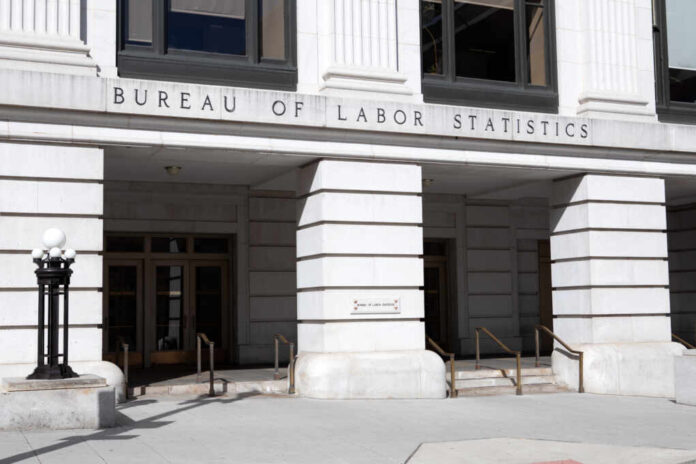
A sharp revision erased 911,000 jobs from the past year, exposing a weaker labor market and complicating Federal Reserve policy.
At a Glance
- BLS revised April 2024–March 2025 job creation down by 911,000.
- Average monthly job gains cut to 71,000 from 147,000.
- Revision may push Federal Reserve toward interest rate cuts.
- Data inaccuracies raise doubts about labor market strength.
Job Market Under the Microscope
The Bureau of Labor Statistics revealed on September 9 that prior estimates overstated job creation by 911,000. The adjustment came through its annual benchmark process, which incorporates state-level unemployment tax records.
The scale of the revision is unusually large and reshapes the picture of the U.S. labor market. A job market once hailed as strong now appears far more fragile.
Watch now: Job Figures SLASHED – Can Economy Recover?
This recalibration will weigh heavily on the Federal Reserve ahead of its next meeting. Monetary policymakers depend on accurate employment figures to guide rate decisions, and the gap between initial reports and reality complicates their task.
Causes and Market Fallout
The BLS said survey errors drove the overcount. Employer non-response and reporting mistakes distorted the initial totals. Analysts now calculate that the economy added just 71,000 jobs per month, not the 147,000 previously believed.
Markets are already adjusting to the weaker trend. Stocks and bonds may see fresh volatility as investors recast assumptions about growth, spending, and corporate earnings. A slower labor market strengthens the case for rate cuts, which could arrive sooner than expected.
Businesses face renewed uncertainty. Slower job creation signals weaker consumer demand, which may dampen investment and hiring plans further. The downward spiral risk is clear.
Policy and Outlook
Economists stress that the revision underscores the hazards of relying on preliminary data. Ellen Zentner of Morgan Stanley said the findings reinforce the Fed’s caution on rates. The shift gives cover to policymakers to delay hikes or pivot to easing.
Mark Zandi of Moody’s Analytics noted that the revision highlights the central role of trustworthy labor figures in shaping both policy and public expectations. While the benchmarking process itself remains credible, the scale of this error rattles confidence.
The political fallout will run parallel to the economic one. Voters are sensitive to job data, and a softer labor market complicates any administration’s recovery message. Investors, workers, and consumers now wait to see if the new numbers prove to be a turning point.
Sources