President Trump’s vow to send $5,000 to every American adult if Republicans win Congress turns a campaign rally line into a trillion-dollar policy test.
Story Snapshot
- Trump tied $5,000 “dividend” checks to Republicans winning both chambers of Congress.
- The plan was framed as universal, for all adult citizens, not tied to how anyone votes.
- An attorney told the Associated Press it likely falls under legal campaign speech, not vote-buying.
- Analysts say it would cost over $1 trillion and still needs Congress to act.
What Trump Promised and When
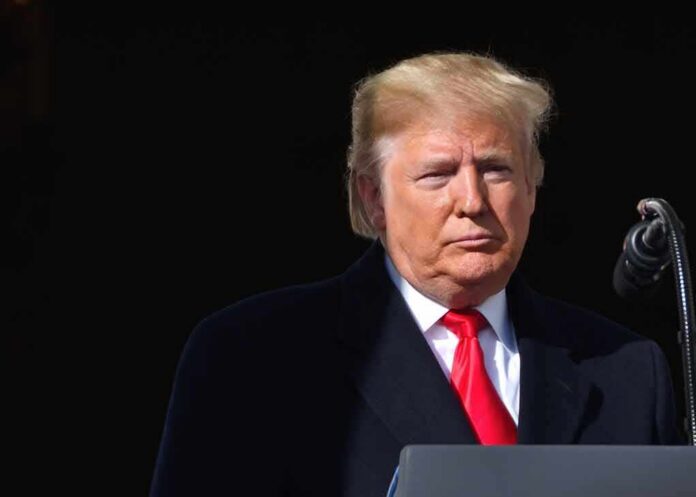
President Trump told supporters he would issue a $5,000 “dividend” to every adult American if Republicans win control of the House of Representatives and the United States Senate in the midterms. He said the payment would be universal and did not tie it to how any person votes. He also said the money must be spent inside the United States. He did not present a bill, funding plan, or timeline during the remarks captured by C-SPAN.
Trump’s framing puts the pledge in the category of a policy promise rather than a reward for votes. His language conditioned the payout on the party outcome, not on individual behavior. That matters under election law. A legal expert quoted by the Associated Press said the pledge is a campaign promise, not a direct payment to induce a specific vote, which makes it more likely to be lawful as political speech.
Why Legality and Election Law Are in Focus
Federal law bans giving money or benefits as payback for political activity. It also bans promising federal benefits as a reward for campaign support. Courts, however, protect broad campaign promises about future governing. The Supreme Court’s Brown v. Hartlage decision drew that line. It protected general policy pledges and targeted bans on quid pro quo vote-buying. Trump’s universal and non-targeted framing tracks that legal logic, at least on the surface.
The Associated Press cited a New Mexico attorney, John Day, who said the plan is legal because it applies to everyone, no matter how they voted. That view does not settle the matter, but it explains why the pledge may fall on the speech side of the line. Still, promising a cash-like benefit linked to an election result invites scrutiny. Regulators could test whether a universal promise tied to partisan control crosses into inducement territory.
Cost, Congress, and the Missing Details
Big promises run into budget math. Analysts told the Associated Press that the plan would likely cost more than $1 trillion. The report also noted the United States already faces a very large annual deficit. That raises two hurdles: finding the money and avoiding more inflation. Even if Republicans win both chambers, Congress would need to draft, pass, and fund a program to deliver checks at that scale.
Trump’s speech did not include a mechanism to verify who qualifies, how to deliver payments, or how to enforce the “spend it in America” rule. Agencies would need systems to limit fraud and confirm eligibility. Lawmakers would also need to decide tax treatment and timing. Those steps take time, hearings, and votes. As of now, reporters found no draft legislation, no budget score, and no executive authority cited to send the money unilaterally.
Shared Hopes, Shared Worries
Many Americans on the right and left feel the system favors the well connected. A universal payout speaks to families squeezed by high prices and wages that lag. People see Washington reach for complex fixes while daily costs rise. A simple check sounds direct. But the lack of clear funding and guardrails will alarm fiscal hawks who fear more debt, and workers who worry new cash could push prices up again.
#Watch | BIG BREAKING: Donald Trump has announced a proposed $5,000 “dividend” for every adult American, but said the plan would depend on Republicans winning both chambers of Congress.
The announcement adds a major economic promise to the political debate ahead of the US… pic.twitter.com/EV3KYcY1OO— The Daily Jagran (@TheDailyJagran) September 10, 2026
Voters also know big checks can come with fine print. Pandemic payments reached people fast, but fraud soared and audits lagged. A new program would need tougher controls. The “spend it in America” rule fits a made-here theme but would be hard to police at the checkout line. Without strong systems, the risk is more waste and more anger at a government many already see as careless with public money.
What to Watch Next
Watch for actual bill text from Republican leaders that sets who qualifies, how to pay for it, and when checks go out. Look for a score from the Congressional Budget Office. Track whether the Department of Justice or the Federal Election Commission weighs in on legal lines for cash-like promises tied to an election result. Those steps will show if this is a real policy push or a rally message that fades after votes are counted.
Sources:
youtube.com, apnews.com, livemint.com, pbs.org