Nearly 1 million Americans are getting $500 checks because the White House says HealthCare.gov overcollected marketplace user fees and is sending the surplus back.
Story Snapshot
- The White House said $500 refunds start going out in October 2026 to almost 1 million people.
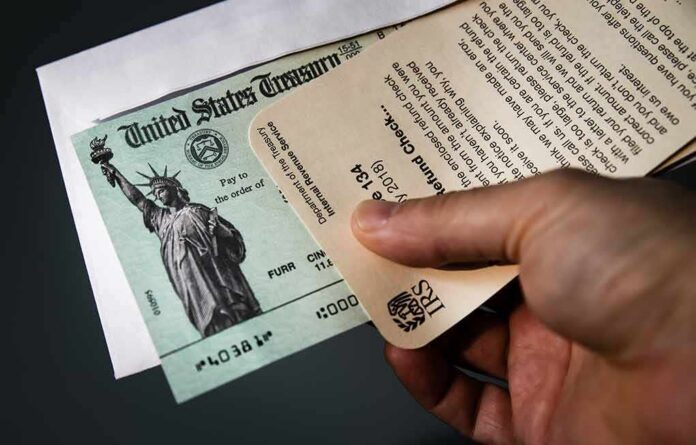
- Treasury began mailing checks, with Trump-signed letters, to more than 950,000 Americans in 30 states.
- Eligibility centers on people who bought Affordable Care Act plans without premium subsidies.
- The administration says the money comes from extra marketplace user fees, not a new benefit.
What Happened And Who Gets Paid
The White House announced a refund program that sends $500 per person to nearly 1 million Americans who bought coverage on HealthCare.gov without premium help. Checks began in October 2026. The payments focus on people who paid the full price for Affordable Care Act plans, and some who fell through subsidy cracks. The administration framed the money as a refund from extra user fees collected through the federal marketplace, not a new spending program.
News outlets reported the Treasury Department started mailing the checks to more than 950,000 people in 30 states that use the federal exchange. Residents in states that run their own Affordable Care Act marketplaces are not included. The checks arrive with letters signed by President Trump, which ties the action to the Oval Office and underscores the White House’s ownership of the move ahead of the midterms.
Why Only 30 States Are Included
The payments apply to states that rely on HealthCare.gov, which is the federal exchange. States that built and run their own marketplaces fund them differently and do not fall under the same fee structure. Reporters said the refunds target residents in the 30 federal-exchange states and exclude the 20 that run their own systems. That boundary matches the administration’s logic: the surplus arose inside the federal platform, so the refunds flow to its users.
That line may feel uneven if your state runs its own exchange. But the policy hook is where the fees were collected. From a conservative view, refunding a defined surplus to the people who paid into it follows a simple rule: when government collects too much for a service, it should give the extra back to the payer, not reroute it elsewhere.
Where The Money Comes From
The White House says the checks draw on a surplus of marketplace user fees. Insurers that sell plans on HealthCare.gov pay these fees to fund the site, the call center, and enrollment help. Insurers pass the cost into premiums, so consumers ultimately pay it. If collections ran above what was needed to operate the marketplace, a refund framed as a fee correction matches common sense: correct the bill and return the difference.
Coverage put a ballpark size on the program at about $500 million. That number reflects $500 per person times roughly a million recipients. This is not a new entitlement or an ongoing benefit. It is a one-time payment tied to a specific pool of marketplace fee collections during a past period, as the administration described.
Who Qualifies And How To Think About It
Reports said the refunds go mainly to people who earned too much for premium subsidies and paid full price on HealthCare.gov plans. Some people with incomes between 100 percent and 400 percent of the federal poverty level who did not get subsidies may also receive a check. If you bought an Affordable Care Act plan on the federal exchange and never saw a premium tax credit, you are in the target group.
Timing also matters. Reuters and other outlets highlighted that many of the 30 states are home to closely watched races. That ensures the action gets attention, but it does not change the basic claim: the checks are a refund linked to user fees inside HealthCare.gov. Voters can hold two thoughts at once. Payments can be both politically timed and financially grounded in a defined surplus.
What To Watch Next
Households will watch mailboxes for Treasury envelopes and the enclosed letter from President Trump. Consumers should verify their address on file with the marketplace and keep an eye out for any notice that pairs their plan history with the refund. Expect continued focus on three points: the federal-versus-state exchange line, the one-time nature of the payment, and whether this approach becomes a template for future fee reconciliations as marketplaces modernize.
Sources:
washingtonpost.com, whitehouse.gov, reuters.com, foxnews.com, investopedia.com