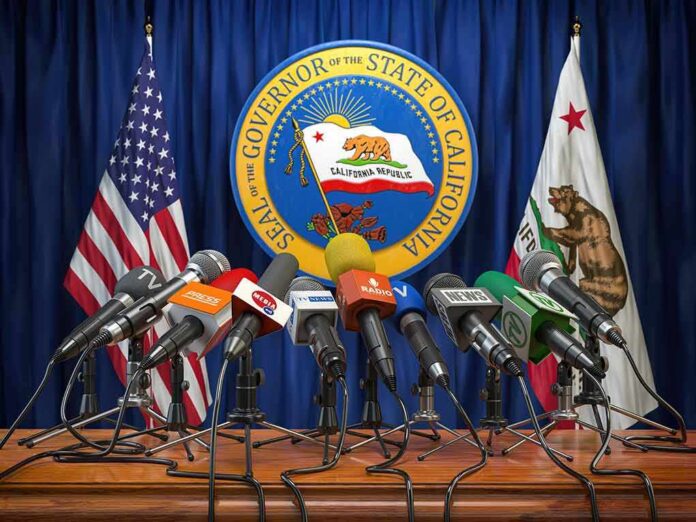
California just passed laws that tax private immigration jails and restrict certain police tools, setting up a high-stakes clash with federal power.
Story Snapshot
- California banned electric-shock gloves for all officers in the state, including federal immigration agents.
- The state created a first-in-the-nation 25% tax on private immigration detention operators, with revenue tied to due-process aid.
- New rules slow approvals for new immigration detention sites by requiring hearings and a waiting period.
- Federal officials signaled they will fight parts that bind federal agents, citing the Supremacy Clause.
What California Enacted And Why It Matters
Governor Gavin Newsom signed a package that targets how immigration enforcement operates inside California. The laws ban electric-shock gloves through 2030 and order a state safety study by 2029. Reports say the ban applies to local, state, and federal officers while they operate in California. State leaders said the goal is to protect civil rights and raise standards in detention. They also framed the package as a pushback on federal tactics used during enforcement actions.
California also moved to raise costs for private immigration detention. A new law places a 25% tax on the gross income of for-profit companies that run immigration detention centers in the state, beginning in mid-2028. Advocacy material calls it the first such levy in the nation and says the money would support a Due Process for All Fund. Bloomberg Tax reported lawmakers narrowed the tax from an earlier, steeper proposal, signaling a more tailored approach.
Procedural Hurdles For New Detention Facilities
Lawmakers added steps before any new immigration detention site gets a green light. A separate measure requires cities to hold public hearings and wait at least 180 days before approving new construction or conversions into immigration detention centers. The Los Angeles Times reported these timing and transparency rules aim to slow fast-track approvals and bring local voices into the process. Supporters argue this gives communities leverage over projects that can reshape local services and safety.
These procedural rules fit a pattern in immigration federalism. States often refuse to spend state resources to aid federal enforcement, while allowing federal agents to act on their own. The Supreme Court has affirmed strong federal control over immigration, yet it has also recognized room for states to manage their own personnel, property, and public safety choices in limited ways. California’s package tests where that line falls when rules touch federal operations on state soil.
The Coming Legal Fight Over Federal Authority
Critics argue California cannot dictate what tools federal agents use. News reports cite federal officials and legal analysts who say the Supremacy Clause blocks states from regulating federal officers directly. Politico highlighted this concern in coverage of the shock-glove ban, and a separate report showed a federal prosecutor predicting quick defeat for parts aimed at federal agents. That mirrors past rulings that stopped other California measures seen as singling out federal immigration personnel.
Tapper: Mr. Hilton, just to clarify, would you direct California law enforcement to assist the Trump administration's mass deportations beyond dangerous criminals? Yes or no?
Hilton: It's about enforcing the law. I mean, the federal law is immigration law is obviously a federal… pic.twitter.com/Y3trOxKflD
— ☀️✨ Rachel Speaks Out 🌙💜 (@Rachelspeakout1) October 1, 2026
California’s own statements stress a different angle. The Governor’s office says the state is not setting immigration policy. Instead, it claims authority to set safety standards, manage detention activity within state borders, and decide how state-linked facilities operate. The law’s study-and-sunset design may help the state argue it is regulating safety, not politics. Still, the lack of full bill text and official legal memos in current reporting makes the scope and legal footing hard to judge with precision.
What This Means For People On The Ground
For communities near detention centers, the new tax and approval delays could change business plans and timelines. Operators may pass costs along or rethink contracts, which could shift where detainees are held and how far families must travel to see them. For officers working in the state, the gear ban will set training and equipment rules. If courts block the ban for federal agents but not for local police, departments could face split standards during joint operations, raising safety and coordination concerns.
For voters across the spectrum, the fight touches a shared worry: powerful institutions play tug-of-war while basic problems persist. Supporters see a state trying to rein in heavy-handed tactics and improve due process. Opponents see a state government using taxes and rules to undercut federal law and public safety. Courts will likely decide much of this. Until then, Californians will live with uncertainty over who is really in charge when federal and state priorities collide.
Sources:
theguardian.com, gov.ca.gov, theepochtimes.com, sfist.com, latimes.com, news.bloombergtax.com, californiaglobe.com